Hvilken
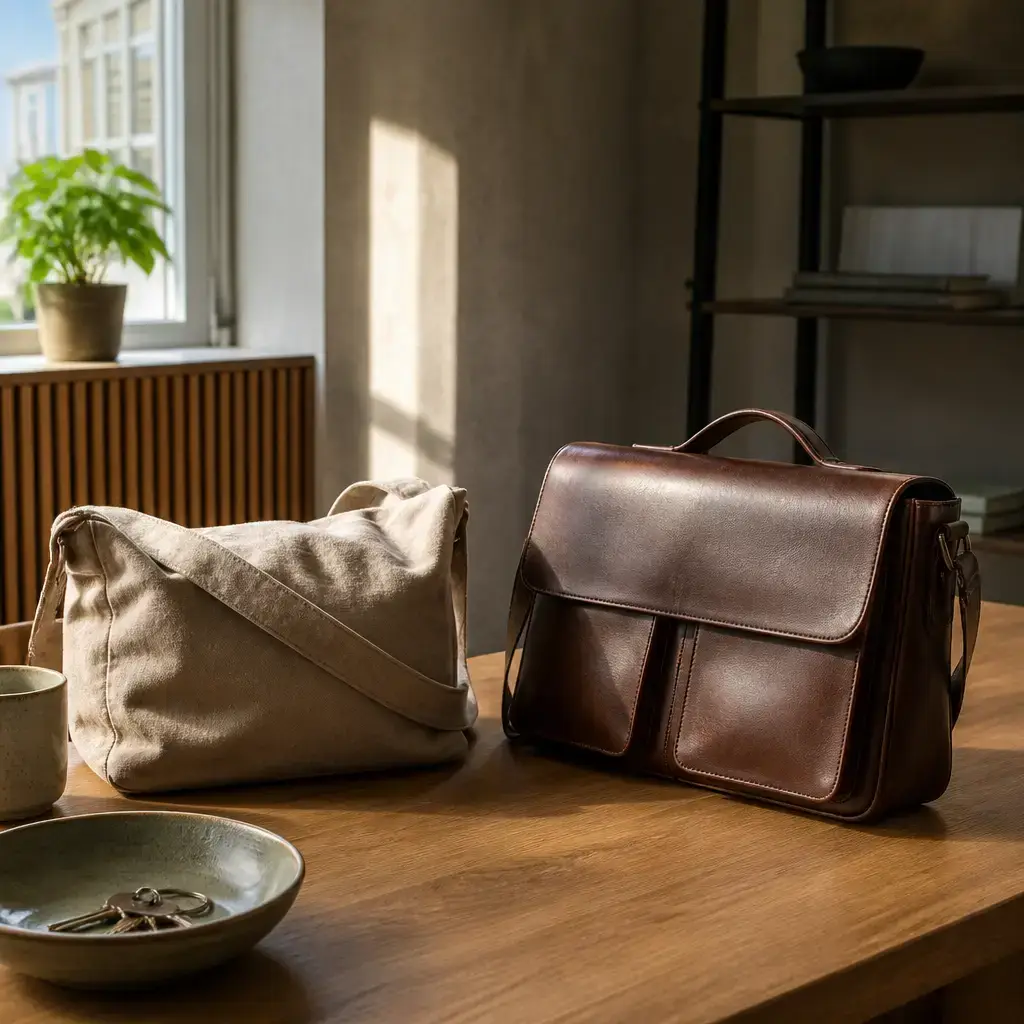
Hvilken means “which” in the question “Hvilken taske skal jeg vælge?” It asks the listener to identify one choice from the alternatives. Use it when asking which item or option to choose.
taske
Taske means “bag” in “Hvilken taske” and “en taske.” It names the item being compared and chosen. Use it for talking about a bag in shopping or everyday errands.
skal
Skal expresses “should” in “skal jeg vælge,” asking what choice is appropriate. It is followed here by the action “vælge.” Use “skal jeg” when asking what you are expected or advised to do.
jeg
Jeg means “I” when the speaker refers to themself, as in “skal jeg vælge”; at the start of a sentence it appears as “Jeg.” It is the person choosing or needing the bag. Use it as the subject when describing your own action or need.
vælge
Vælge means “choose” in “skal jeg vælge.” It names the action of selecting one bag from the alternatives. Use it when deciding between items or options.
Denne
Denne means “this one” in “Denne er let,” referring to one of the bags under discussion. It lets the speaker identify an item without repeating “taske.” Use it when pointing out or selecting a particular item.
er
Er means “is” in “Denne er let.” It connects the selected bag with the description “let.” Use it to say what something is like or what condition it is in.
let
Let means “light” in “Denne er let,” describing the bag’s weight. It is presented as one reason to consider that bag. Use it when comparing how heavy or light an object is.
Den
Den refers to the relevant bag in “den anden taske” and “Den har også to lommer”; in the first phrase it helps identify “the other bag,” and in the second it means “it.” Use it to refer back to a specific common-gender item already being discussed.
anden
Anden means “other” in “den anden taske.” It identifies the second bag in the comparison. Use it when distinguishing one option from another.
ser
Ser contributes the “looks” part of the expression “ser stærkere ud,” which means that the bag appears stronger. The complete expression, rather than ser alone, describes how something seems. Use “ser ... ud” with a description when giving an impression.
stærkere
Stærkere means “stronger” in “ser stærkere ud” and “den stærkere taske.” It compares the bags and identifies the one considered more durable. Use it when saying that one item has greater strength than another.
ud
Ud completes the expression “ser stærkere ud,” meaning “looks stronger.” It does not independently mean “looks” in this dialogue; ser and ud work together. Use it as part of “ser ... ud” when describing how something appears.
har
Har means “has” in “Den har også to lommer,” describing what the bag contains. It also forms the need expression “har brug for” in “Jeg har brug for en taske.” Use “har” for possession or as part of that expression for needing something.
også
Også means “also” in “Den har også to lommer.” It adds the pocket information to what has already been said about the bag. Its position here is after har and before the added information. Use it when adding another fact or feature.
lommer
Lommer means “pockets” in “to lommer.” It names the bag compartments that support the choice of the stronger bag. Use it when talking about pockets in clothing, bags, or similar objects.
brug
Brug is part of the complete expression “har brug for,” meaning “need.” In this dialogue, brug should be understood together with har and for, not as a separate meaning. Use “har brug for” when saying that you need an item or thing.
for
For completes “har brug for,” the expression used for “need” in “Jeg har brug for en taske.” It connects the need to the thing that is needed. Use it inside “har brug for” before the needed item.
en
En means “a” in “en taske,” introducing one unspecified bag. It comes directly before taske in the phrase for needing a bag. Use it when mentioning one non-specific item.
til
Til means “for” in “til arbejde,” marking the intended purpose of the bag. The phrase “en taske til arbejde” says that the bag is for work. Use til to connect an item with its purpose or intended use.
arbejde
Arbejde means “work” in “til arbejde.” It explains why the speaker needs the bag and what it will be used for. Use it when describing work as an activity or purpose.
Så
Så means “then” in “Så giver den stærkere taske mening.” It introduces a conclusion based on the need for a work bag. Use it when moving from information to a resulting decision or conclusion.
giver
Giver is part of “giver ... mening,” the expression meaning “makes sense” in this dialogue. Together with mening, it presents the stronger bag as a logical choice. Use “giver mening” when a decision, explanation, or idea seems logical.
mening
Mening means “sense” in “giver ... mening.” The complete expression “giver mening” means that something is logical or reasonable, rather than simply describing its literal meaning. Use it to approve or explain a sensible conclusion.
kan
Kan means “can” in “Jeg kan lægge mine papirer i lommerne,” expressing the speaker’s ability to put the papers there. It is followed by the action “lægge.” Use it when saying that someone is able to do something.
lægge
Lægge means “put” or “place” in “lægge mine papirer i lommerne.” It describes placing the papers inside the pockets. Use it with the item being placed and a location, as in “lægge ... i ...”.
mine
Mine means “my” in “mine papirer,” showing that the papers belong to the speaker. It comes before the thing that is owned. Use it to identify something as belonging to you.
papirer
Papirer means “papers” in “mine papirer.” It is the object that the speaker plans to place in the pockets. Use it for documents or sheets of paper, especially when discussing what you carry.
i
I means “in” in “i lommerne,” marking that the papers go inside the pockets. It introduces the location in the placing expression “lægge mine papirer i lommerne.” Use it when describing something being inside a place or put into it.
lommerne
Lommerne means “the pockets” in “i lommerne,” referring to the specific pockets of the bag. The form identifies the pockets as the relevant storage places. Use it when referring to particular pockets already known from the context.
Det
Det means “that” in “Det burde fungere godt for dig.” Here it refers back to the suggested bag choice or solution. Use it to point back to a situation, decision, or idea just mentioned.
burde
Burde expresses “should” or “ought to” in “burde fungere,” giving an expectation that something will work. It is followed here by the action “fungere.” Use it when offering a reasonable expectation or gentle recommendation.
fungere
Fungere means “work” or “function” in “burde fungere godt.” It describes whether the chosen bag will serve its intended purpose successfully. Use it for objects, plans, or arrangements that operate or serve someone well.
godt
Godt means “well” in “fungere godt,” describing the expected quality of how the bag will work for the speaker. It modifies the expression for functioning. Use it to say that something works successfully or satisfactorily.
dig
Dig means “you” in “for dig,” identifying the person who will benefit from the bag. The phrase “fungere godt for dig” means that it should work well for that person. Use “for dig” when describing what is suitable or helpful for someone.