Skal
“Skal” means “should” here and begins a question about what the speaker ought to choose. With a subject and an infinitive, “Skal jeg vælge ...?” asks for advice or a decision. A new example is “Skal vi vente?” for suggesting or asking whether we should wait.
jeg
“Jeg” means “I” and identifies the person who is choosing. In the question “Skal jeg vælge ...?”, it comes after “Skal” because the sentence is a question. A new example is “Jeg vil have en salat.”
vælge
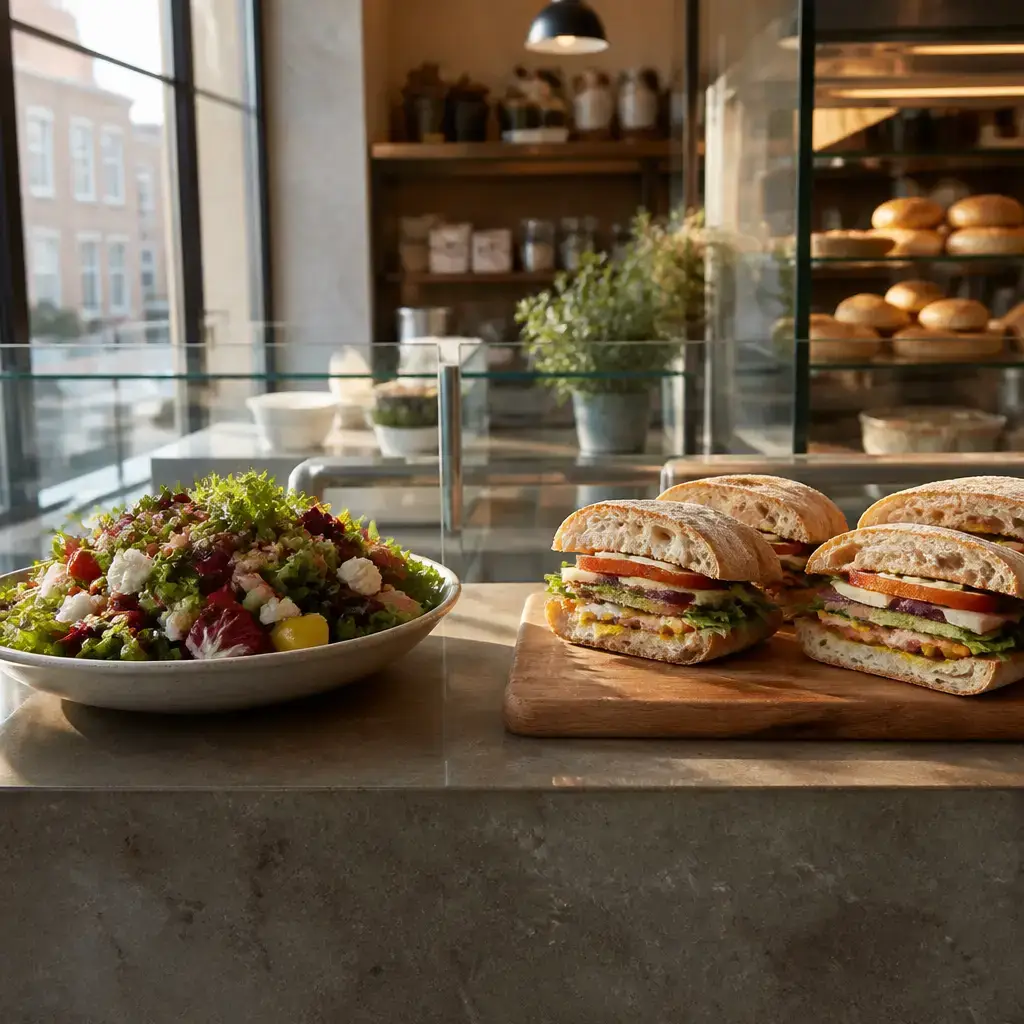
“Vælge” means “choose” in “Skal jeg vælge en sandwich eller en salat?”. It is the action that follows “Skal jeg”. A new example is “Jeg kan vælge en sandwich.”
en
“En” means “a” before “sandwich” and “salat”, presenting either item as one possible choice. It comes directly before the noun in “en sandwich” and “en salat”. A new example is “en mulighed” for “an option”.
sandwich
“Sandwich” means “sandwich” and names one of the two food choices. In “en sandwich”, it follows the indefinite article “en”. A new example is “Jeg vælger en sandwich.”
eller
“Eller” means “or” and connects the two alternatives in “en sandwich eller en salat”. It is used between choices or possibilities. A new example is “te eller kaffe?” when asking someone to choose between two drinks.
salat
“Salat” means “salad” and names the second food choice in “en salat”. The form appears after “en” because the speaker is mentioning one possible salad. A new example is “Jeg vil have en salat.”
Salaten
“Salaten” means “the salad” and refers to the specific salad being considered. It is the form used at the beginning of “Salaten er en lettere mulighed.” A new example is “Salaten passer mig fint.”
er
“Er” means “is” and links “Salaten” with the description “en lettere mulighed”. It is used in “Salaten er ...” to state what the salad is like or represents here. A new example is “Sandwichen er større.”
lettere
“Lettere” means “lighter” in the description “en lettere mulighed”. It compares this option with the alternative in the conversation. A new example is “Denne taske er lettere.”
mulighed
“Mulighed” means “option” in “en lettere mulighed”, describing the salad as a possible choice. It commonly follows “en” when naming one option. A new example is “Det er en god mulighed.”
ikke
“Ikke” makes the statement negative in “Jeg er ikke særlig sulten”. It comes before the part of the sentence being negated. A new example is “Jeg vil ikke have en sandwich.”
særlig
“Særlig” means “particularly” or “very” in “ikke særlig sulten”, making the speaker’s hunger sound limited. Together with “ikke” it means the speaker is not very hungry. A new example is “Jeg er særlig sulten” only when emphasizing that someone is particularly hungry.
sulten
“Sulten” means “hungry” and describes the speaker in “Jeg er ikke særlig sulten”. It follows “er” in this description of how the speaker feels. A new example is “Jeg er sulten.”
Så
“Så” means “then” and connects the speaker’s lack of hunger with the suggestion that follows. At the start of “Så passer den måske bedre til dig”, it marks a conclusion based on what was just said. A new example is “Så vælger jeg salaten.”
passer
“Passer” means “suits” or “works for” in “passer den måske bedre til dig”. It expresses that something is a good fit for a person. A new example is “Denne mulighed passer mig.”
den
“Den” means “it” or “that one” and refers here to the salad already being discussed. In “passer den måske bedre til dig”, it is the thing that may suit the listener better. A new example is “Den passer mig fint.”
måske
“Måske” means “perhaps” and makes the suggestion less certain in “den måske bedre til dig”. It is useful when offering a possibility rather than stating a fact. A new example is “Måske vælger jeg salaten.”
bedre
“Bedre” means “better” in “passer ... bedre til dig”, comparing how well the salad suits the listener with the other option. It appears before “til dig” in this reusable pattern. A new example is “Denne mulighed passer bedre til mig.”
til
“Til” means “to” or “for” in the expression “passer ... til dig”. Together with “dig”, it identifies the person for whom something is suitable. A new example is “Det passer til mig.”
dig
“Dig” means “you” in “til dig” and identifies the person the salad may suit. It follows “til” in this expression. A new example is “Hvad passer til dig?” when asking about someone’s preference.
Hvad
“Hvad” means “what” and asks which thing the other person is going to get. In “Hvad skal du have?”, it begins the question about the desired food. A new example is “Hvad vil du have?”
du
“Du” means “you” and identifies the person being asked in “Hvad skal du have?”. It comes after “skal” in this question. A new example is “Du vælger sandwichen.”
have
“Have” means “have” or “get” in “Hvad skal du have?”, referring to the item the person will receive or choose at the counter. It follows “skal du” in this question pattern. A new example is “Jeg skal have en salat.”
vil
“Vil” means “want” in “Jeg vil have noget større”, expressing the speaker’s preference. It is followed here by “have” and the desired item. A new example is “Jeg vil have en sandwich.”
noget
“Noget” means “something” in “noget større”, referring to an unspecified item. It comes before the description “større”. A new example is “Jeg vil have noget andet.”
større
“Større” means “bigger” in “noget større”, describing the unspecified item the speaker wants. The pattern “noget større” means “something bigger”. A new example is “Jeg vælger noget større.”
vælger
“Vælger” means “choose” in “Jeg vælger sandwichen” and states the speaker’s decision. It is the present-tense form used with “jeg” here, and it is related to “vælge” from the earlier question. A new example is “Jeg vælger salaten.”
sandwichen
“Sandwichen” means “the sandwich” and refers to the specific sandwich chosen by the speaker. The ending in “sandwichen” marks it as the particular sandwich under discussion. A new example is “Sandwichen er større.”
mig
“Mig” means “me” in “Salaten passer mig fint” and identifies the person for whom the salad works. It follows “passer” in this expression. A new example is “Det passer mig.”
fint
“Fint” means “fine” or “well” in “passer mig fint”, showing that the salad works satisfactorily for the speaker. It adds a positive evaluation to “passer mig”. A new example is “Det passer mig fint.”
Lad
“Lad” means “let” in “Lad os bestille”, introducing a suggestion that the speakers order. Together with “os”, it forms the suggestion “let us order”. A new example is “Lad os vente.”
os
“Os” means “us” in “Lad os bestille” and includes the speaker and the other person in the suggestion. It follows “Lad” in this construction. A new example is “Lad os vælge.”
bestille
“Bestille” means “order” in “Lad os bestille”, referring to ordering food at the counter. It follows “Lad os” in the suggestion pattern. A new example is “Vi vil bestille en sandwich.”
når
“Når” means “when” and introduces the time condition for ordering in “når medarbejderen kommer tilbage”. It connects the main action with the event that must happen first. A new example is “Vi bestiller, når du er klar.”
medarbejderen
“Medarbejderen” means “the employee” and refers here to the server at the food counter. It is the specific person who comes back in “medarbejderen kommer tilbage”. A new example is “Medarbejderen hjælper os.”
kommer
“Kommer” means “comes” in “medarbejderen kommer tilbage”, describing the employee’s return. It is followed by “tilbage” to express coming back. A new example is “Han kommer tilbage senere.”
tilbage
“Tilbage” means “back” in “kommer tilbage”, showing movement or return to the earlier place or situation. The reusable expression is “komme tilbage”. A new example is “Jeg kommer tilbage.”