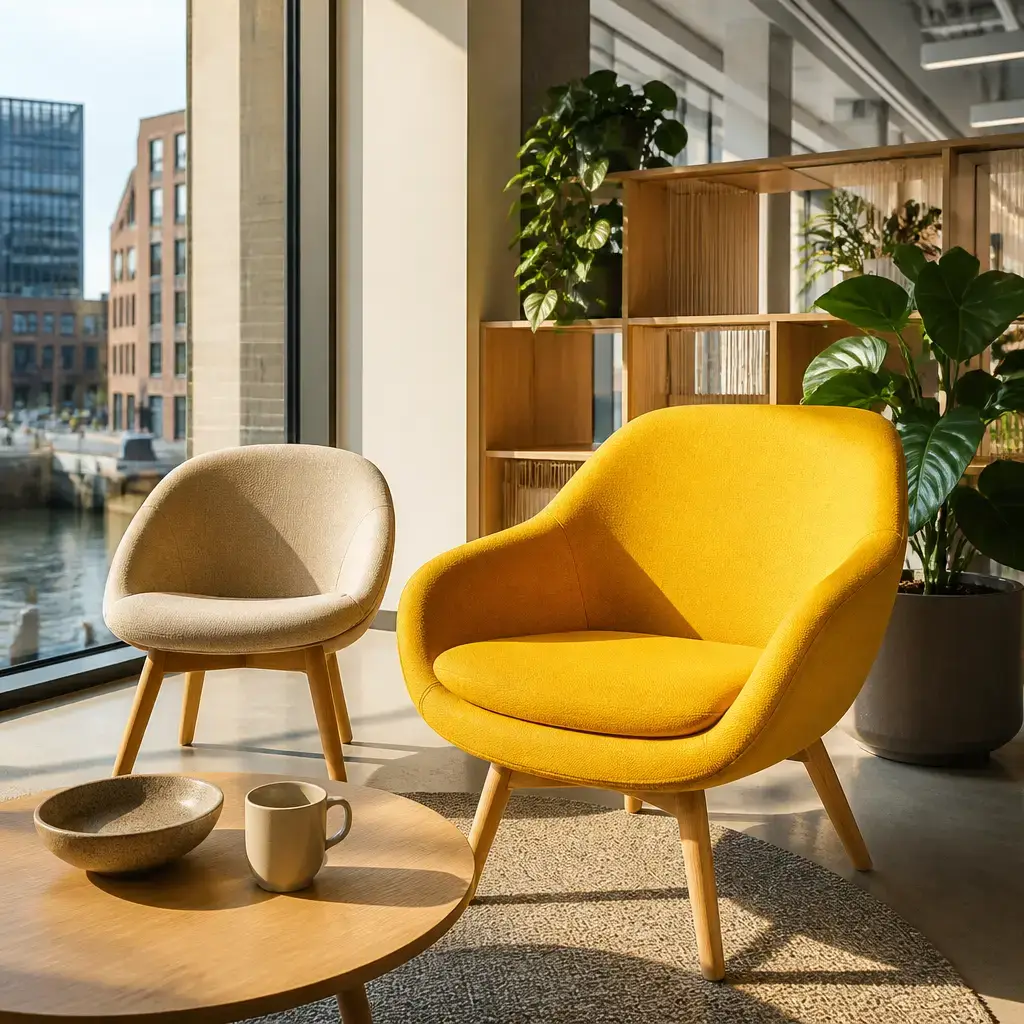
Hvilken
“Hvilken” means “which” when asking the listener to choose one chair. It appears before the noun in “Hvilken stol”. A new example is “Hvilken bog vil du læse?” when asking which book someone wants to read.
stol
“stol” means “chair” in both “Hvilken stol” and “denne stol”. It names the piece of furniture being chosen. A new example is “Jeg sidder på en stol” for saying that you are sitting on a chair.
skal
“skal” expresses what the speakers should or are supposed to do in “skal vi vælge”. It comes before “vi” and the action “vælge”. A new example is “Skal vi gå?” when suggesting that two people go.
vi
“vi” means “we” and refers to the two people making the choice together. It is followed by “vælge” in “skal vi vælge”. A new example is “Vi vælger denne” when saying that we choose this one.
vælge
“vælge” means “choose” in “skal vi vælge”. It names the action the speakers are deciding to carry out. A new example is “Jeg vil vælge den blå” when selecting the blue one.
Denne
“Denne” means “this” and points to the chair being considered in “Denne stol ser behagelig ud”. It appears directly before “stol”. A new example is “Denne bog er interessant” when pointing out a particular book.
ser
“ser” means “looks” in “ser behagelig ud”, describing how the chair appears. The exact form “ser” is used with “ud” as part of this expression. A new example is “Det ser godt ud” when something appears good.
behagelig
“behagelig” means “comfortable” in “ser behagelig ud”. It describes the chair’s apparent comfort. A new example is “Sofaen er behagelig” when saying that a sofa is comfortable.
ud
“ud” completes the expression “ser behagelig ud”, which means that the chair looks comfortable. Here, “ud” does not mean movement out; it helps express appearance together with “ser”. A new example is “Hun ser glad ud” when someone appears happy.
Den
“Den” means “the” in “Den anden stol” and introduces the other chair. It appears before “anden stol” to identify that chair. A new example is “Den store stol står her” when referring to a particular large chair.
anden
“anden” means “other” in “Den anden stol”. It distinguishes this chair from the one already being considered. A new example is “Den anden er bedre” when choosing between two options.
virker
“virker” means “seems” in “virker for lille”, expressing an impression about the chair’s size. The exact form “virker” is used before the description “for lille”. A new example is “Det virker svært” when something seems difficult.
for
“for” means “too” in “for lille”, showing that the chair is smaller than is suitable for the speakers’ purpose. It comes before the adjective “lille”. A new example is “Det er for dyrt” when a price is higher than acceptable.
lille
“lille” means “small” in “for lille”. It describes the size of the other chair. A new example is “Et lille bord” when describing a small table.
Så
“Så” means “then” in “Så burde denne stol være fin” and connects the conclusion to the previous comment about the other chair. It appears at the beginning of the sentence. A new example is “Så vælger vi denne” when drawing a decision from what was just said.
burde
“burde” means “should” or “ought to” in “burde denne stol være fin”, expressing an expectation that this chair will be suitable. It is followed by “være fin”. A new example is “Det burde være nok” when saying that something is expected to be sufficient.
være
“være” means “be” in “burde ... være fin”. It links the chair to the description “fin” after “burde”. A new example is “Det skal være nemt” when saying that something should be easy.
fin
“fin” means “fine” or “suitable” in “være fin”, referring to the chair as an acceptable choice. It follows “være”. A new example is “Denne løsning er fin” when approving a solution.
Hvad
“Hvad” means “what” in “Hvad synes du om ...?”, opening a question about the listener’s opinion. It appears at the beginning of the question. A new example is “Hvad vil du vælge?” when asking what someone wants to choose.
synes
“synes” expresses having an opinion in “Hvad synes du om den klare farve?”. It is used with “du” and the preposition “om” to ask what someone thinks of something. A new example is “Jeg synes om stolen” when expressing that I like the chair.
du
“du” means “you” and refers to the person whose opinion is being requested in “Hvad synes du om ...?”. It appears after “synes” in this question. A new example is “Hvad vælger du?” when asking what the listener chooses.
om
“om” is used with “synes” in “synes du om den klare farve?” to introduce the thing being evaluated. Together, “synes ... om” asks for an opinion about or feeling toward something. A new example is “Hvad synes du om stolen?” when asking what someone thinks of the chair.
klare
“klare” means “bright” in “den klare farve” and describes the color being discussed. It appears directly before “farve”. A new example is “en klar farve” when describing a bright or vivid color.
farve
“farve” means “color” in “den klare farve”. It names the visual feature whose brightness the speakers are discussing. A new example is “Jeg kan lide farven” when saying that you like the color.
Det
“Det” means “it” in “Det gør stolen nem at få øje på”, referring to the bright color mentioned in the previous line. It is the thing presented as producing the effect. A new example is “Det hjælper meget” when referring to something already mentioned.
gør
“gør” means “makes” in “gør stolen nem at få øje på”. It introduces the effect that the color has on the chair’s visibility. A new example is “Det gør arbejdet lettere” when saying that something makes work easier.
stolen
“stolen” means “the chair” in “gør stolen nem at få øje på”. It refers to the chair selected for discussion. The exact form “stolen” is the definite form related to “stol”. A new example is “Stolen står her” when referring to a particular chair.
nem
“nem” means “easy” in “stolen nem at få øje på”. It describes how easy it is to notice the chair. The reusable pattern is “gøre noget nem at ...”, as in “Det gør stolen nem at finde” in a new example.
at
“at” introduces the action in “nem at få øje på”, meaning that the chair is easy to spot. It comes before “få” in this construction. A new example is “Det er svært at vælge” when saying that choosing is difficult.
få øje på
“få øje på” means “spot” or “notice” in “nem at få øje på”. Within the expression, “få” contributes the idea of getting, “øje” means eye, and “på” completes the expression; together they mean noticing something. A new example is “Jeg fik øje på stolen” when saying that I spotted the chair.
Lad
“Lad” means “let” in “Lad os vælge denne stol”, introducing a suggestion for the speakers to act together. It is followed by “os” and the action “vælge”. A new example is “Lad os gå” when suggesting that we leave.
os
“os” means “us” in “Lad os vælge denne stol”. Together with “Lad”, it refers to the speaker and the listener as the people who should carry out the action. A new example is “Lad os prøve igen” when suggesting that we try again.
Jeg
“Jeg” means “I” and identifies the speaker who will move the chair in “Jeg flytter den herhen”. It appears at the beginning of the sentence before the verb. A new example is “Jeg vælger denne stol” when saying which chair I choose.
flytter
“flytter” means “move” in “Jeg flytter den herhen”, describing the speaker’s action of moving the chair. The exact form “flytter” is used after “Jeg”. A new example is “Jeg flytter stolen” when saying that I move the chair.
herhen
“herhen” means “over here” and indicates the destination in “Jeg flytter den herhen”. It comes after the object “den” and shows where the chair will be moved. A new example is “Kom herhen” when asking someone to come over here.