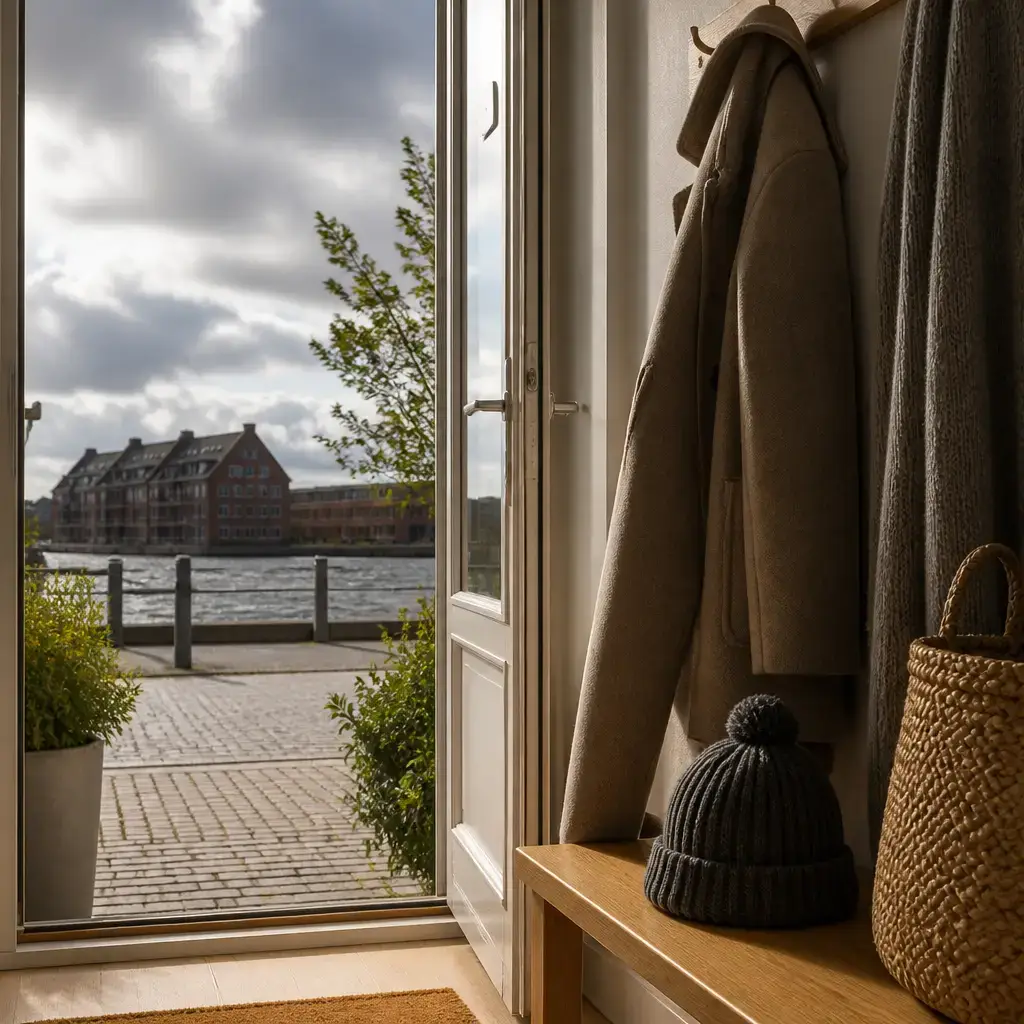
Det
“Det” means “it” in “Det ser overskyet ud udenfor” and serves as the subject of the weather statement. A common reuse pattern is “Det er ...” for describing weather or a state.
ser
“ser” means “looks” or “appears” in “Det ser overskyet ud udenfor”. Together with “ud”, it describes how something appears; reuse the pattern “Det ser ... ud” with a description in the middle.
overskyet
“overskyet” means “cloudy” or “overcast” and describes the weather in “Det ser overskyet ud udenfor”. Use it when describing a sky or weather with many clouds.
ud
“ud” completes “ser overskyet ud” in “Det ser overskyet ud udenfor” and helps express how something looks. Reuse the construction “ser ... ud” when giving an appearance or impression.
udenfor
“udenfor” means “outside” in “Det ser overskyet ud udenfor” and locates the weather outdoors. Use it when saying that something is or happens outside.
Tag
“Tag” means “take” in the instruction “Tag en varm frakke med”. It is used here to tell someone to take something along; reuse “Tag ... med” for a similar instruction.
en
“en” means “a” before “varm frakke” in “Tag en varm frakke med”. Reuse “en” before a noun when referring to one non-specific item.
varm
“varm” means “warm” and describes the coat in “Tag en varm frakke med”. It can be placed before an item to describe its temperature or warmth.
frakke
“frakke” means “coat” and is the item being taken in “Tag en varm frakke med”. The expression “Tag en varm frakke med” is useful when advising someone to bring a coat.
med
“med” means “with” in the construction “Tag en varm frakke med”, where it shows that the coat should be taken along. Reuse “Tag ... med” when telling someone to bring an item.
Føles
“Føles” means “feels” in the question “Føles vinden kold?”. It asks about a sensation, here the sensation caused by the wind; reuse “Føles ...?” when asking how something feels.
vinden
“vinden” means “the wind” in “Føles vinden kold?” and is what is being described as feeling cold. Use it when talking about the wind in a weather-related question or statement.
kold
“kold” means “cold” in “Føles vinden kold?” and describes how the wind feels. It can follow “Føles” when asking whether something feels cold.
er
“er” means “is” in “Det er koldt og blæsende i dag” and links the subject with the weather description. Reuse “Det er ...” to state a current weather condition or state.
koldt
“koldt” means “cold” in “Det er koldt og blæsende i dag” and describes the weather. It appears after “Det er” as part of the statement about today’s conditions.
og
“og” means “and” and connects the two weather descriptions in “Det er koldt og blæsende i dag”. Use it to join two related descriptions or pieces of information.
blæsende
“blæsende” means “windy” in “Det er koldt og blæsende i dag”. It adds wind as a second description of the weather; use it when the wind is noticeable.
i
“i” is part of the time expression “i dag” in “Det er koldt og blæsende i dag”. Together with a time expression, it helps say when something is true or happens.
dag
“dag” means “day” in the expression “i dag”, which means “today” in “Det er koldt og blæsende i dag”. Reuse “i dag” when talking about the current day.
Jeg
“Jeg” means “I” and is the speaker in “Jeg har også brug for min hat”. It commonly comes before the verb when the speaker describes their own need or action.
har
“har” contributes to the expression “har brug for”, meaning “needs” in “Jeg har også brug for min hat”. Reuse “har brug for + an item or thing” to say that you need something.
også
“også” means “also” or “too” in “Jeg har også brug for min hat” and adds the hat to something already being discussed or needed. It commonly appears after the subject and verb in a sentence such as “Jeg har også ...”.
brug
“brug” is part of “har brug for”, the full construction meaning “need” in “Jeg har også brug for min hat”. Reuse the complete pattern “har brug for + an item”, rather than treating “brug” alone as the meaning “need” here.
for
“for” is part of “har brug for”, which expresses need in “Jeg har også brug for min hat”. Keep “for” in this construction before the thing that is needed.
min
“min” means “my” before “hat” in “Jeg har også brug for min hat”. Reuse “min + item” when identifying something that belongs to or is associated with the speaker.
hat
“hat” means “hat” in “Jeg har også brug for min hat” and is the item the speaker needs. It is also the item referred to later by “Den” and “den”.
Den
“Den” means “it” in “Den er ved døren” and refers to the hat. The same pronoun appears as “den” in “Jeg tager den på”; its capitalization changes with its position in the sentence.
ved
“ved” means “by” or “at” in “Den er ved døren” and gives the hat’s location. Reuse “er ved + place or object” when saying that something is by or near something.
døren
“døren” means “the door” in “Den er ved døren” and identifies the location of the hat. Use it after a location expression such as “ved” when referring to the door.
tager
“tager” means “take” in general, but in “Jeg tager den på” it means “put it on” because it is used with “på” and an item of clothing. Reuse the construction “tager ... på” for putting clothing on.
på
“på” means “on” in the construction “Jeg tager den på” and completes the meaning “put it on”. Keep it after the item in the reusable pattern “tager ... på”.
før
“før” means “before” and introduces the earlier action in “før jeg går”. Reuse “før + clause” when one action happens before another.
går
“går” means “goes” or “leaves” in “før jeg går”; in this context, the speaker means leaving for the walk. Reuse it in a time clause such as “før jeg går” when describing what happens before leaving.
Så
“Så” means “then” in “Så er du klar til gåturen” and presents the result of getting dressed and prepared. Use it to connect an earlier action with its consequence.
du
“du” means “you” in “Så er du klar til gåturen”. It identifies the person who will be ready; use it when addressing one person directly.
klar
“klar” means “ready” in “Så er du klar til gåturen”. Reuse the pattern “er klar til + activity or noun” to say what someone is ready for.
til
“til” means “for” in “klar til gåturen” and marks what the person is ready for. Reuse “klar til + activity or noun” after “klar”.
gåturen
“gåturen” means “the walk” in “Så er du klar til gåturen” and refers to the walk the speakers are preparing for. The expression “klar til gåturen” means being ready for that walk.