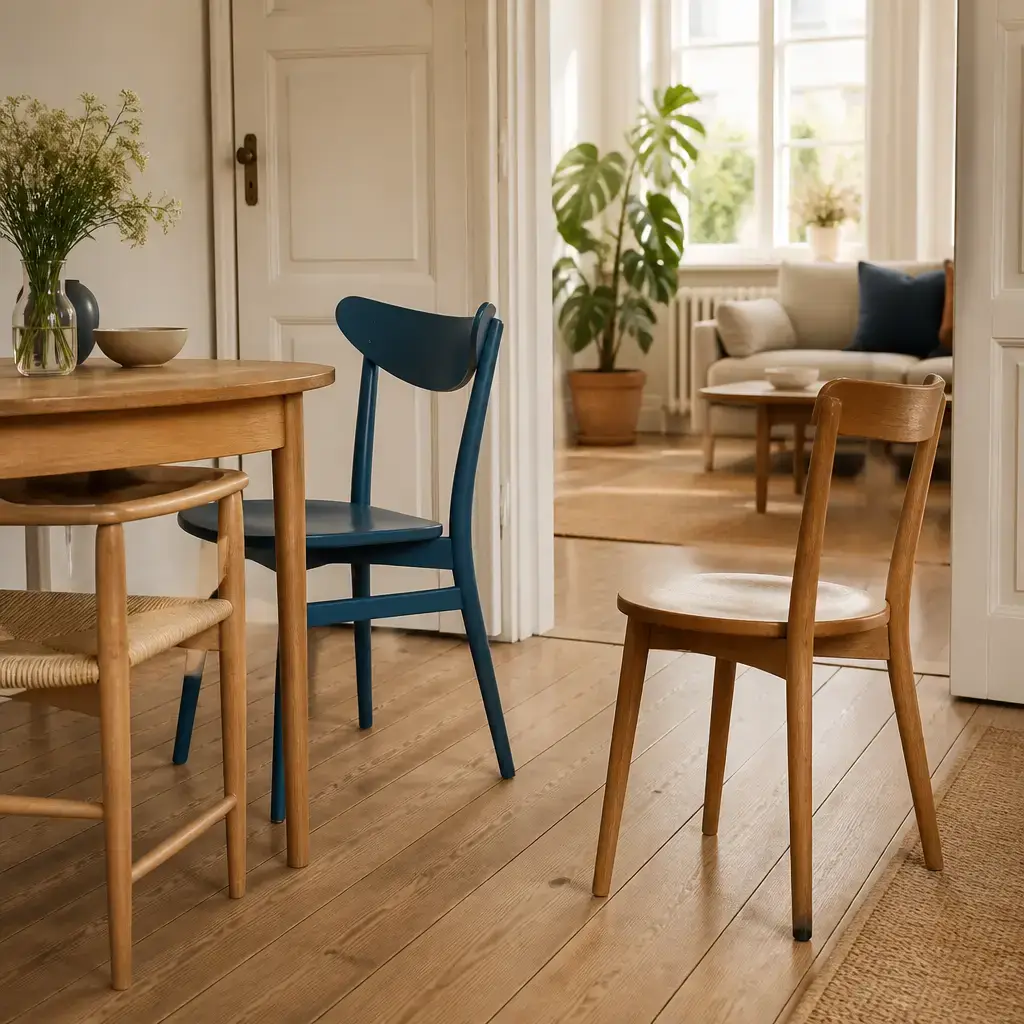
Denne
In “Denne stol virker løs.”, “Denne” means “this” and points to the chair being discussed. It is used directly before “stol” in this noun phrase.
stol
“Stol” means “chair” in “Denne stol virker løs.” It can be used for a seat that someone may sit on, as in the new example “Jeg bruger en stol.”
virker
In “virker løs”, “virker” means “seems” or “feels” based on how the chair behaves. It is commonly used before an adjective to describe an impression, as in the new example “Det virker mærkeligt.”
løs
“Løs” means “loose” in “Denne stol virker løs.” It describes the chair as not firmly secured; the new example “En løs skrue” uses the same adjective with an object that is not tight.
Hvilken
“Hvilken” means “which” in the question “Hvilken del bevæger sig?” It is placed before the thing being selected, as in the reusable pattern “Hvilken ___?”
del
“Del” means “part” in “Hvilken del bevæger sig?” Here it asks which part of the chair is moving. A reusable pattern is “en del af noget” for “a part of something.”
bevæger
In “bevæger sig”, “bevæger” describes moving, and “sig” completes the expression for the part moving. The reusable pattern is “bevæger sig” when a person or thing moves itself.
sig
In “bevæger sig”, “sig” refers back to the thing that is moving and helps express movement by that subject. A new example is “Han bevæger sig langsomt.”
Det
In “Det bageste ben”, “Det” is part of the phrase referring to the specific back leg. It appears together with “bageste” and “ben” rather than identifying a person.
bageste
“Bageste” means “back” or “rear” in “Det bageste ben.” It identifies the leg at the back of the chair and is placed before “ben” here.
ben
“Ben” means “leg” in “Det bageste ben.” In this dialogue it refers to one supporting part of the chair; the new example “Et bordben” uses the same word for a table leg.
vipper
“Vipper” means “wobbles” or “tilts” in “vipper lidt.” It describes a small unstable movement, and a reusable pattern is “noget vipper lidt.”
lidt
“Lidt” means “a little” in “vipper lidt” and shows that the movement is small. It is commonly placed after the verb to limit the amount, as in the new example “Vent lidt.”
Vi
“Vi” means “we” and is the subject of “Vi bør reparere den.” It refers to the speakers together and can be used before a verb when describing a shared action.
bør
“Bør” expresses that something is advisable or should be done in “Vi bør reparere den.” It is followed here by “reparere”; the reusable pattern is “Vi bør + action.”
reparere
“Reparere” means “repair” or “fix” in “bør reparere den.” It is used for making a damaged or loose object usable again, with the object placed after it, as in “reparere noget.”
den
“Den” means “it” in “reparere den” and refers back to the loose chair. It is used as the object after “reparere” here, so the sentence says to repair the chair.
før
“Før” means “before” in “før nogen bruger den.” It introduces the action that must happen first, and the reusable pattern is “før + action.”
nogen
“Nogen” means “anyone” in “før nogen bruger den.” It refers to an unspecified person who might use the chair, as in the reusable pattern “før nogen + action.”
bruger
“Bruger” means “uses” in “nogen bruger den.” It describes a person making use of the chair, and the reusable pattern is “bruger noget” with the object after the verb.
Skal
At the start of “Skal jeg sidde et andet sted?”, “Skal” asks whether the speaker should or is expected to do something. It is followed by the subject “jeg” and the action “sidde.”
jeg
“Jeg” means “I” in “Skal jeg sidde et andet sted?” and “Jeg flytter denne stol væk.” It identifies the speaker as the person asking or acting.
sidde
“Sidde” means “sit” in “Skal jeg sidde et andet sted?” It follows “Skal” and is used with a place expression, here “et andet sted.”
et
In “et andet sted”, “et” introduces the singular noun phrase meaning “a different place.” It comes before “andet sted” in this reusable expression for being somewhere else.
andet
“Andet” means “another” or “different” in “et andet sted.” It modifies “sted” and marks a place different from the current one; the same pattern is “et andet + noun.”
sted
“Sted” means “place” in “et andet sted,” which means “somewhere else” or “in another place.” It is used after a description such as “et andet.”
Brug
“Brug” is a direct instruction meaning “use” in “Brug en anden stol.” It is followed by the thing to use, and the reusable pattern is “Brug + object.”
en
In “en anden stol”, “en” means “a” and introduces the chair being recommended. It comes before “anden stol” in this noun phrase.
anden
“Anden” means “another” in “en anden stol.” It tells the listener to choose a chair different from the loose one, and it is placed before “stol.”
indtil videre
“Indtil videre” means “for now” in “Brug en anden stol indtil videre.” The whole expression is used temporarily: “indtil” contributes “until” and “videre” contributes the idea of continuing onward; a new example is “Vi venter indtil videre.”
flytter
“Flytter” expresses moving something in “Jeg flytter denne stol væk.” It is used with the object “denne stol” and can be followed by “væk” to show movement away.
væk
“Væk” means “away” in “flytter denne stol væk.” It shows that the chair is moved away from its current position; a new example is “Gå væk.”
Stil
“Stil” is a direct instruction meaning “put” or “place” in “Stil den op ad væggen.” It is followed by the object being placed and then its destination.
op
In “op ad væggen”, “op” helps express placing something into position against the wall. The reusable pattern is “Stil noget op ad noget” for placing one thing against another.
ad
In “op ad væggen”, “ad” means “against” and connects the placed chair with the wall. A new example is “Stolen står op ad væggen.”
væggen
“Væggen” means “the wall” in “op ad væggen” and refers to the specific wall where the chair should go. The citation form is “væg”; “væggen” is the form used here for that wall.
så
“Så” means “so that” in “så gangen er fri.” It introduces the intended result of placing the chair by the wall, and the reusable pattern is “så + result.”
gangen
“Gangen” means “the walkway” or “the corridor” in “så gangen er fri.” It refers to the passage people use; the citation form is “gang”, while “gangen” is the form used here for the specific passage.
er
“Er” means “is” in “gangen er fri.” It links the walkway with its condition, “fri,” and the reusable pattern is “noget er + description.”
fri
“Fri” means “clear” or “unobstructed” in “gangen er fri.” Here it describes a walkway with nothing blocking it; a new example is “Hold gangen fri.”