Jeg
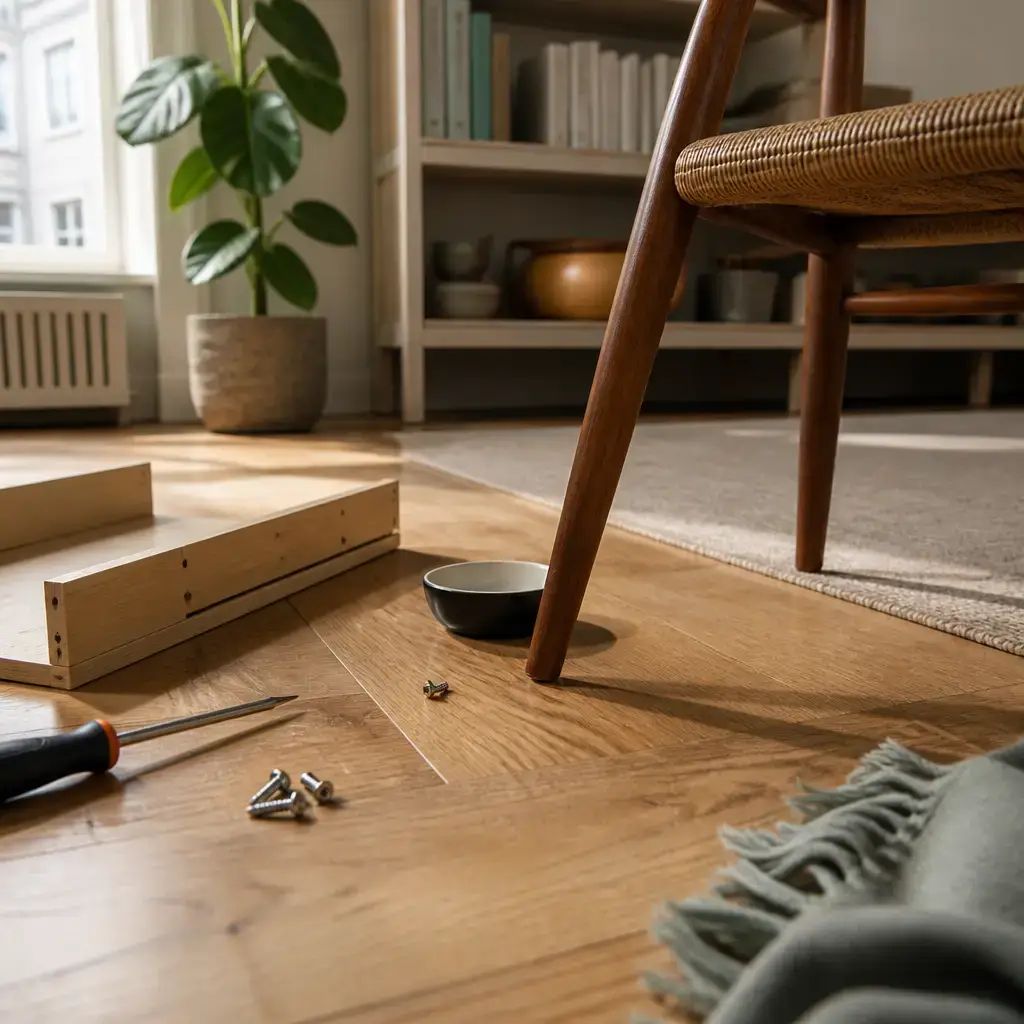
“Jeg” means “I” here: the speaker says “Jeg har mistet en lille skrue.” It is used as the subject before the verb phrase, as in “Jeg har …” when talking about something the speaker has done or experienced.
har
“har” helps form the expression “Jeg har mistet”, meaning that the speaker has lost something. It is the form of “have” used with “mistet” in this dialogue. A reusable pattern is “Jeg har + participle” when reporting a completed action or experience.
mistet
“mistet” means “lost” in “Jeg har mistet en lille skrue.” It is the form used after “har” to say that the screw is no longer where the speaker had it; the citation form is “miste”. Use “har mistet” with the thing that was lost, such as “Jeg har mistet …”.
en
“en” means “a” in “en lille skrue” and introduces one nonspecific screw. It comes directly before the noun phrase “lille skrue”. Use “en” before a common-gender singular noun when referring to one unspecified item.
lille
“lille” means “small” in “en lille skrue”, describing the screw’s size. This exact form is used with the singular noun phrase “en lille skrue”. You can reuse “en lille + noun” to describe one small object.
skrue
“skrue” means “screw”, the small object that was lost and found near the chair. It appears after “en lille” in “en lille skrue”. Use it after an article or description when talking about a screw, for example the reusable phrase “en skrue”.
Tjek
“Tjek” is a direct instruction meaning “check” in “Tjek under stolen.” It tells the other person to look in a particular place; the citation form is “tjekke”. Use the imperative “Tjek” before a place or object to ask someone to check it.
under
“under” means “under” in “Tjek under stolen”, identifying the area below the chair. It is followed here by “stolen”, the place to check. Use “under + noun” to describe something located below another thing.
stolen
“stolen” means “the chair” in “under stolen.” It is the definite form of “stol”, used because the conversation refers to a particular chair in the room. Use “under stolen” when directing someone to look under that chair.
Den
“Den” means “it” here and refers back to “en lille skrue” in “Den lå ved stolebenet.” The same pronoun appears as lowercase “den” later in the dialogue. Use “den” to refer back to a known noun of this type, especially when it is the subject or object of the sentence.
lå
“lå” means “was lying” in “Den lå ved stolebenet”, describing where the screw was located. It is the past form of “ligge”. Use “lå” with a place expression when describing where something was lying.
ved
“ved” means “by” or “near” in “ved stolebenet”, showing the screw’s position close to the chair leg. It comes before the location noun “stolebenet”. Use “ved + noun” to say that something is next to or near a place or object.
stolebenet
“stolebenet” means “the chair leg” in “ved stolebenet.” It is a definite compound referring to the leg of the chair, not to the whole chair. Use it after a location word such as “ved” when identifying the chair leg as the place where something is found.
Saml
“Saml” is an instruction meaning “pick up” or “collect” in “Saml den forsigtigt op.” It tells the listener to gather the screw from where it is; the citation form is “samle”. In this dialogue, “Saml … op” is the reusable instruction for picking up an object.
forsigtigt
“forsigtigt” means “carefully” in “Saml den forsigtigt op.” It describes how the listener should pick up the tiny screw. Use it with an action to show that the action should be done gently or with care.
op
“op” is the particle in “Saml den forsigtigt op” that completes the meaning “pick it up.” It adds the upward or gathering direction to “Saml”. Keep “op” with the verb when reusing this instruction for picking up an object.
er
“er” means “is” in “Den er meget lille”, describing the screw’s present size. It is the present form of “være”. Use “er” before an adjective when describing what something is like, as in “Den er …”.
meget
“meget” means “very” in “meget lille” and strengthens the description of the screw’s size. It comes before the adjective “lille”. Use “meget + adjective” to make a description stronger.
Hold
“Hold” is an instruction meaning “hold” in “Hold den i håndfladen.” It tells the listener to keep the screw in a particular place; the citation form is “holde”. Use “Hold + object + place” when asking someone to keep something somewhere.
i
“i” means “in” in “i håndfladen”, identifying the place where the screw should be held. It comes before “håndfladen”. Use “i + noun” to describe an object’s position inside or within a place.
håndfladen
“håndfladen” means “the palm of the hand” in “Hold den i håndfladen.” It names the specific part of the hand where the screw should be kept so it will not roll away. Use “i håndfladen” when describing something held in the palm.
så
The lowercase “så” in “så den ikke ruller væk igen” means “so that” and introduces the intended result of holding the screw in the palm. The capitalized form “Så” in “Så kan vi …” means “then”. Use “så + clause” to connect an action with its result or purpose.
ikke
“ikke” means “not” in “den ikke ruller væk igen”, making the clause negative. It appears before the verb “ruller” in this sentence. Use “ikke” to say that an action does not happen.
ruller
“ruller” means “rolls” in “den ikke ruller væk igen”, referring to the screw moving by rolling. It is the present form of “rulle”. Use “ruller” with a moving object and a direction expression such as “ruller væk”.
væk
“væk” means “away” in “ruller væk”, showing movement away from the current place. It works with “ruller” to describe the screw rolling away. Use “verb + væk” when an object moves away.
igen
“igen” means “again” in “ruller væk igen.” It says that rolling away would happen another time, after it has already happened once. Use it after an action to show that the action is repeated.
Vi
“Vi” means “we” in “Vi skal bruge den”, referring to the two people who need the screw. It is the subject before the verb phrase. Use “Vi” when speaking about yourself together with one or more other people.
skal
“skal” helps express necessity in “Vi skal bruge den”, meaning that the two speakers need the screw. It is used with “bruge” in this context. A reusable pattern is “Vi skal + verb” when saying what the group needs or is expected to do.
bruge
“bruge” means “use”, but together with “skal” in “Vi skal bruge den” the phrase means “we need it.” It is followed by the object “den”, referring to the screw. Use “bruge + object” when saying what is used or needed.
til
“til” means “for” in “til at reparere hylden” and introduces the purpose of using the screw. It is followed here by “at reparere”. Use “til at + verb” to explain what something is for.
at
“at” marks the infinitive in “at reparere”, following “til” in the purpose expression “til at reparere hylden.” It connects the purpose marker “til” with the verb “reparere”. Use “at + verb” in an infinitive expression such as “til at …”.
reparere
“reparere” means “repair” or “fix” in “til at reparere hylden.” It describes the work the speakers want to do to the shelf. Use “reparere + object” to say what needs to be repaired.
hylden
“hylden” means “the shelf” in “reparere hylden.” It is the definite form of “hylde”, referring to a particular shelf that the speakers are fixing. Use it after a repair verb when the specific shelf is already known.
kan
“kan” means “can” in “Så kan vi blive færdige”, expressing that finishing is possible at that point. It is followed by “vi” and the infinitive “blive”. Use “kan + verb” to talk about ability or possibility.
blive
“blive” means “become” or “get” in “blive færdige”, together meaning “get finished” or “be done.” It follows “kan” in “kan vi blive færdige”. Use “blive + adjective” when describing a change into a state.
færdige
“færdige” means “finished” or “done” in “blive færdige med at reparere den.” It describes the two speakers as completing the repair, and its plural form matches “vi”. Use “blive færdige med + activity” to say that people finish an activity.
med
“med” means “with” in “blive færdige med at reparere den.” Here it introduces the activity that the speakers will finish, namely repairing the shelf. Use “færdig med + activity” to say that someone has finished doing something.