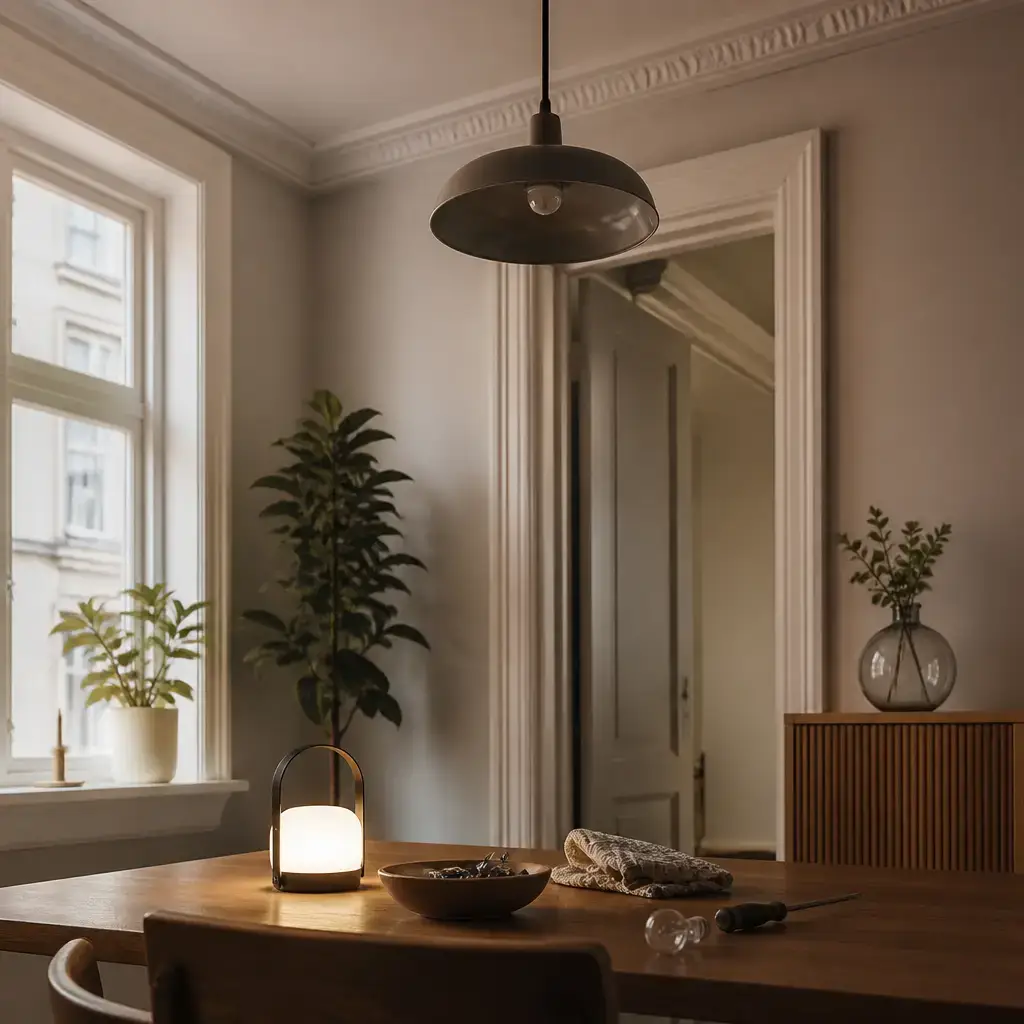
Lyset
“Lyset” means “the light” in the first sentence. It is the definite form of “lys”, used here for the specific light in the room. Use this form when referring to a particular light that both people know.
virker
“Virker” means “works” or “functions” in “Lyset virker ikke.” It is the form used to describe whether the light is functioning. The same pattern can describe an appliance or device that functions or does not function.
ikke
“Ikke” means “not” and makes the statement negative in “Lyset virker ikke.” It comes after “virker” in this sentence. Use it after the relevant verb when saying that something does not happen or function.
Har
“Har” is the auxiliary at the beginning of the question “Har du tjekket kontakten?” It helps ask whether an action has been completed together with “tjekket”. This question pattern is useful for asking whether someone has checked, done, or seen something.
du
“Du” means “you” in “Har du tjekket kontakten?” It identifies the person being asked about the checking. Use it for one person whom you are addressing directly.
tjekket
“Tjekket” means “checked” in “Har du tjekket kontakten?” It appears with “Har” to refer to a completed check. Use “Har du tjekket” followed by the thing being checked when asking about a completed inspection.
kontakten
“Kontakten” means “the switch” in the question. It is the definite form of “kontakt”, referring to the specific switch for the light. Use this form when the particular switch is already clear from the situation.
Jeg
“Jeg” means “I” and identifies the speaker in “Jeg tjekkede den.” It is used when the speaker reports their own action. Use it as the subject when talking about something you did or experienced.
tjekkede
“Tjekkede” means “checked” in “Jeg tjekkede den.” It reports the speaker’s completed check. Use it after “Jeg” when saying that you checked a particular thing.
den
“Den” means “it” in “Jeg tjekkede den” and refers back to the light or switch being discussed. It replaces a previously identified common-gender noun. Use it when the thing you mean is already clear from the conversation.
og
“Og” means “and” and connects “Jeg tjekkede den” with the following result. It links two related parts of the speaker’s report. Use it to join actions, statements, or results.
stadig
“Stadig” means “still” in “den virker stadig ikke.” It shows that the light remains nonfunctional after the check. Use it when a situation continues even after an action or change was expected to help.
Måske
“Måske” means “maybe” and introduces a possible explanation in “Måske er pæren gammel.” It signals that the speaker is making a suggestion rather than stating a certainty. Use it before a possible reason, answer, or explanation.
er
“Er” means “is” in “pæren er gammel.” It links the bulb with the description “gammel”. This is the form used for a present description or state.
pæren
“Pæren” means “the bulb” in “Måske er pæren gammel.” It is the definite form of “pære”, referring to the particular bulb in the light. Use this form when the bulb is specific and known in the situation.
gammel
“Gammel” means “old” in “pæren er gammel.” It describes the condition or age of the specific bulb. Use it after “er” when describing something as old.
Rummet
“Rummet” means “the room” in “Rummet er for mørkt nu.” It is the definite form of “rum”, referring to the particular room where the speakers are. Use this form when talking about a specific room known from the context.
for
“For” means “too” in “for mørkt”. It shows that the room is darker than is acceptable or useful in this situation. Use it before an adjective when describing an excessive degree.
mørkt
“Mørkt” means “dark” in “Rummet er for mørkt nu.” It describes the room’s current lighting condition. Use it with “er” to describe a room or other place that has little light.
nu
“Nu” means “now” in “Rummet er for mørkt nu.” It places the described condition at the present time. Use it when referring to what is happening at this moment.
kan
“Kan” means “can” in “Jeg kan hente en lille lampe.” It expresses the speaker’s ability or willingness to fetch a lamp. It is followed by the action form “hente”; this pattern is useful for saying what someone can do.
hente
“Hente” means “bring” or “fetch” in “Jeg kan hente en lille lampe.” It names the action the speaker can perform. After “kan”, use this action form followed by the thing being fetched.
en
“En” means “a” in “en lille lampe.” It introduces one nonspecific common-gender noun. Use it before a singular noun when mentioning one item without identifying a particular one.
lille
“Lille” means “small” in “en lille lampe.” It describes the size of the lamp and comes before the noun. Use it before a singular noun when giving this kind of size description.
lampe
“Lampe” means “lamp” in “en lille lampe.” It is the indefinite form used after “en” for one lamp that has not yet been specified. Use it after an article or adjective when introducing a lamp as a new item.
Vi
“Vi” means “we” in “Vi bør skifte pæren senere.” It refers to the speaker and at least one other person as the group responsible for the action. Use it as the subject when describing a shared plan or recommendation.
bør
“Bør” means “should” in “Vi bør skifte pæren senere.” It expresses a recommendation or appropriate action. It is followed by the action form “skifte”; use this pattern when suggesting what someone ought to do.
skifte
“Skifte” means “change” or “replace” in “Vi bør skifte pæren senere.” It names the planned action of replacing the bulb. After “bør”, use this action form followed by the object being changed.
senere
“Senere” means “later” in “Vi bør skifte pæren senere.” It places the planned replacement at a time after now. Use it when an action is intended for a later time without specifying exactly when.
Brug
“Brug” means “use” in the instruction “Brug lampen”. It tells the listener to use the lamp as a temporary light source. Use this form at the beginning of a direct instruction addressed to one person.
lampen
“Lampen” means “the lamp” in “Brug lampen”. It is the definite form of “lampe”, referring to the particular small lamp that was just mentioned. Use this form when the listener knows which lamp to use.
indtil
“Indtil” means “until” and introduces the point up to which the lamp should be used. In “indtil vi skifter pæren”, it connects the temporary action with the later bulb replacement. Use it before the event that ends an ongoing action.
skifter
“Skifter” means “replace” or “change” in “vi skifter pæren.” It describes the later action that ends the period of using the lamp. Use it with the thing being replaced, as in “skifter pæren” in this dialogue.