Er
“Er” means “is/are” in the opening question “Er der”, which asks whether something is available. It is a form of “være”; use “Er der” when asking whether something exists or is present.
der
“der” marks the existence frame in “Er der en oplader...?”, rather than naming a physical object itself. Reuse “Er der” to ask whether something is available.
en
“en” means “a” in “en oplader”, introducing one charger that has not yet been specified. Reuse “en” before a singular item when introducing it.
oplader
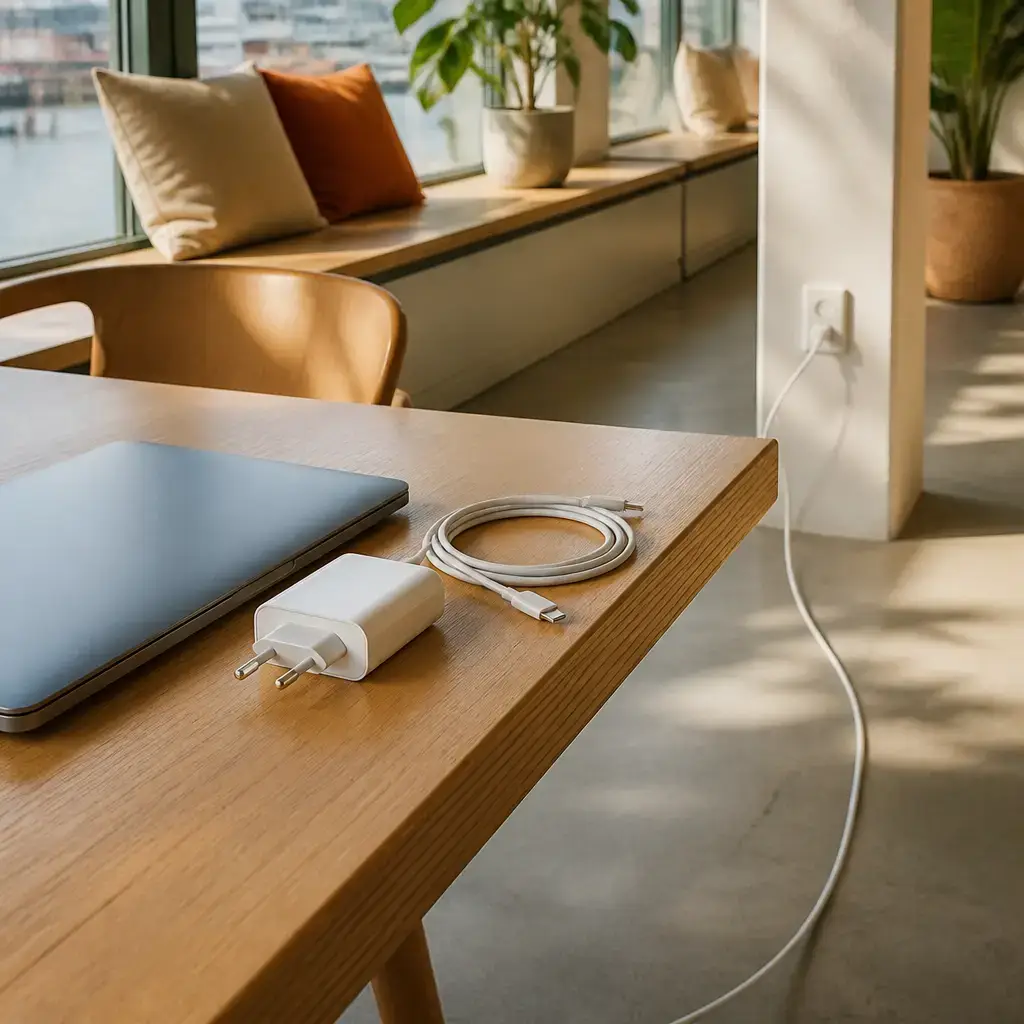
“oplader” means “charger”; it is the item the speaker wants to borrow in “en oplader, jeg kan låne”. Use it when asking about or referring to a charger.
jeg
“jeg” means “I” and refers to the speaker. In “jeg kan låne”, it is the person who can borrow the item; reuse “jeg” as the subject when talking about yourself.
kan
“kan” means “can” or “be able to”. In “jeg kan låne” it expresses ability or possibility, and in “Kan kablet nå...” it asks about possibility. It is a form of “kunne”; use “kan” before an infinitive such as “låne”.
låne
“låne” means “borrow” here, as in “jeg kan låne”. It is used after “kan” to describe receiving an item temporarily; reuse it after “kan” when talking about borrowing something.
Brug
“Brug” means “use” as a direct instruction in “Brug den...”. It is the imperative form related to “bruge”; use “Brug” before the item someone is instructed to use.
den
“den” means “the one” or “it” and refers back to an item already identified, such as the charger or adapter in “Brug den”. Reuse “den” when pointing back to a known item instead of repeating its name.
ved siden af
“ved siden af” means “beside” or “next to” in “den ved siden af min bærbare computer”. “ved”, “siden”, and “af” work together as one location phrase; reuse the whole phrase before a noun phrase to describe something next to it.
min
“min” means “my” and marks the laptop as belonging to the speaker in “min bærbare computer”. Reuse “min” before an item you identify as yours.
bærbare
“bærbare” describes the computer as portable, so “bærbare computer” means “laptop”. It is the form of “bærbar” used in this noun phrase; reuse “bærbare computer” when referring to a laptop.
computer
“computer” means “computer” and is the main noun in “min bærbare computer”. Together with “bærbare”, it refers to a laptop; reuse the phrase when identifying that device.
Har
“Har” means “have” in the question “Har jeg også brug for denne adapter?”. It begins a question about whether the speaker needs the adapter, while the need itself is expressed by “brug for”. It is a form of “have”; use “Har” at the beginning of a yes-or-no question.
også
“også” means “also” or “too” and adds the adapter to the charger as an additional item in “Har jeg også brug for denne adapter?”. Reuse “også” when adding one more item, fact, or action.
brug for
“brug for” means “need” in “Har jeg også brug for denne adapter?”. “brug” and “for” form a fixed construction here, so the phrase should be learned as a unit rather than read literally. Reuse it when asking or stating whether someone needs a named item.
denne
“denne” means “this” and points to the specific adapter in “denne adapter”. Reuse “denne” directly with an item that is being identified or pointed out.
adapter
“adapter” means “adapter” and is the specific extra item mentioned in “denne adapter”. Use it when referring to an adapter in a question about whether it is needed.
hvis
“hvis” means “if” and introduces the condition in “hvis dit stik ikke passer”. Reuse “hvis” before a condition that determines what happens or what someone should do.
dit
“dit” means “your” and marks the plug as belonging to or being associated with the person addressed in “dit stik”. Reuse “dit” before an item connected with the person you are speaking to.
stik
“stik” means “plug” in “dit stik ikke passer”. It is the plug whose fit is being checked; reuse it when discussing the plug involved in a connection.
ikke
“ikke” means “not” and negates “passer” in “ikke passer”. Reuse “ikke” before the verb being negated.
passer
“passer” means “fits” here, referring to whether the plug fits the connection. It is the dialogue form related to “passe”; use it when checking whether an item fits a place or connection.
kablet
“kablet” means “the cable” and identifies the specific cable in “Kan kablet nå hen til bordet?”. It is the definite dialogue form related to “kabel”; reuse it when referring to that particular cable.
nå
“nå” means “reach” in “nå hen til bordet”, describing whether the cable extends far enough to get to the table. Use it after “kan” when asking or stating whether something can reach a destination.
hen
“hen” contributes the direction “over” or “toward” in “nå hen til bordet”. Together with “til”, it helps show the destination; reuse “hen til” when describing direction toward a place.
til
“til” means “to” or “toward” and marks the table as the destination in “hen til bordet”. Reuse “til” before a destination.
bordet
“bordet” means “the table” and is the destination in “hen til bordet”. It is the definite dialogue form related to “bord”; reuse it when referring to the particular table.
Det
“Det” means “it” and refers back to the cable in “Det kan nå”. Reuse “Det” as the subject when referring to a thing already under discussion.
du
“du” means “you” and refers to the person being addressed. In “du sidder...” it is the person whose position determines whether the cable can reach; reuse “du” as the subject when speaking directly to one person.
sidder
“sidder” means “sit” or “are sitting” in “hvis du sidder tæt på væggen”. It is the dialogue form related to “sidde”; reuse it with “du” when describing where someone is sitting.
tæt
“tæt” means “close” or “near” in “tæt på væggen”. It describes the short distance between the person and the wall; reuse “tæt på” before a place or person to describe proximity.
på
“på” means “near” in the phrase “tæt på væggen”, not “on” in this context. It completes the proximity phrase; reuse “tæt på” when saying that something or someone is close to a place or person.
væggen
“væggen” means “the wall” and is the specific reference point in “tæt på væggen”. It is the definite dialogue form related to “væg”; reuse it when referring to that particular wall.
lægger
“lægger” means “put” or “place” in “Jeg lægger det hele tilbage”. It describes placing the borrowed items back; it is the dialogue form related to “lægge”. Reuse it with an object and a location or direction.
hele
In “det hele”, “hele” contributes the meaning “whole” or “all of it”, so the exact phrase means “everything”. It is related to “hel”; reuse “det hele” for all the relevant items considered together.
tilbage
“tilbage” means “back” in “lægger det hele tilbage”, showing that the items are returned to their previous place. Reuse it after a placement or movement expression when something is being returned.
når
“når” means “when” and introduces the time clause “når jeg er færdig”. Reuse “når” before a clause that says when an action will happen.
færdig
“færdig” means “finished” or “done” in “jeg er færdig”. It describes the speaker’s task as completed; reuse “er færdig” when saying that you have finished.
Læg
“Læg” means “put” or “leave” as a direct instruction in “Læg det på mit skrivebord...”. It is the imperative form related to “lægge”; reuse it before an object and its location.
mit
“mit” means “my” and marks the desk as belonging to or being associated with the speaker in “mit skrivebord”. Reuse “mit” before an item you identify as yours.
skrivebord
“skrivebord” means “desk” in “på mit skrivebord”. It names the place where the item should be left; reuse it when referring to a desk.
så
“så” means “so that” in “så jeg kan finde det”. It introduces the intended result or purpose of putting the item on the desk; reuse “så” before a clause expressing what this makes possible.
finde
“finde” means “find” in “jeg kan finde det”. It is used after “kan” to describe being able to locate the item; reuse it after “kan” when talking about finding something.