About This Lesson
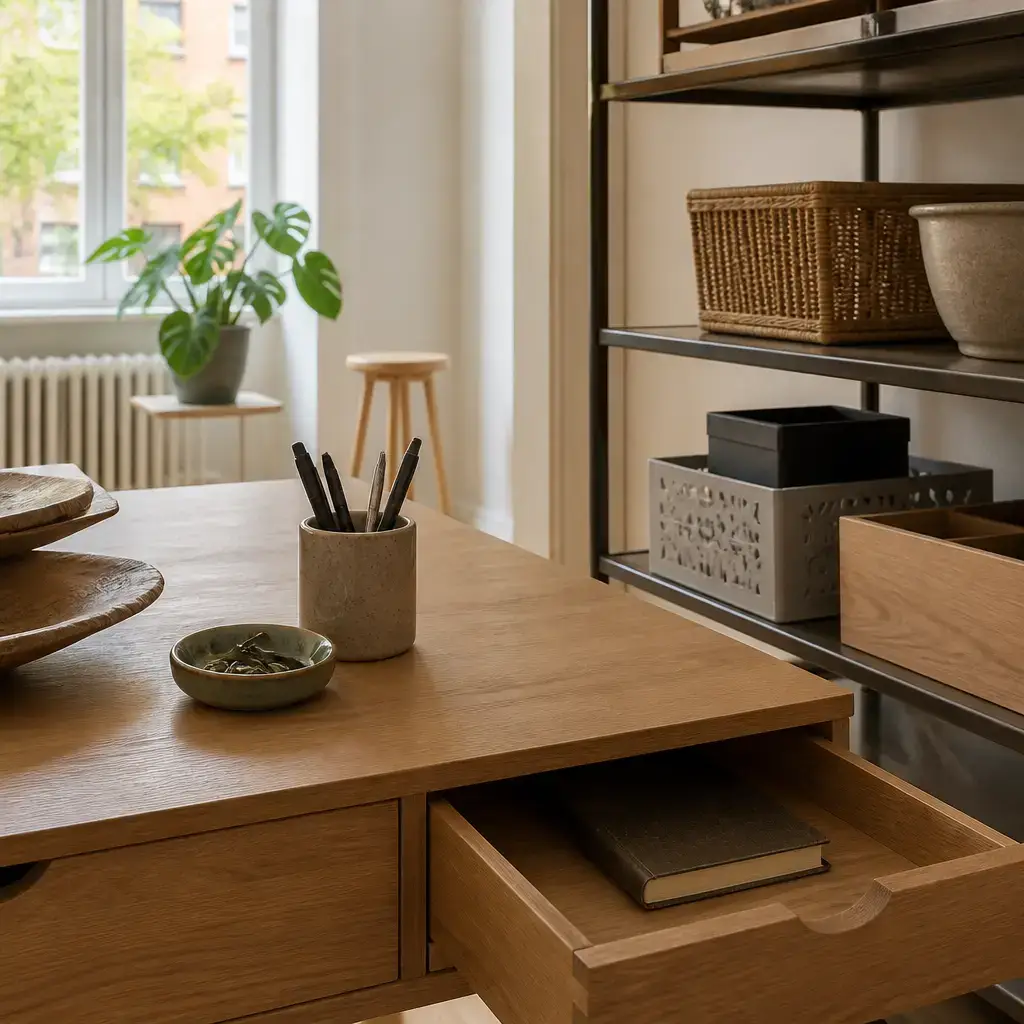
Use Borrowing a pen and notebook to practice Danish conversation, pronunciation, vocabulary, grammar, and quizzes.
Dialogue
A
Må jeg bruge en kuglepen?
moh yai BROO-uh uhn KOO-luh-payN? Can I use a pen?
B
Tag den sorte fra koppen.
TAY den SOHR-duh frah KOH-buhn. Take the black one from the cup.
A
Jeg skal også bruge en notesbog.
yai skel OH-suh BROO-uh uhn NOH-duhs-boh. I need a notebook too.
B
Der er en gammel notesbog i skuffen.
dair air uhn GAY-muhl NOH-duhs-boh ee SKOO-fuhn. There is an old one in the drawer.
A
Jeg skal bare skrive en kort liste.
yai skel BAH-uh SKREE-wuh uhn KORT LEHS-duh. I only need to write a short list.
B
Tag begge med tilbage, når du er færdig.
TAY BEH-guh mayd tih-LAY-wuh, nohr doo air FAIR-dee. Bring both back when you finish.
A
Jeg lægger dem på dit skrivebord.
yai LEH-guh dem poh dit SKREE-vuh-bohrd. I will put them on your desk.
B
Så er de nemme at finde.
soh air dee NEH-muh uh FEN-uh. That makes them easy to find.Word by Word
Må
“Må” asks for permission here: “Må jeg bruge en kuglepen?” means “May I use a ballpoint pen?” It is useful in polite permission questions such as “Må jeg ...?” (new example).
jeg
“jeg” means “I” in “Må jeg bruge en kuglepen?” and “Jeg skal også bruge en notesbog.” It is used as the subject before the verb in statements and questions.
bruge
“bruge” means “use” in “Må jeg bruge en kuglepen?” It follows “Må jeg” in a permission question; a reusable pattern is “Må jeg bruge ...?” (new example).
en
“en” introduces one non-specific item in “en kuglepen” and “en notesbog,” meaning “a” or “an.” It comes directly before the noun it introduces.
kuglepen
“kuglepen” means “ballpoint pen” in “en kuglepen.” It is useful when asking to use or borrow a specific writing tool.
Tag
“Tag” means “take” in the instruction “Tag den sorte fra koppen.” It is the command form used to tell someone to take an item; “Tag ...” is a reusable instruction pattern (new example).
den
“den” means “the” in “den sorte,” identifying the particular item being selected. Together with “den sorte,” it refers to the black pen already understood from the context.
sorte
“sorte” means “black” in “den sorte,” identifying which pen to take. It is used after “den” in this definite description.
fra
“fra” means “from” in “fra koppen,” showing where the pen should be taken from. A reusable location pattern is “tage noget fra ...” (new example).
koppen
“koppen” means “the cup” in “fra koppen,” the source location of the pen. It appears after “fra” to name where the item is.
skal
“skal” expresses the need in “Jeg skal også bruge en notesbog,” meaning “I need a notebook too.” It is commonly used before an action or need, as in “Jeg skal ...” (new example).
også
“også” means “also” or “too” in “Jeg skal også bruge en notesbog,” adding the notebook to the pen already requested. It normally appears near the part of the sentence being added.
notesbog
“notesbog” means “notebook” in “en notesbog” and “en gammel notesbog.” It is used after “en” when referring to one notebook.
Der
“Der” introduces the existence of something in “Der er en gammel notesbog i skuffen,” meaning “There is an old notebook in the drawer.” The reusable pattern is “Der er ...” for saying that something is present.
er
“er” means “is” or “are” in “Der er en gammel notesbog i skuffen,” forming the expression “there is.” It also appears in “når du er færdig,” where it describes a state.
gammel
“gammel” means “old” in “en gammel notesbog,” describing the notebook in the drawer. It comes before the noun it describes.
i
“i” means “in” in “i skuffen,” specifying the notebook’s location. It is used before a place or container, as in “i ...” (new example).
skuffen
“skuffen” means “the drawer” in “i skuffen.” It names the container that holds the old notebook and follows “i” to express the location.
bare
“bare” means “just” or “only” in “Jeg skal bare skrive en kort liste,” limiting what the speaker needs to do. It is useful for downplaying or restricting an action with “bare ...” (new example).
skrive
“skrive” means “write” in “skal bare skrive en kort liste.” It follows “skal” and names the action the speaker needs to carry out.
kort
“kort” means “short” in “en kort liste,” describing the list as brief. It comes before the noun “liste” in this description.
liste
“liste” means “list” in “en kort liste,” the thing the speaker plans to write. It can be used after “skrive” to name the written content.
begge
“begge” means “both” in “Tag begge med tilbage,” referring to the pen and the notebook together. It is useful when two known items are included as a pair.
med
“med” contributes the meaning “along” in “Tag begge med tilbage,” indicating that the two items should be taken along. Together with “tilbage,” it forms the instruction to bring them back.
tilbage
“tilbage” means “back” in “Tag begge med tilbage,” showing that the items should return to their original place or person. The reusable pattern is “tage noget med tilbage” (new example).
når
“når” means “when” in “når du er færdig,” introducing the time when the items should be brought back. It can introduce a time clause such as “når ...” (new example).
du
“du” means “you” in “når du er færdig,” referring to the person who is using the items. It is the subject before the verb in this clause.
færdig
“færdig” means “finished” in “du er færdig,” describing the point at which the person has completed the writing. The expression “er færdig” is useful for saying that an activity is complete.
lægger
“lægger” means “put” or “place” in “Jeg lægger dem på dit skrivebord.” It describes placing the items somewhere, with the placed object before the destination phrase.
dem
“dem” means “them” in “Jeg lægger dem på dit skrivebord,” referring to the pen and notebook. It is the object placed on the desk.
på
“på” means “on” in “på dit skrivebord,” showing the surface where the items will be placed. It is used before the destination or surface in this pattern.
dit
“dit” means “your” in “dit skrivebord,” identifying the desk as belonging to the person being addressed. It comes directly before “skrivebord.”
skrivebord
“skrivebord” means “desk” in “på dit skrivebord,” the place where the pen and notebook will be put. It follows “på” when naming that surface.
Så
“Så” means “that way” or “so” in “Så er de nemme at finde,” linking the placement on the desk to the result that follows. It can introduce a result or consequence in a short reply.
de
“de” refers to the pen and notebook in “Så er de nemme at finde,” meaning “they.” It is the subject of the statement about how easy the items are to find.
nemme
“nemme” means “easy” in “de nemme at finde,” describing the items as easy to locate. Together with “at finde,” it forms the meaning “easy to find.”
at
“at” marks the infinitive in “at finde,” helping form the expression “nemme at finde,” or “easy to find.” It comes directly before the action word in this construction.
finde
“finde” means “find” in “nemme at finde,” describing the action that is easy to do. The reusable pattern is “nem at finde” or “nemme at finde” followed by the thing that is easy to locate.
Grammar Points
Bestemt form med endelsen -en
koppen
KOH-buhnthe cup
Danish often marks a singular definite noun with a suffix: kop + -en = koppen.
Danish Vocabulary
bare
adv
BAH-uh
only; just
bruge
verb
BROO-uh
use
gammel
adj
GAY-muhl
old
koppen
noun
KOH-buhn
the cup
- Gender
- common
kort
adj
KORT
short
kuglepen
noun
KOO-luh-payN
pen; ballpoint pen
- Gender
- common
notesbog
noun
NOH-duhs-boh
notebook
- Gender
- common
også
adv
OH-suh
also; too
skrive
verb
SKREE-wuh
write
skuffen
noun
SKOO-fuhn
the drawer
- Gender
- common
sorte
adj
SOHR-duh
black
Tag
verb
TAY
take
Quiz
Word Order
Arrange the words in the correct order.
Can I use a pen?
Show Answer
Må jeg bruge en kuglepen?Take the black one from the cup.
Show Answer
Tag den sorte fra koppen.I need a notebook too.
Show Answer
Jeg skal også bruge en notesbog.Spelling
Tap the letters to spell the word.
notebook
Show Answer
notesbogpen; ballpoint pen
Show Answer
kuglepenthe drawer
Show Answer
skuffenblack