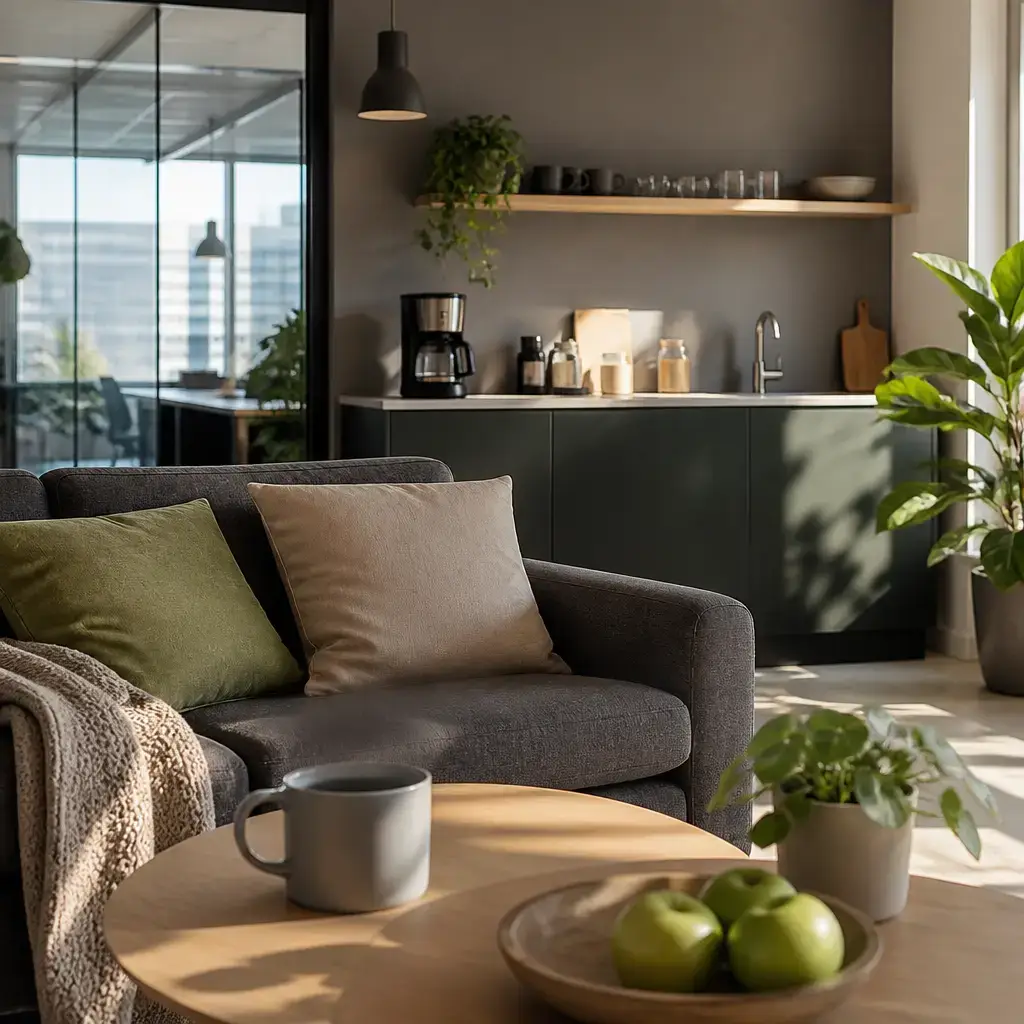
About This Lesson
Use Resting on the sofa during a break to practice Danish conversation, pronunciation, vocabulary, grammar, and quizzes.
Dialogue
A
Jeg har brug for en kort pause.
YAI ha BROO foh en KOHT POW-suh. I need a short break.
B
Lad os sætte os i sofaen.
LAH ohs SED-uh ohs ee SOH-fah-en. Let's sit on the sofa.
A
Må jeg hente noget kaffe?
Moh yai HEN-duh NOH-uh KAH-fuh? Can I get some coffee?
B
Der er kaffe i køkkenet.
DAIR air KAH-fuh ee KUR-guh-neth. There is coffee in the kitchen.
A
Jeg henter noget, efter jeg har strakt mig lidt.
YAI HEN-duh NOH-uh, EF-tuh yai ha STREHGD mai LEHD. I'll get some after I stretch a little.
B
Det hjælper at strække sig, når man er træt.
Deh YEL-puh eh STREH-guh sigh, NOR man air TREH(D). Stretching helps when you feel tired.
A
Dette rum er stille.
DEH-də ROHM air STEE-luh. This room is quiet.
B
Vi kan hvile her lidt.
VEE kan VEE-luh hair LEHD. We can rest here for a while.Word by Word
Jeg
“Jeg” means “I” in “Jeg har brug for en kort pause.” It identifies the speaker as the person who needs a break. Use “Jeg” at the start when talking about your own action, feeling, or need.
har
“Har” means “have” in “Jeg har brug for en kort pause.” Together with “brug for”, it expresses that the speaker needs something. A reusable pattern is “har brug for” followed by the thing that is needed.
brug for
“Brug for” expresses “need” in “har brug for en kort pause.” “Brug” supplies the core of the expression, while “for” connects the need to its object; together they should be learned as “har brug for” rather than translated word by word. Use “har brug for” followed by a person, thing, or activity that is needed.
en
“En” means “a” in “en kort pause.” It introduces one nonspecific pause. Use it directly before the noun phrase, as in “en kort pause.”
kort
“Kort” means “short” in “en kort pause” and describes the length of the break. It comes before “pause” here. Use “kort” before something that has a short duration or length.
pause
“Pause” means “break” in “en kort pause.” It refers to a short period when the speaker stops working. Use it after a describing word such as “kort” when talking about a break.
Lad os
“Lad os” means “let’s” in “Lad os sætte os i sofaen.” “Lad” introduces a suggestion, and “os” includes the speaker and the other person in the suggested action. A reusable pattern is “Lad os” followed by an action.
sætte
“Sætte” means “sit down” in “Lad os sætte os i sofaen.” Here it is followed by “os” and the location “i sofaen.” Use “sætte” in a suggestion about sitting down, especially in the pattern “Lad os sætte os”.
i
“I” means “in” or “on” in “i sofaen.” Here it indicates the place where the people will sit. Use “i” before a place or location, such as “i sofaen.”
sofaen
“Sofaen” means “the sofa” in “i sofaen.” It refers to the specific sofa in the room where they plan to sit. Use it after “i” when indicating that location.
Må
“Må” asks for permission in “Må jeg hente noget kaffe?” and can mean “may” or “can” in this question. It is followed by “jeg” and the action “hente.” Use “Må jeg” when politely asking whether you are allowed to do something.
hente
“Hente” means “get” or “fetch” in “Må jeg hente noget kaffe?” The context shows that the speaker wants to go and get coffee. A reusable pattern is “hente noget,” followed by the thing being fetched.
noget
“Noget” means “some” in “noget kaffe” and “something” in “Jeg henter noget.” In the first phrase it refers to an unspecified amount of coffee; in the second, the context makes the coffee understood. Use “noget” before an unspecified thing or amount, or by itself when the object is already clear.
kaffe
“Kaffe” means “coffee” in “noget kaffe” and “Der er kaffe i køkkenet.” It names the drink the speakers want to get. Use it after “noget” when referring to some coffee, or after “Der er” when saying that coffee is available.
Der
“Der” helps introduce the statement “Der er kaffe i køkkenet,” meaning that coffee is present. Here it does not name the kitchen’s location by itself; the location is given by “i køkkenet.” Use “Der er” to say that something exists or is available somewhere.
er
“Er” means “is” or “are” in “Der er kaffe i køkkenet.” With “Der” it says that coffee is present in the kitchen. Use “er” after “Der” when describing what is available or located somewhere.
køkkenet
“Køkkenet” means “the kitchen” in “i køkkenet.” It identifies the place where the coffee is. Use it after “i” when saying that something is in the kitchen.
henter
“Henter” means “get” or “fetch” in “Jeg henter noget.” It says that the speaker will get something, which the context identifies as coffee. A reusable pattern is “Jeg henter” followed by the object being fetched.
efter
“Efter” means “after” in “efter jeg har strakt mig lidt.” It introduces the action that must happen first. Use “efter” before a clause or event to show that another action follows it.
strakt
“Strakt” means “stretched” in “har strakt mig.” It describes the stretching action in the clause about what the speaker does before getting coffee. It appears with “har” and before “mig” in this expression.
mig
“Mig” means “myself” in “har strakt mig.” It refers back to the speaker, who is the person doing the stretching. Use “mig” in this reflexive expression when the speaker stretches their own body.
lidt
“Lidt” means “a little” in “strakt mig lidt” and “hvile her lidt.” It limits the amount or duration of the action. Use it after an action when you mean to do that action only a little or for a short while.
Det
“Det” means “it” in “Det hjælper at strække sig.” Here it points to the idea that follows, namely stretching. Use “Det hjælper” to say that an action is helpful.
hjælper
“Hjælper” means “helps” in “Det hjælper at strække sig.” The sentence says that stretching is helpful when someone feels tired. Use “hjælper” with a person or action that provides help.
at
“At” introduces the action “at strække sig” in “Det hjælper at strække sig.” It marks the action as the thing that helps. Use “at” before an infinitive when an action functions as part of a larger statement.
strække
“Strække” means “stretch” in “at strække sig.” Together with “sig,” it describes stretching oneself. Use it in the pattern “at strække sig” when talking about this kind of action.
sig
“Sig” means “oneself” in “strække sig.” It shows that the person doing the stretching is also the person affected by the action. Use it after “strække” in the expression “strække sig.”
når
“Når” means “when” in “når man er træt.” It introduces the situation in which stretching helps. Use “når” before a clause that describes when something happens or is useful.
man
“Man” means “one” or general “you” in “når man er træt.” It refers to people generally rather than to one named person. Use “man” when giving general advice or describing what people experience.
træt
“Træt” means “tired” in “man er træt.” It describes how a person feels. Use it after “er” to say that someone is tired.
Dette
“Dette” means “this” in “Dette rum er stille.” It points to the particular room where the speakers are. Use it before a noun when identifying something nearby or currently being discussed.
rum
“Rum” means “room” in “Dette rum.” It names the place the speakers are sitting in. Use it after a word such as “Dette” when referring to a particular room.
stille
“Stille” means “quiet” in “Dette rum er stille.” It describes the room’s lack of noise. Use it after “er” to describe a place as quiet.
Vi
“Vi” means “we” in “Vi kan hvile her lidt.” It includes the speaker and at least one other person. Use “Vi” when describing an action or possibility shared by the group.
kan
“Kan” means “can” in “Vi kan hvile her lidt.” It shows that resting is possible for the group in this place. It is followed by the action “hvile,” so a reusable pattern is “kan” plus an action.
hvile
“Hvile” means “rest” in “Vi kan hvile her lidt.” It names the activity the speakers can do in the quiet room. Use it after “kan” when saying that someone can rest.
her
“Her” means “here” in “Vi kan hvile her lidt.” It identifies the speakers’ current place as the place where they can rest. Use it after an action when pointing to the place where that action happens.
Grammar Points
at sætte sig
Vi sætter os.
VEE SED-uh ohs.We sit down.
Reflexive verbs use a pronoun that matches the subject: vi → os.
Der er + noun
Der er kaffe.
DAIR air KAH-fuh.There is coffee.
Use “der er” to say that something exists or is present.
Danish Vocabulary
der er
phrase
DAIR air
there is; there are
Der er
have brug for
phrase
HAH-vuh BROO foh
to need
har brug for
hente
verb
HEN-duh
to get; to fetch
henter
jeg
pron
YAI
I
kaffe
noun
KAH-fuh
coffee
kort
adj
KOHT
short
køkken
noun
KUR-guhn
kitchen
køkkenet
- Gender
- neuter
man
pron
MAN
one; you; people
pause
noun
POW-suh
break
pausen
- Gender
- common
sofa
noun
SOH-fah
sofa
sofaen
- Gender
- common
sætte sig
verb
SED-uh sigh
to sit down
sætte os
vi
pron
VEE
we
Quiz
Word Order
Arrange the words in the correct order.
Let's sit on the sofa.
Show Answer
Lad os sætte os i sofaen.Can I get some coffee?
Show Answer
Må jeg hente noget kaffe?There is coffee in the kitchen.
Show Answer
Der er kaffe i køkkenet.Spelling
Tap the letters to spell the word.
sofa
Show Answer
sofaenshort
Show Answer
kortto get; to fetch
Show Answer
henterbreak