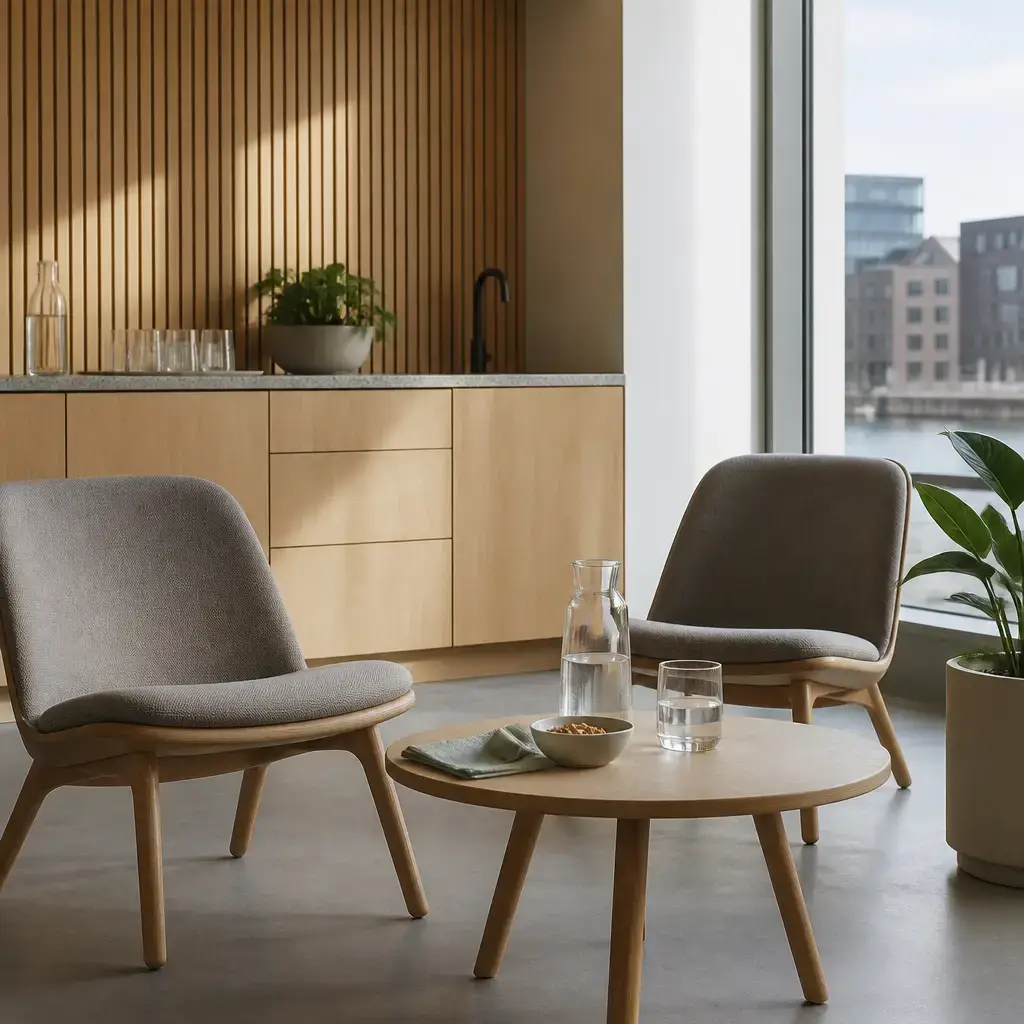
Jeg
Jeg means “I” here and identifies the speaker as the person who feels tired. It is used as the subject in Jeg føler mig træt. Use Jeg before an action or feeling when speaking about yourself.
føler
føler means “feel” in Jeg føler mig træt, describing the speaker’s current feeling. It is used with mig in the expression føler mig træt. Use Jeg føler mig ... to describe how you feel.
mig
mig means “myself” or “me” in føler mig træt and refers back to Jeg. Together, føler mig træt means “feel tired.” Use mig after a verb when the action or feeling refers back to the speaker.
træt
træt means “tired” and describes the speaker’s condition in Jeg føler mig træt. It completes the expression føler mig træt. Use it when telling someone that you lack energy or need rest.
Lad
Lad means “let” in Lad os tage en kort pause and begins a suggestion. The pattern Lad os + verb is used to suggest doing something together. Use it when inviting another person to do an activity with you.
os
os means “us” in Lad os tage en kort pause and shows that the suggestion includes the speaker and the other person. It follows Lad in the pattern Lad os + verb. Use Lad os when making a joint suggestion.
tage
tage means “take” in Lad os tage en kort pause. It follows Lad os and names the suggested action. The pattern tage en pause is used when suggesting a break.
en
en means “a” in en kort pause and introduces one unspecified pause. It comes before the noun pause and its description kort. Use en before a noun in a similar indefinite phrase.
kort
kort means “short” and describes pause in en kort pause. It comes before the noun it describes. Use it to describe a pause or another period as short.
pause
pause means “break” in en kort pause. The phrase tage en kort pause means “take a short break.” Use pause when referring to time set aside for resting.
Er
Er means “is” at the beginning of Er denne stol ledig? It starts a question about the chair’s availability. Use Er ...? to ask whether something is or has a stated condition.
denne
denne means “this” and points to the chair being referred to in Er denne stol ledig? It comes directly before stol. Use denne before a nearby item when identifying it as “this” one.
stol
stol means “chair” in Er denne stol ledig? It is the item whose availability is being checked. Use stol when asking about or referring to a chair.
ledig
ledig means “free” or “available” in Er denne stol ledig? Here it asks whether the chair can be used. Use Er ... ledig? to check whether a seat or place is available.
Du
Du means “you” in Du kan sidde her and addresses the other person. It is the subject of the sentence. Use Du when telling the person you are speaking to what they can do.
kan
kan means “can” in Du kan sidde her and says that sitting here is possible or allowed. It is followed by sidde, the action that is possible. Use Du kan + verb to tell someone what they can do.
sidde
sidde means “sit” in Du kan sidde her. It follows kan and names the action the person may do. Use kan sidde when saying that someone can sit.
her
her means “here” and identifies the place in Du kan sidde her. It comes after the action sidde. Use her to direct someone to the place where the speaker is indicating.
har
har means “have” in Jeg har taget en lille snack med til pausen. Together with taget ... med, it helps say that the speaker has brought a snack along. Use Jeg har ... when describing something you have already done or have with you.
taget
taget is part of taget en lille snack med and means “taken” or “brought” in this dialogue. The full expression har taget en lille snack med means “have brought a small snack.” Use tage ... med when saying that someone brings something along.
lille
lille means “small” and describes snack in en lille snack. It comes before the noun snack. Use it before an item you want to describe as small.
snack
snack means “snack” in Jeg har taget en lille snack med til pausen. It names the food the speaker has brought. Use snack when referring to a small amount of food eaten between meals or during a break.
med
med means “with” and completes taget en lille snack med, showing that the snack was brought along. The full pattern tage noget med means “bring or take something along.” Use med after the thing being brought in this pattern.
til
til means “for” or “to” in til pausen and marks the break as the occasion the snack is intended for. It comes before pausen. Use til + an occasion when saying what something is for.
pausen
pausen means “the break” in til pausen and refers to the break discussed in the conversation. It is used after til in the phrase til pausen. Use this form when referring to a specific break.
henter
henter means “get” or “fetch” in Jeg henter noget vand. Here it describes going to get water for the break. Use henter when saying that you are going to get or fetch something.
noget
noget means “some” in noget vand and indicates an unspecified amount. It comes before vand in the phrase noget vand. Use noget before a thing when referring to some unspecified amount of it.
vand
vand means “water” in Jeg henter noget vand. It is the thing the speaker intends to get. Use vand when referring to water, including an unspecified amount such as noget vand.
Der
Der introduces the statement about the condition in Der er stille her. Together with er stille her, it expresses that the place is quiet. Use Der er ... to state that a condition or situation exists.
stille
stille means “quiet” in Der er stille her and describes the atmosphere of the place. It completes the condition expressed by Der er. Use it when there is little noise in a place.
Så
Så means “then” in Så kan vi hvile os her lidt and connects the quiet situation with the suggested result. It introduces what can happen next. Use Så when drawing a practical conclusion from what was just said.
vi
vi means “we” in Så kan vi hvile os her lidt and includes the speaker and the other person. It is the subject of the suggested action. Use vi when referring to yourself together with one or more other people.
hvile
hvile means “rest” in hvile os her lidt. It follows kan and names the activity that is possible. Use kan hvile os when saying that a group can rest.
lidt
lidt means “a little” or “for a bit” in hvile os her lidt and limits the length of the rest. The full phrase hvile os her lidt means “rest here for a bit.” Use lidt after an activity or time expression when referring to a short amount of time.