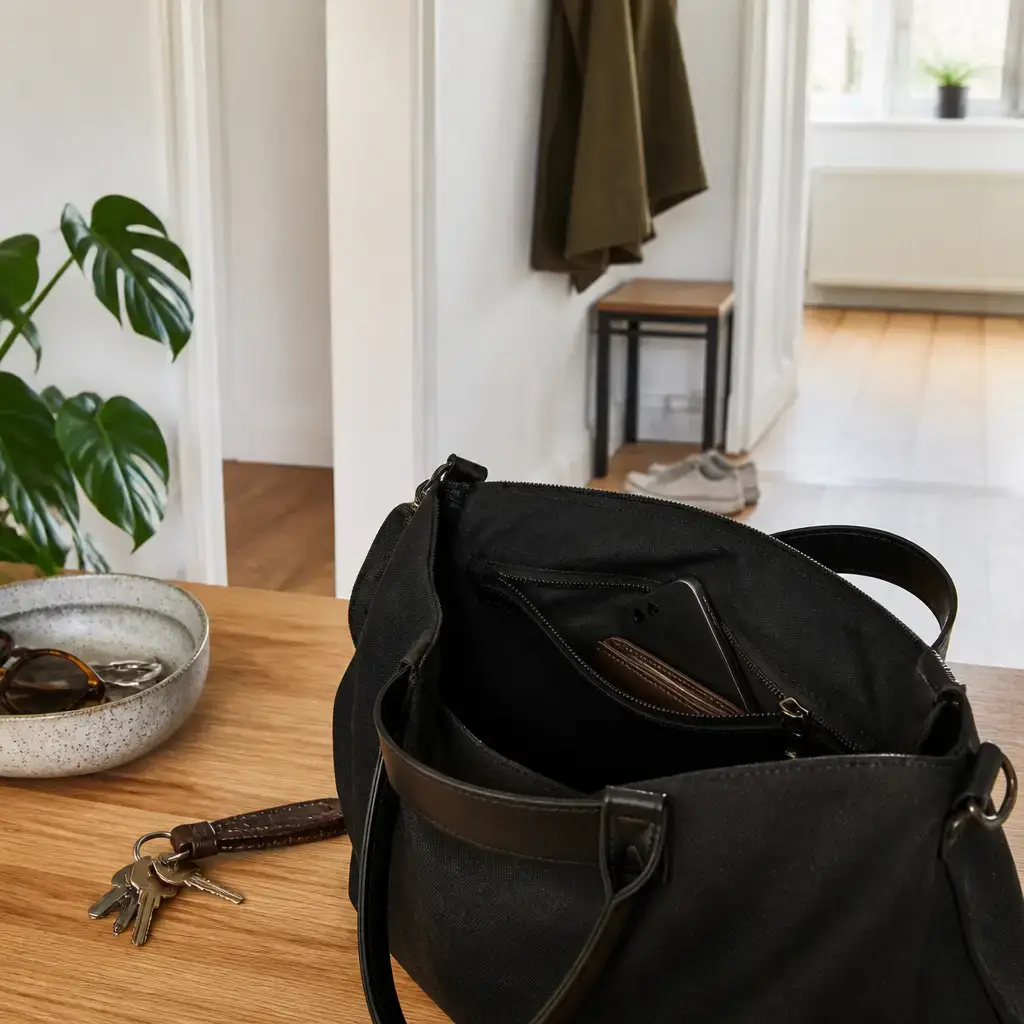
About This Lesson
Use Keeping Valuables Safe in a Bag to practice Danish conversation, pronunciation, vocabulary, grammar, and quizzes.
Dialogue
A
Hvor skal jeg lægge min pung?
voh skal yai LEH-guh men POONG? Where should I put my wallet?
B
Læg den i inderlommen.
LEH den ee EN-uh-lom-un. Keep it in the inside pocket.
A
Er forlommen sikker?
air FOH-lom-un SEK-uh? Is the front pocket safe?
B
Inderlommen er mere sikker.
EN-uh-lom-un air MAY-uh SEK-uh. The inside one is safer.
A
Jeg kan lukke lynlåsen.
yai kan LOH-guh LEWN-lohs-un. I can close the zipper.
B
Så burde den være i sikkerhed.
soh BOO-uh-duh den VAIR ee SEK-uh-hayth. That should keep it secure.
A
Min telefon er også derinde.
men teh-leh-FOHN air AW-suh der-IN-uh. My phone is in there too.
B
Tjek lommen, før du går.
chek LOM-un, fuh doo GOH. Check the pocket before you go.Word by Word
Hvor
“Hvor” means “where” in “Hvor skal jeg lægge min pung?” It asks about the place for putting the wallet. A reusable pattern is “Hvor skal jeg lægge ...?” when asking where to put something.
skal
“skal” expresses “should” in “Hvor skal jeg lægge min pung?” and helps form a question about what to do. It is used with a following verb, as in “skal jeg lægge”. Use it when asking what action is appropriate.
jeg
“jeg” means “I” in “Hvor skal jeg lægge min pung?” It identifies the person who will put the wallet somewhere. It commonly comes before the verb in a statement, such as “Jeg kan ...”.
lægge
“lægge” means “put” or “place” in “Hvor skal jeg lægge min pung?” It describes placing the wallet somewhere, after “skal” in this question. A reusable pattern is “lægge ... i ...” for putting something in a place.
min
“min” means “my” in “min pung” and shows that the wallet belongs to the speaker. It comes directly before the noun it describes here. Use “min” with a personal possession, such as “min telefon” in a new example.
pung
“pung” means “wallet” in “min pung”. It is the item the speaker wants to place safely. A reusable pattern is “min pung” when referring to your wallet.
Læg
“Læg” means “put” or “keep” in the instruction “Læg den i inderlommen.” It tells someone where to place the item. A reusable pattern is “Læg ... i ...” when giving instructions about putting something somewhere.
den
“den” refers to the item already being discussed in “Læg den i inderlommen”, namely the wallet. It stands for that item instead of repeating “pung”. It commonly appears before the place phrase in this pattern: “Læg den i ...”.
i
“i” means “in” in “i inderlommen” and shows the destination where the item should be placed. It comes before the location word here. A reusable pattern is “i + place”, such as “i tasken” in a new example.
inderlommen
“inderlommen” means “the inside pocket” in “Læg den i inderlommen.” It names the specific pocket where the item should be kept. Use it after “i” when describing placement in this pocket.
Er
“Er” means “is” in “Er forlommen sikker?” It asks whether the front pocket has the quality described by “sikker”. It is useful at the beginning of a yes-or-no question, such as “Er ... sikker?”.
forlommen
“forlommen” means “the front pocket” in “Er forlommen sikker?” It identifies the pocket whose safety is being checked. A reusable pattern is “forlommen er ...” when describing this pocket.
sikker
“sikker” means “safe” in “Er forlommen sikker?” and describes whether the front pocket protects the belongings. It is used after “er” here. A reusable pattern is “er ... sikker” when asking or saying that something is safe.
mere
“mere” means “more” in “Inderlommen er mere sikker.” It shows that the inside pocket is safer in comparison with the front pocket. It comes before “sikker” in this comparison.
kan
“kan” means “can” in “Jeg kan lukke lynlåsen” and expresses the speaker’s ability to close the zipper. It is followed by another verb, here “lukke”. Use “Jeg kan ...” to say what you are able to do.
lukke
“lukke” means “close” in “Jeg kan lukke lynlåsen.” It describes the action performed on the zipper. After “kan”, it appears in the pattern “kan + verb”, such as “kan lukke”.
lynlåsen
“lynlåsen” means “the zipper” in “Jeg kan lukke lynlåsen.” It is the object that the speaker can close. A reusable pattern is “lukke lynlåsen” when talking about closing a zipper.
Så
“Så” means “so” or “then” in “Så burde den være i sikkerhed.” It connects the previous action of closing the zipper with the expected result. Use it to introduce a conclusion based on what was just said.
burde
“burde” means “should” or “ought to” in “Så burde den være i sikkerhed.” It expresses an expectation that the item will be safe. It is followed here by “være” in the pattern “burde være ...”.
være
“være” means “be” in “burde den være i sikkerhed.” It links the item with the state of being safe. After “burde”, it appears in the pattern “burde være ...”.
i sikkerhed
“i sikkerhed” means “safe” or “out of danger” in “Så burde den være i sikkerhed.” The component “i” means “in”, and “sikkerhed” means “safety” or “security”; together they form the expression for being safe. Use “være i sikkerhed” when saying that a person or item is protected.
telefon
“telefon” means “phone” in “Min telefon er også derinde.” It identifies another valuable item in the bag. A reusable pattern is “min telefon” when referring to your phone.
også
“også” means “also” or “too” in “Min telefon er også derinde.” It adds the phone to the wallet as another item in that place. It commonly comes before the location or state being added, as in “er også derinde”.
derinde
“derinde” means “in there” in “Min telefon er også derinde.” It refers to the inside location already under discussion, such as the bag or pocket. Use it after “er” to say that something is located inside there.
Tjek
“Tjek” means “check” in the instruction “Tjek lommen, før du går.” It tells someone to inspect the pocket. A reusable pattern is “Tjek ...” when giving a direct instruction to check something.
lommen
“lommen” means “the pocket” in “Tjek lommen, før du går.” It identifies the pocket that should be inspected. It follows “Tjek” here as the thing being checked.
før
“før” means “before” in “før du går.” It places the checking action earlier than leaving. It introduces a clause with a subject and verb, here “du går”.
du
“du” means “you” in “før du går.” It identifies the person who is going. It commonly appears before the verb in a clause, as in “du går”.
går
“går” means “go” in “før du går.” It describes the listener leaving or going away. It appears after “du” in the clause “du går”.
Grammar Points
mere + adjektiv
mere sikker
MAY-uh SEK-uhsafer
Use mere before an adjective to form a comparative, like “safer.”
Danish Vocabulary
derinde
adv
der-IN-uh
in there
forlomme
noun
FOH-lom-uh
front pocket
forlommen
- Gender
- common
hvor
adv
VOH-uh
where
i sikkerhed
phrase
ee SEK-uh-hayth
safe; secure
inderlomme
noun
EN-uh-lom-uh
inside pocket
inderlommen
- Gender
- common
lukke
verb
LOH-guh
close
lynlås
noun
LEWN-lohs
zipper
lynlåsen
- Gender
- common
lægge
verb
LEH-guh
put; place
mere sikker
phrase
MAY-uh SEK-uh
safer
The analytic comparative form of sikker.
pung
noun
POONG
wallet
- Gender
- common
sikker
adj
SEK-uh
safe; secure
telefon
noun
teh-leh-FOHN
phone
- Gender
- common
Quiz
Word Order
Arrange the words in the correct order.
Where should I put my wallet?
Show Answer
Hvor skal jeg lægge min pung?Keep it in the inside pocket.
Show Answer
Læg den i inderlommen.Is the front pocket safe?
Show Answer
Er forlommen sikker?Spelling
Tap the letters to spell the word.
safe; secure
Show Answer
sikkerfront pocket
Show Answer
forlommenwallet
Show Answer
pungzipper