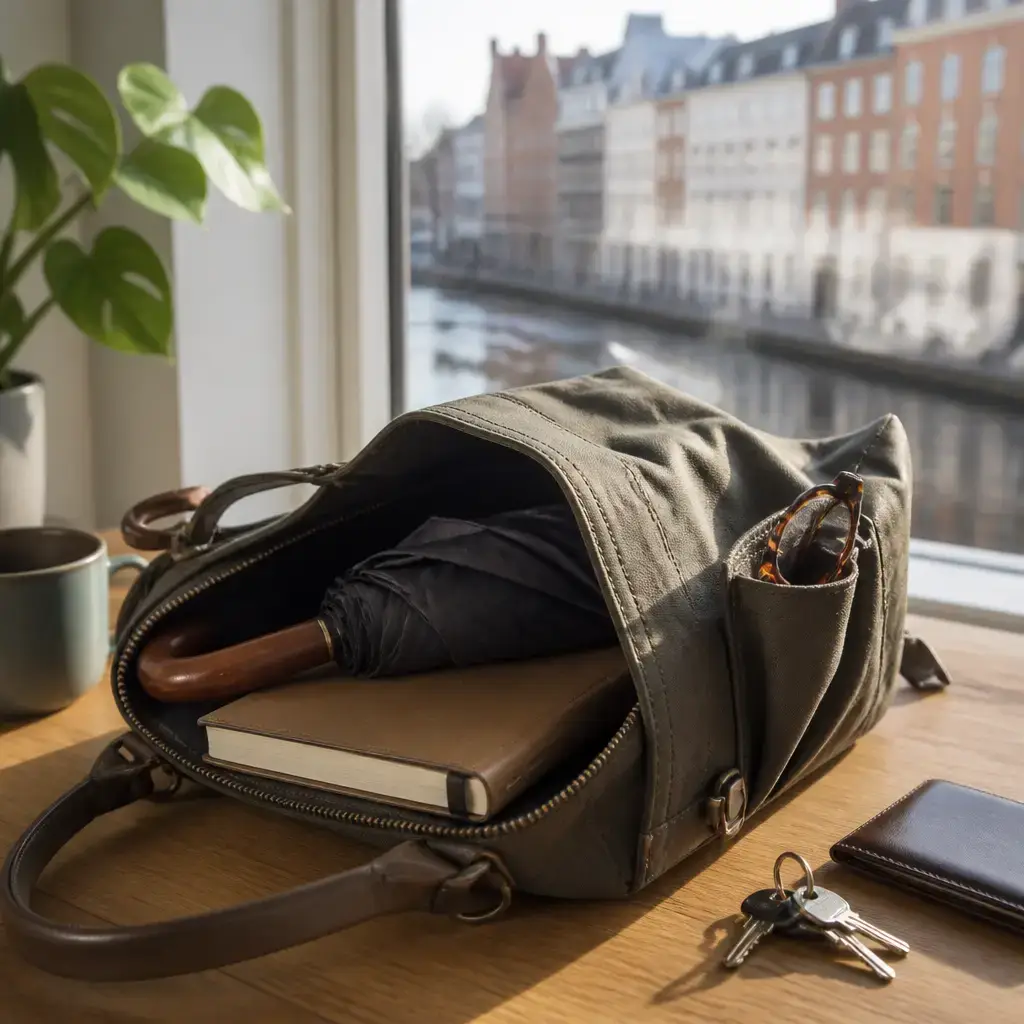
Er
In this dialogue, Er means “is/are” and starts the question about whether the glasses are in the bag. It is useful for asking where something is, using a pattern such as Er + subject + place?
mine
Here mine means “my” in mine briller and shows that the glasses belong to the speaker. The form mine is used before briller in this plural possession pattern. Use it when identifying several belongings as your own.
briller
Briller means “glasses,” the item the speaker is looking for. In mine briller, it names the possessed item after mine. Use briller when talking about or locating glasses among personal belongings.
i
Here i means “in” and marks the bag as the location in i denne taske; it also appears in i sidelommen. A reliable reuse pattern is i + a place or container when something is inside it. Use it when asking or answering where an item is.
denne
Denne means “this” in denne taske and points to the particular bag being discussed. It comes directly before taske in the noun phrase. Use it to identify one specific nearby or known item.
taske
Taske means “bag” in denne taske. It names the container whose location is being asked about. Use taske when referring to a bag in everyday situations.
De
De refers back to briller and means “they” in De er i sidelommen. It is the subject placed before er in this answer. Use it to refer back to plural belongings that have already been mentioned.
sidelommen
Sidelommen means “the side pocket,” the place where the glasses are located. It follows i in i sidelommen to name the specific compartment. Use it when identifying a particular pocket in a bag.
Jeg
Jeg means “I” and identifies the speaker as the person who needs the notebook and organizes the bag. It comes before the verb in Jeg skal også bruge and Jeg organiserer. Use it as the subject when describing your own actions or needs.
skal
In Jeg skal også bruge min notesbog, skal helps express that the speaker needs the notebook. It is followed by bruge in this construction. A reliable reuse pattern is Jeg skal bruge + an object when saying that you need something.
også
Også means “also” or “too” and adds the notebook to the belongings the speaker needs. It appears after skal and before bruge in the sentence. Use it when adding another item or action to information already given.
bruge
In skal bruge, bruge is the action word connected to the notebook, while the whole phrase skal bruge means that the speaker needs it here. It follows skal in this dialogue. Reuse the pattern skal bruge + an object for a needed item.
min
Min means “my” in min notesbog and shows that the notebook belongs to the speaker. It comes directly before notesbog. Use it before a singular possessed item when identifying something as yours.
notesbog
Notesbog means “notebook,” the item the speaker says they need. In min notesbog, it is the noun after the possessive min. Use it when talking about a notebook or locating one among your belongings.
Den
Den means “it” and refers to the notebook just mentioned in Den er under din paraply. It is the subject placed before er. Use it to refer back to a previously mentioned singular item.
under
Under means “under” and describes the notebook’s position beneath the umbrella in under din paraply. It comes before the thing that marks the reference position. Use under + an object when describing where something is located below another thing.
din
Din means “your” in din paraply and shows that the umbrella belongs to the person being addressed. It comes directly before paraply. Use it before a singular possessed item when identifying something as someone else’s.
paraply
Paraply means “umbrella” in under din paraply. It names the item used as the reference point for the notebook’s location. Use paraply when talking about an umbrella in daily situations.
Må
Må means “may” or “can” in Må jeg flytte paraplyen? and introduces a request for permission. It comes before jeg in this question. Use the pattern Må jeg + action? when asking whether you are allowed to do something.
flytte
Flytte means “move” and names the action requested in Må jeg flytte paraplyen? It follows Må jeg in the question. Reuse the pattern Må jeg flytte + an object? when asking permission to move something.
paraplyen
Paraplyen means “the umbrella” and identifies the specific umbrella that the speaker wants to move. It is the object after flytte. Use this form when referring to a known umbrella in the situation.
Læg
Læg means “put” or “place” in the instruction Læg den ved håndtaget. It tells the listener where to place the umbrella. A reliable reuse pattern is Læg + object + place when giving an instruction about placement.
ved
Ved means “by” or “next to” in ved håndtaget and marks the handle as the nearby position. It comes before håndtaget to form the location phrase. Use ved + a reference object when saying that something is beside it.
håndtaget
Håndtaget means “the handle” in ved håndtaget. It identifies the specific handle beside which the umbrella should be placed. Use it when referring to a known handle on an object.
så
Here så means “so” and connects placing the umbrella with the intended result that it will not obstruct anything. It introduces the following result clause. Use it to connect an action with the result or purpose that follows.
ikke
Ikke means “not” and makes the statement den ikke er i vejen negative. It appears before er in this clause. Use it when saying that something does not have a stated condition or position.
vejen
Vejen is part of the exact expression i vejen in så den ikke er i vejen. The whole expression i vejen means “in the way,” describing something that obstructs or gets in the way. Reuse the whole expression when explaining that an object is blocking a space.
organiserer
Organiserer means “organize” in Jeg organiserer tasken nu and describes the speaker’s action with the bag. It comes after Jeg and before the object tasken. Reuse the pattern Jeg organiserer + an object when saying that you are organizing something.
tasken
Tasken means “the bag” in Jeg organiserer tasken nu. It identifies the specific bag being organized and is the object of organiserer. Use it when referring to a known bag in the situation.
nu
Nu means “now” and places the organizing action in the present moment. It appears at the end of Jeg organiserer tasken nu. Use it to emphasize that an action is happening at this time.
bliver
Bliver means “becomes” or “will be” in Så bliver det lettere at finde ting. Here it introduces a change to an easier state after the bag is organized. A common reuse pattern is bliver + a description when something changes state.
det
Here det is the neutral subject in det bliver lettere at finde ting and supports the statement about the situation becoming easier. It does not name a particular item in the bag. Use this kind of det in a general statement about how easy or difficult an activity is.
lettere
Lettere means “easier” and describes finding things as less difficult after the bag is organized. It follows bliver in bliver det lettere. Reuse the pattern lettere at + an action when describing an activity that requires less effort.
at
At is the infinitive marker before finde in at finde ting. It links lettere with the action being described. Use at before a verb when placing an action after expressions such as lettere.
finde
Finde means “find” and names the action of locating things in at finde ting. It follows the infinitive marker at. Reuse the pattern at finde + an object when referring to the action of finding something.
ting
Ting means “things” and refers generally to the items that will be easier to locate in the organized bag. It is the object after finde. Use ting when referring to objects or belongings without naming each one.