Kan
In “Kan vi tjekke, om min taske er klar?”, “Kan” asks whether something is possible or whether someone can do it. It comes before the subject “vi” in this question. Use “Kan du ...?” when asking one person whether they can do something.
vi
In “Kan vi tjekke...?”, “vi” means “we” and refers to the people doing the checking together. It is the subject after “Kan” here. Use “vi” for a group that includes the speaker.
tjekke
In “Kan vi tjekke, om min taske er klar?”, “tjekke” means check. It names the action being asked about after “Kan vi”. Use “tjekke” before the thing or information being checked.
om
In “tjekke, om min taske er klar”, “om” introduces the question being checked: whether the bag is ready. It connects “tjekke” to the following clause. A similar reusable pattern is “se, om ...” for checking whether something is so.
min
In “min taske”, “min” means “my” and shows that the bag belongs to the speaker. It comes directly before the owned noun here. Use “min” before a singular item that belongs to you.
taske
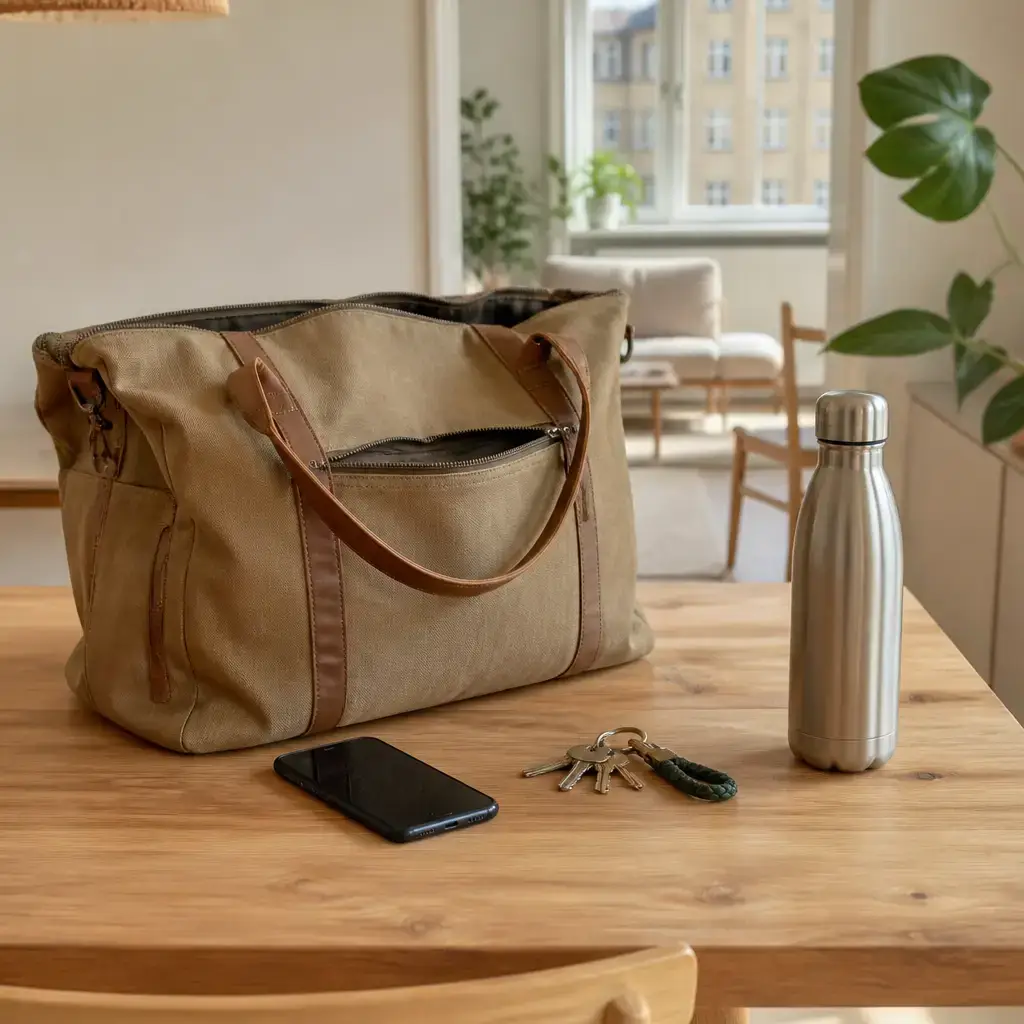
In “min taske”, “taske” means “bag”. It names the item whose readiness is being checked. Use it after a word such as “min” when referring to a bag.
er
In “min taske er klar” and “telefon er i forlommen”, “er” states what something is like or where it is. It links the subject to a description or location. Use “er” when describing a current state or position.
klar
In “min taske er klar”, “klar” means ready. It describes the state of the bag after “er”. Use “er klar” to say that something is ready.
Læg
In “Læg de vigtige ting på bordet først”, “Læg” tells someone to put or place something. It is used at the beginning of this instruction. A reusable pattern is “Læg ... på ...” when telling someone where to place an item.
de
In “de vigtige ting”, lowercase “de” means “the” and introduces the things to be placed on the table. It comes before the rest of this noun phrase. The capitalized “De” in “De ligger...” has a different meaning and is explained separately.
vigtige
In “de vigtige ting”, “vigtige” means important and describes which things are meant. It appears before “ting” in the phrase. Use it before a noun when identifying things as important.
ting
In “de vigtige ting”, “ting” means things or items. It refers here to the important items that should be put on the table. Use “ting” when speaking generally about items or objects.
på
In “på bordet”, “på” means on and shows the surface where the things should be placed. It appears before the location “bordet”. Use “på” for something located or placed on a surface.
bordet
In “på bordet”, “bordet” means the table. It is the place where the important things should be put. Use it after “på” when referring to something placed on the table.
først
In “Læg de vigtige ting på bordet først”, “først” means first and sets the order of the action. It comes at the end of this instruction. Use “først” when one action should happen before another.
telefon
In “Min telefon er i forlommen”, “telefon” means phone. It identifies the item that is already in the front pocket. Use it after a possessive such as “min” when referring to your phone.
i
In “i forlommen” and “i hovedlommen”, “i” means in and marks the inside location of an item. It comes before the pocket named as the location. Use “i” before a place or container where something is located.
forlommen
In “i forlommen”, “forlommen” means the front pocket. It identifies where the phone is located. Use it after “i” when saying that something is in the front pocket.
Hvor
In “Hvor lagde du dine nøgler?”, “Hvor” asks where something was placed. It comes at the beginning of the location question. Use “Hvor” when asking about a place or position.
lagde
In “Hvor lagde du dine nøgler?”, “lagde” means put or placed and asks about the placement of the keys. It is used with the person “du” and the object “dine nøgler”. Use “lagde” when asking or saying where someone put something.
du
In “lagde du dine nøgler?”, “du” means “you” and refers to the person who put the keys somewhere. It follows “lagde” in this question. Use “du” when speaking to one person.
dine
In “dine nøgler”, “dine” means “your” and shows that the keys belong to the person being addressed. It comes before the owned item. Use “dine” before keys or other items that belong to “du”.
nøgler
In “dine nøgler”, “nøgler” means keys. These are the items whose location is being asked about. Use “nøgler” when referring to keys.
ligger
In “De ligger ved siden af min telefon”, “ligger” says that the keys are located there. It is followed by the location phrase “ved siden af min telefon”. Use “ligger” when describing where an item or items are positioned.
ved siden af
In “De ligger ved siden af min telefon”, the whole expression “ved siden af” means next to. “ved” contributes the relation at or by, “siden” refers to a side, and “af” links the expression to the reference object; together they place the keys beside the phone. Use “ved siden af” before the person or thing that something is next to.
Har
In “Har du også brug for din vandflaske?”, “Har” means “have” and begins a question about whether someone has a need. It comes before the subject “du” here. Use “Har du ...?” to ask one person whether they have something or need something.
også
In “Har du også brug for din vandflaske?”, “også” means also or too. It adds the water bottle to the items already being considered. Use “også” when adding another person, item, or action to the situation.
brug for
In “brug for din vandflaske”, the whole expression “brug for” means need. “brug” supplies the need or use element, while “for” connects the expression to the needed item “din vandflaske”; the two components work together. Reuse “have brug for” before the thing that is needed.
din
In “din vandflaske”, “din” means “your” and shows that the water bottle belongs to the person being addressed. It comes directly before the owned item. Use “din” before an item belonging to “du”.
vandflaske
In “din vandflaske”, “vandflaske” means water bottle. It names the additional item being checked in the bag. Use it after a possessive such as “din” when referring to someone’s water bottle.
Ja
In “Ja, den er allerede i hovedlommen”, “Ja” means yes and confirms the preceding question. It appears at the beginning of the reply. Use “Ja” to give an affirmative answer.
den
In “den er allerede i hovedlommen”, “den” means “it” and refers back to “vandflaske”. It is the subject of the statement about the bottle’s location. Use “den” to refer back to this item in the reply.
allerede
In “den er allerede i hovedlommen”, “allerede” means already and says that the bottle is in the main pocket by this point. It appears before the location phrase. Use “allerede” when something has happened or is true sooner than the current point in the situation.
hovedlommen
In “i hovedlommen”, “hovedlommen” means the main pocket. It identifies where the water bottle is located. Use it after “i” when referring to the main pocket.
Så
In “Så har du det, du skal bruge”, “Så” means then or so and introduces the conclusion from the bag check. It comes at the beginning of the sentence. Use “Så” when drawing a conclusion from what was just established.
det
In “det, du skal bruge”, “det” points to the thing or things that are needed. The following words “du skal bruge” specify what “det” refers to. Use this pattern when referring to what someone needs.
skal
In “du skal bruge”, “skal” contributes the idea of requirement: what you need to use. It works together with “bruge” in this expression. Use “skal” before an action when presenting that action as required.
bruge
In “du skal bruge”, “bruge” means use, but together with “skal” the expression refers to what you need. It follows “skal” in the reusable pattern “skal bruge + thing”. Keep the thing needed as the object of this pattern.