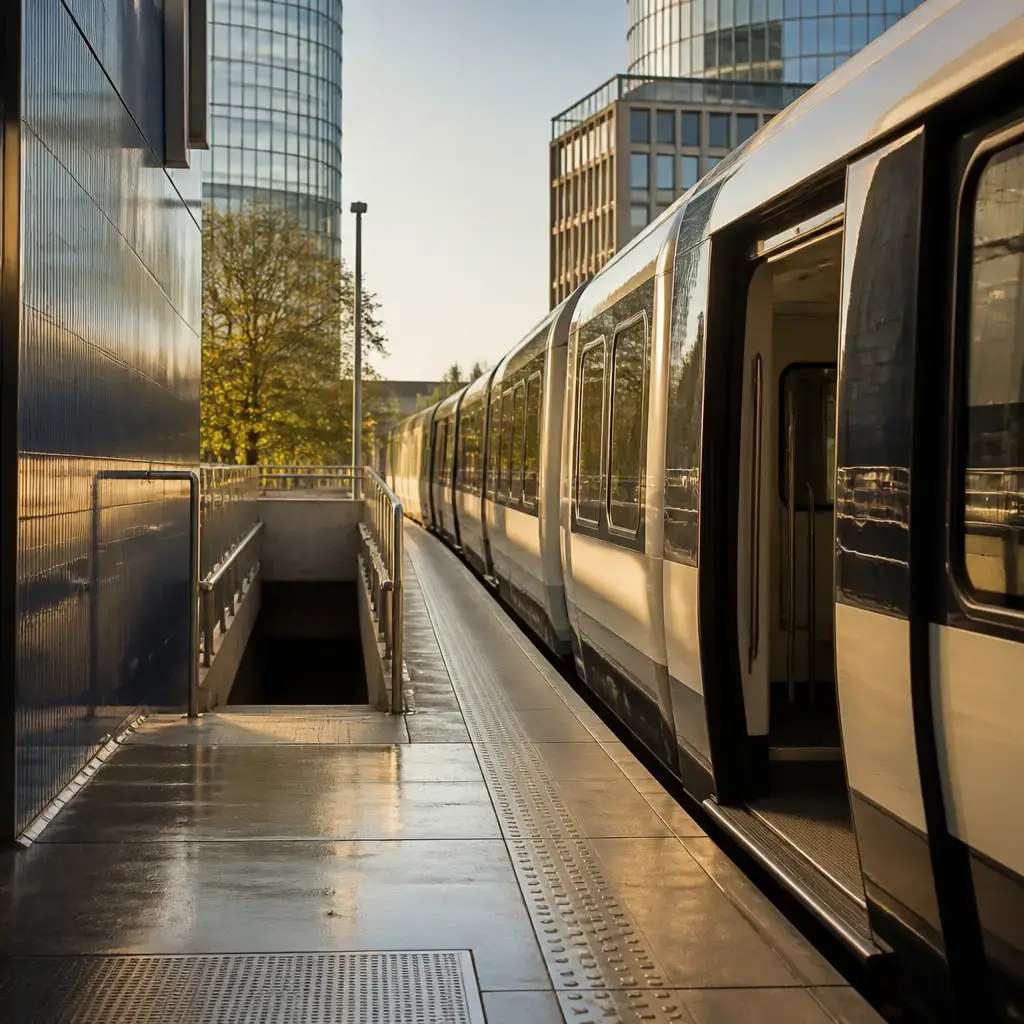
Der
In “Der er virkelig meget trafik på vejen i dag.”, “Der” is an existential placeholder that helps introduce what exists. The common reusable pattern is “Der er” followed by a noun or noun phrase.
er
In “Der er virkelig meget trafik på vejen i dag.”, “er” means “is” or “are” and expresses existence. It is the form used in the reusable pattern “Der er + noun.”
virkelig
“Virkelig” means “really” here and strengthens “meget trafik.” It can be placed before another word or phrase to emphasize it, as in “virkelig meget.”
meget
“Meget” means “a lot of” in “meget trafik” and quantifies the amount of traffic. A useful pattern is “meget + an uncounted amount or mass noun.”
trafik
“Trafik” means “traffic” in “meget trafik.” It is used for the flow of vehicles on a road, especially when describing road conditions.
på
“På” means “on” in “på vejen” and indicates the road where the traffic is. The same word also appears in “tæt på,” where it helps express closeness; prepositions such as “på” are learned with the location phrase they form.
vejen
“Vejen” means “the road” in “på vejen.” It names the road as the specific location of the traffic and can be reused after a location preposition such as “på.”
i
In “i dag,” “i” contributes the meaning “in” and forms the expression “today.” A useful reuse point is “i” with time expressions such as “i dag.”
dag
“Dag” means “day” in “i dag.” Together with “i,” it forms the exact time expression “i dag,” meaning today, rather than simply naming a day by itself.
Myldretiden
“Myldretiden” means “rush hour” and is the subject of “er begyndt.” It is useful when talking about the period when traffic and public transport are especially busy.
begyndt
“Begyndt” means “started” in “Myldretiden er begyndt.” Together with “er,” it says that rush hour has started; the pattern “er begyndt” can describe something that has started.
Kan
At the beginning of “Kan vi stadig nå det næste tog?”, “Kan” means “can” and asks about ability or possibility. A reusable question pattern is “Kan + subject + infinitive,” as in the dialogue’s “Kan vi ... nå.”
vi
“Vi” means “we” and refers to the two people acting together. It is the subject in “Kan vi stadig nå det næste tog?” and “stiger vi på sammen,” and it can be used with a modal or an ordinary verb.
stadig
“Stadig” means “still” in “Kan vi stadig nå det næste tog?” and shows that the possibility remains despite the traffic. It commonly appears before the main verb or infinitive in a sentence.
nå
“Nå” means “catch or reach in time” in “nå det næste tog.” After “kan,” it stays in the infinitive and takes the thing to be caught or reached as its object.
det
In “nå det næste tog,” “det” helps identify “tog” as the specific train, giving the phrase “the next train.” In “Det burde vi kunne,” “Det” refers back to the action under discussion, namely catching the train; the same form can therefore identify a noun phrase or refer to an earlier situation.
næste
“Næste” means “next” and describes “tog” in “det næste tog.” The reusable pattern is “næste + noun” when identifying the item or event that follows.
tog
“Tog” means “train” in “det næste tog.” It is the transport object that the speakers are trying to catch, and it can be used with a destination or a station-related expression.
burde
“Burde” means “should” in “Det burde vi kunne” and expresses an expectation that the action is possible. A useful pattern is “burde + infinitive,” here followed by “kunne.”
kunne
“Kunne” means “be able to” in “burde vi kunne.” It completes the ability meaning after “burde” and can be followed by the action that someone is expected to be able to do.
Stationen
“Stationen” means “the station” and is the subject of “Stationen er lige fremme.” It is used here to identify the nearby place the speakers are approaching.
lige
“Lige” means “just” in “lige fremme” and makes the location sound immediately ahead. The useful expression is the whole location phrase “lige fremme.”
fremme
“Fremme” means “ahead” or “in front” in “lige fremme.” Together with “lige,” it describes a place that is directly ahead, as in the station’s location.
Jeg
“Jeg” means “I” and marks the speaker as the person who can see the entrance. A reusable pattern is “Jeg kan + infinitive,” as in “Jeg kan se.”
se
“Se” means “see” in “Jeg kan se indgangen nu.” It follows “kan” in the infinitive and takes “indgangen” as the thing being seen.
indgangen
“Indgangen” means “the entrance” in “Jeg kan se indgangen nu.” It is the specific place the speaker can now see, especially useful in a station or building context.
nu
“Nu” means “now” and places the seeing at the current moment in “Jeg kan se indgangen nu.” It can be added to a sentence to emphasize that something is true at this time.
Lad
“Lad” begins the suggestion “Lad os gå direkte til perronen” and contributes the meaning “let.” The fixed reusable pattern is “Lad os + infinitive” for suggesting that a group do something.
os
“Os” means “us” in “Lad os gå” and includes the speaker and the other person in the suggestion. It is used directly after “Lad” in the common pattern “Lad os + infinitive.”
gå
“Gå” means “go” or “walk” in “Lad os gå direkte til perronen.” It is the infinitive after “Lad os” and can be followed by “til” plus a destination.
direkte
“Direkte” means “directly” or “straight” in “gå direkte til perronen.” It describes how they should go and fits the reusable pattern “gå direkte til + destination.”
til
“Til” means “to” and marks “perronen” as the destination in “til perronen.” A useful movement pattern is “gå til + place.”
perronen
“Perronen” means “the platform” in “til perronen.” It is the destination the speakers are hurrying toward at the station.
Toget
“Toget” means “the train” and is the subject of “Toget kører allerede ind.” It identifies the specific train that is arriving at the platform.
kører
“Kører” expresses moving or traveling in “Toget kører allerede ind.” The verb gives the train’s movement, while “ind” adds the direction inward; a useful pattern is a movement verb followed by a direction word.
allerede
“Allerede” means “already” in “Toget kører allerede ind.” It shows that the train has begun pulling in sooner or by this point, and it can modify an event that is happening by a certain time.
ind
“Ind” means “in” or “into” in “kører allerede ind” and shows movement inward toward the station or platform. It can follow a movement verb to specify inward direction.
Hold
“Hold” is a direct instruction meaning “stay” or “keep” in “Hold dig tæt på.” The reusable pattern “Hold dig + description” tells someone to remain in a particular state or position.
dig
“Dig” refers to “you” or “yourself” as the person being told to stay close in “Hold dig tæt på.” It follows “Hold” in this direct instruction and identifies the person whose position should be maintained.
tæt
“Tæt” means “close” in “Hold dig tæt på.” Together with “på,” it describes a short distance from another person or place; the reusable phrase is “tæt på + person or place.”
så
“Så” means “so” or “then” in “Hold dig tæt på, så stiger vi på sammen.” It connects staying close with the resulting action of boarding together, and it can link one clause to the consequence that follows.
stiger
“Stiger” expresses stepping onto or boarding in “stiger vi på.” With “på,” it forms the boarding expression, and the subject “vi” shows that the speakers will do it together.
sammen
“Sammen” means “together” in “stiger vi på sammen.” It shows that the speakers will board as a group and can be placed with an action to emphasize joint participation.