Har
“Har” means “have” here and begins the question “Har du allerede en togbillet?” It is useful in questions about whether someone has something, such as “Har du ...?”
du
“du” means “you”, the person being asked the question. It is used as the subject in “Har du allerede en togbillet?” and can follow a question word order such as “Har du ...?”
allerede
“allerede” means “already” and asks whether the ticket is available by now. In “Har du allerede en togbillet?”, it is placed with the question about having the ticket; use it to refer to something that may have happened or become true by a certain time.
en
“en” means “a” in “en togbillet” and introduces one ticket. A reusable pattern is “en” followed by a singular noun, as in the dialogue’s “en togbillet”.
togbillet
“togbillet” means “train ticket”, the ticket needed for the journey. It appears after “en” in “en togbillet”; use this word when talking about a ticket for a train.
Ikke
“Ikke” marks negation in “Ikke endnu”, meaning that the ticket has not been obtained at this point. It is commonly placed before the word or phrase being negated, as in “Ikke endnu”.
endnu
“endnu” means “yet” in “Ikke endnu”, referring to the time up to now. Together with “Ikke”, it is useful for saying that something has not happened or is not true yet.
Jeg
“Jeg” means “I”, the speaker referring to themself. It begins statements such as “Jeg skal købe en” and “Jeg har min billet på min telefon.”
skal
“skal” expresses the need or intention to do something in “Jeg skal købe en”. It is followed here by the infinitive “købe”; a reusable pattern is “Jeg skal” plus an action.
købe
“købe” means “buy” in “Jeg skal købe en”. It follows “skal” and names the action the speaker needs to carry out; use “købe” with the thing being bought.
Der
“Der” is the marker in “Der er billetautomater ved indgangen”, which introduces the presence of ticket machines. A reusable pattern is “Der er” followed by the thing that is present.
er
“er” states that something is present in the construction “Der er billetautomater ved indgangen”. It is used after “Der” in the reusable pattern “Der er” plus a noun or noun phrase.
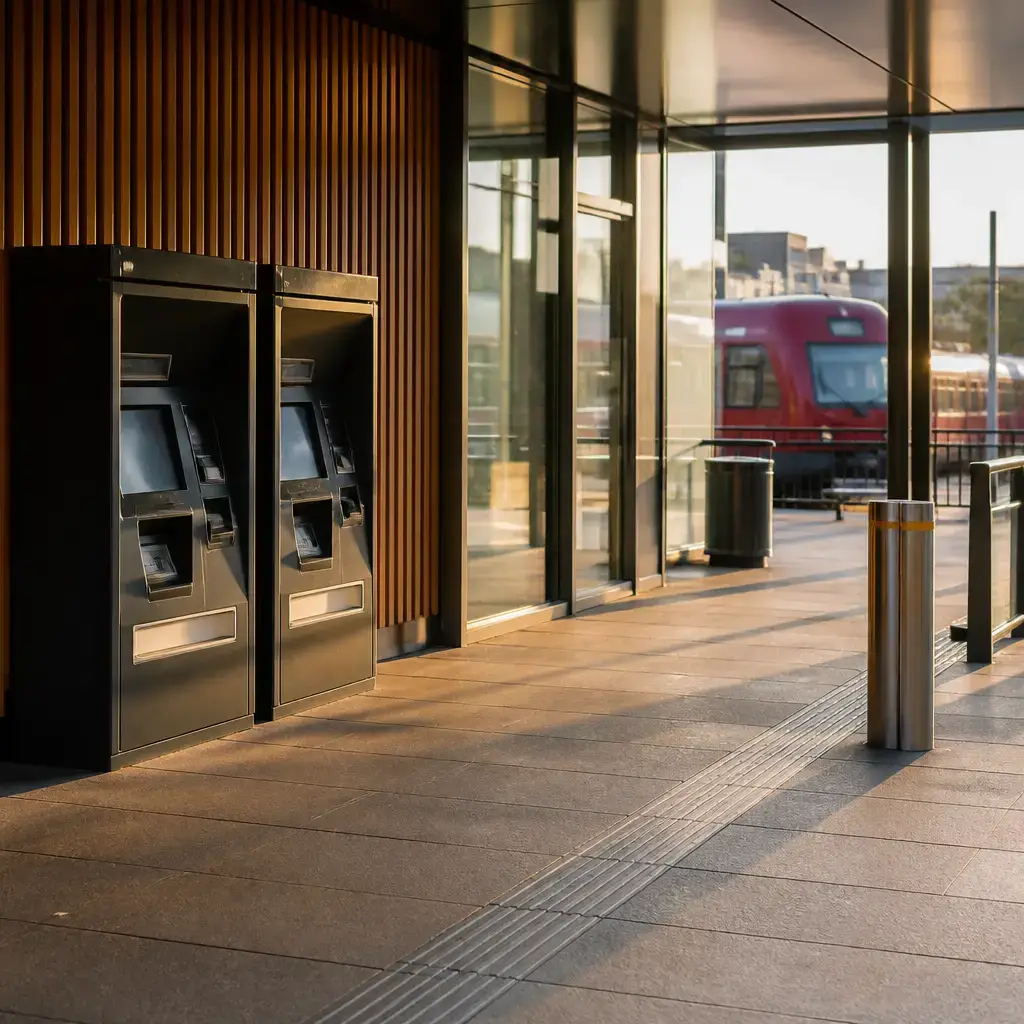
billetautomater
“billetautomater” means “ticket machines”, the machines where a ticket can be bought. In “Der er billetautomater ved indgangen”, it names what is available at the entrance; use it when identifying ticket-buying machines.
ved
“ved” means “by” or “at” in “ved indgangen”, locating the ticket machines next to the entrance. Use “ved” before a place when describing where something is situated.
indgangen
“indgangen” means “the entrance” in “ved indgangen”. With “ved”, it gives the location by which the ticket machines are found; use “ved indgangen” to identify a meeting or object location.
køber
“køber” describes the speaker buying the ticket in “Jeg køber min der.” It is used with the thing being bought, here “min”, and can be followed by a place such as “der”.
min
“min” means “my” or, in “Jeg køber min der”, “mine”, referring to the speaker’s ticket. It also appears before the noun in “min billet”; use it to identify something belonging to the speaker.
billet
“billet” means “ticket” in “min billet”, the ticket the speaker already has on the phone. It can be used after a possessive such as “min” when referring to a particular ticket.
på
“på” means “on” in “på min telefon”, describing where the ticket is available. Use “på” with a device or surface when saying that something is on it.
telefon
“telefon” means “phone” in “min telefon”. In “på min telefon”, it identifies the device containing or displaying the ticket; use it when referring to a phone.
Så
“Så” means “then” and introduces the speaker’s next step in “Så møder jeg dig her igen”. It is useful at the beginning of a statement when one action follows from what was just said.
møder
“møder” means “meet” in “Så møder jeg dig her igen”. It is used with the person being met, here “dig”; a reusable pattern is “møder” plus a person and, if needed, a place.
dig
“dig” means “you” as the person the speaker will meet in “møder jeg dig”. It identifies the person receiving the action; use it after a verb such as “møder” when addressing the person being met.
her
“her” means “here”, referring to the current meeting place in “her igen”. It can identify the place where someone should return or meet, as in “møder jeg dig her igen”.
igen
“igen” means “again” and shows that the meeting will take place here another time in “her igen”. Use it with an action or place when something is repeated or resumed.
når
“når” means “when” and introduces the time clause “når jeg har købt min”. It is useful for linking one action to the time at which another action is completed.
købt
“købt” is the form used with “har” in “har købt min” for the completed purchase of the ticket. A reusable pattern is “har købt” followed by the thing bought, such as “har købt min” in the dialogue.
venter
“venter” means “wait” in “Jeg venter i nærheden af automaterne”. It describes staying until someone or something is ready; use it with a location to say where you will wait.
i nærheden af
“i nærheden af” means “near”. In this expression, “i” means “in”, “nærheden” means “the vicinity”, and “af” completes the relation to the place or thing; together they describe being close to something, as in “i nærheden af automaterne”.
automaterne
“automaterne” means “the machines” and refers back to the ticket machines in the dialogue. In “i nærheden af automaterne”, it identifies the machines used as the waiting point.
Se efter
“Se efter” means “look for” in the instruction “Se efter mig”. “Se” directs the listener to look, while “efter” makes the looking a search for someone or something; use “Se efter” followed by the person or thing being sought.
mig
“mig” means “me”, the person the listener should find in “Se efter mig”. It follows “Se efter” to identify who is being looked for; use the same pattern when asking someone to look for you.
ved siden af
“ved siden af” means “beside” or “next to”. Here, “ved” locates something, “siden” contributes the idea of a side, and “af” completes the relation in “ved siden af dem”; use it before a person or thing to describe its adjacent position.
dem
“dem” means “them” and refers to the machines in “ved siden af dem”. It identifies the things beside which the speaker will be found; use “ved siden af” followed by “dem” when referring back to several things.