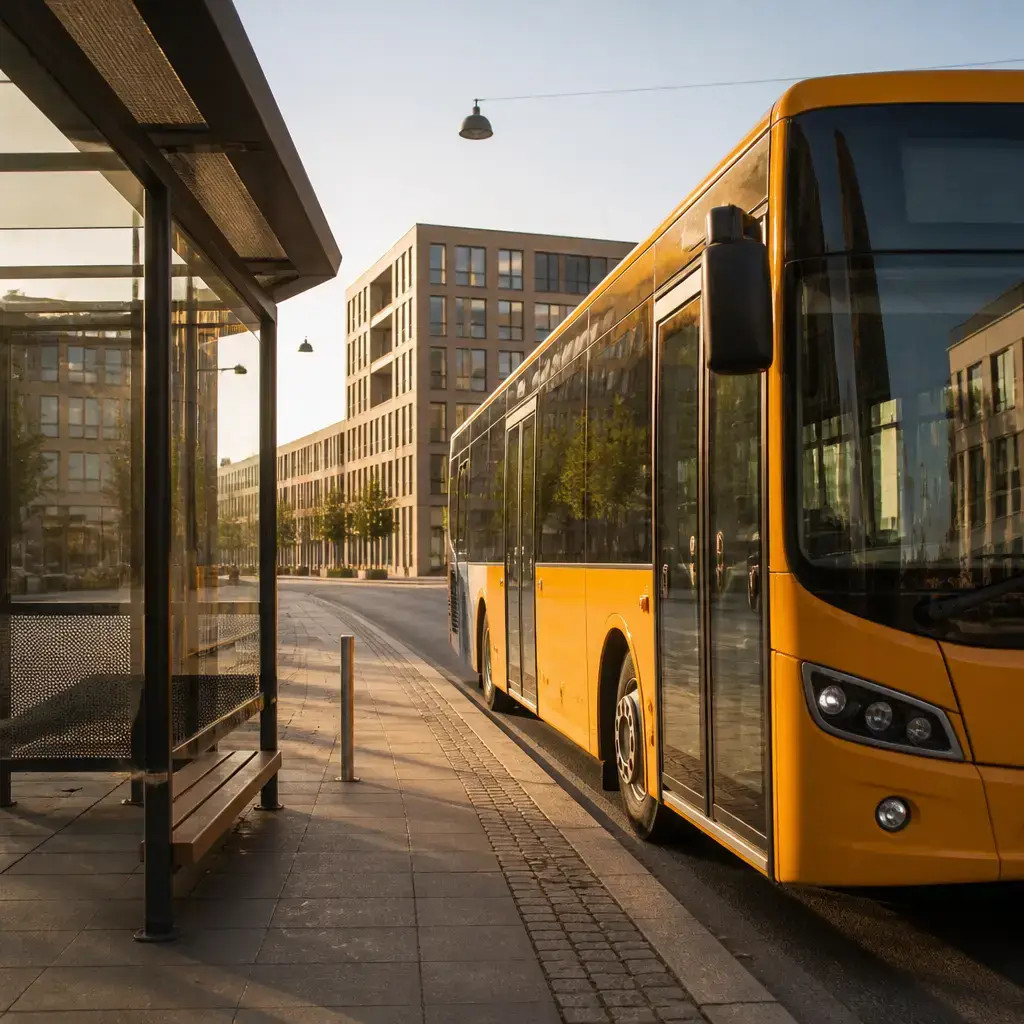
Bussen
“Bussen” means “the bus” in “Bussen er her.” It is the definite form of “bus,” used for a specific bus that has arrived; use it when referring to that known bus.
er
“Er” means “is” in “Bussen er her” and “det er den rigtige bus.” It links the subject with a place or description, as in “X er …”.
her
“Her” means “here” in “Bussen er her,” indicating the bus’s location. Use it to point out that someone or something is at the speaker’s location.
Tror
“Tror” means “think” in the question “Tror du, det er den rigtige bus?” It asks for someone’s opinion and is used here at the beginning of a question with “du”.
du
“Du” means “you” in “Tror du, det er den rigtige bus?” It identifies the person whose opinion is being asked; use it when speaking directly to one person.
det
“Det” refers to the bus or situation being evaluated in “det er den rigtige bus.” It is commonly used in the pattern “det er …” when identifying or describing something.
den
“Den” is part of the definite noun phrase “den rigtige bus,” referring to the specific bus that is correct. It appears before the adjective and noun when describing a definite common-gender noun phrase.
rigtige
“Rigtige” means “right” or “correct” in “den rigtige bus.” The citation form is “rigtig”; this exact form appears after “den” and before “bus” in the definite phrase.
bus
“Bus” means “bus” in “den rigtige bus.” It names the vehicle being identified, and it combines with “den rigtige” to refer to a specific bus.
Lad
“Lad” helps form the suggestion “Lad os spørge …” and “Lad os stige på …,” meaning “let’s ….” Use “Lad os” before an action to suggest doing it together.
os
“Os” means “us” in “Lad os spørge chaufføren” and “Lad os stige på.” Together with “Lad” it identifies the people included in the suggested action.
spørge
“Spørge” means “ask” in “Lad os spørge chaufføren.” It is the action proposed after “Lad os”; use it when requesting information from a person.
chaufføren
“Chaufføren” means “the driver” in “spørge chaufføren.” The citation form is “chauffør”; this exact form refers to the specific driver of the bus.
før
“Før” means “before” in “før vi stiger på,” introducing the action that must happen earlier. Use “før” before a clause to order two actions in time.
vi
“Vi” means “we” in “før vi stiger på.” It refers to the speakers as a group and is used as the subject of the following action.
stiger
“Stiger” contributes the meaning “get on” in the expression “stiger på.” With “på,” it describes boarding the bus; use the expression when talking about getting onto public transport.
på
“På” is part of “stiger på,” where it contributes the meaning of getting onto the bus rather than simply indicating location. Keep it with “stiger” when using this boarding expression.
Undskyld
“Undskyld” means “excuse me” at the start of “Undskyld, kører denne bus til stationen?” It is a polite way to address someone before asking for information.
kører
“Kører” means “goes” in “kører denne bus til stationen,” describing the bus’s route. It is used here with a vehicle as the subject and “til” to name the destination.
denne
“Denne” means “this” in “denne bus,” pointing to the bus the speakers are asking about. Use it directly before a noun when identifying something nearby or under discussion.
til
“Til” means “to” in “til stationen,” marking the destination of the bus. It is used after “kører” in the pattern “kører … til …” to ask or state where a vehicle goes.
stationen
“Stationen” means “the station” in “kører denne bus til stationen.” The citation form is “station”; this exact form refers to the specific station that is the destination.
sidste
“Sidste” means “last” in “det sidste stoppested.” It identifies the final stop in the route and appears before the noun it describes.
stoppested
“Stoppested” means “stop” in “det sidste stoppested,” referring to a place where the bus stops. It is used here with “sidste” to identify the final stop.
Så
“Så” means “then” in “Så er det den rigtige bus,” marking a conclusion from the information about the station. Use it to connect a result or decision to what was just said.
og
“Og” means “and” in “stige på og gå længere ind.” It joins the two actions in the suggestion, showing that they are to happen together or in sequence.
gå
“Gå” means “go” or “walk” in “gå længere ind,” describing movement farther inside the bus. Use it with a direction or destination to say where someone should move.
længere
“Længere” means “farther” or “further” in “gå længere ind.” Together with “ind,” it specifies movement farther toward the inside; use the expression when asking someone to move further in.
ind
“Ind” means “inside” in “gå længere ind,” indicating inward movement. It commonly follows a movement verb when the direction is into an enclosed place.
Jeg
“Jeg” means “I” in “Jeg stiller mig tæt på midten.” It identifies the speaker as the subject of the action and is used at the beginning of this statement.
stiller
“Stiller” means “stand” or “place” in “stiller mig,” describing the speaker positioning themself. The expression “stiller mig” is used when saying where the speaker will position themself.
mig
“Mig” refers back to the speaker in “Jeg stiller mig,” making the action reflexive: the speaker positions themself. It follows “stiller” in this expression and identifies who is being positioned.
tæt
“Tæt” means “close” or “near” in “tæt på midten.” Together with “på,” it describes proximity to a place or object; use the full expression to say that something is nearby.
midten
“Midten” means “the middle” in “tæt på midten.” The citation form is “midte”; this exact form refers to the central part of the bus.