Har
“Har” means “do we have” here, asking whether anything more is needed. It is the form of “have” used in the question “Har vi brug for noget andet?”. The pattern “Har vi brug for ...?” can be used to ask whether something is needed.
vi
“vi” means “we” and refers to the two people shopping together. It is the subject in “Har vi brug for noget andet?”. Use “vi” when talking about yourself together with other people.
brug for
“brug for” means “need” as part of the expression “have brug for”. In “Har vi brug for noget andet?”, it identifies what may still be needed. The reusable pattern is “have brug for” followed by the thing that is needed.
noget
“noget” refers to an unspecified thing; in this question it means “anything”. Together with “andet”, it forms “noget andet”, meaning “anything else” in this context. Use “noget andet” when asking whether there is an additional thing.
andet
“andet” adds the meaning “other” or “else” in “noget andet”. It shows that the question concerns something beyond what they already have. The reusable expression is “noget andet” for “something or anything else”.
Jeg
“Jeg” means “I” and identifies the speaker who gives the opinion. It begins “Jeg tror, det er det hele.”. Use “Jeg” before a statement about yourself, such as an opinion or belief.
tror
“tror” means “think” or “believe” here, introducing the speaker’s judgment that everything is complete. It is used in “Jeg tror, ...”. The pattern “Jeg tror, ...” can introduce something the speaker considers likely or true.
det
“det” refers to the situation or things being discussed in “det er det hele”. The first occurrence means “it” or “that”, while the second is part of “det hele”, referring to the complete set. The expressions “det er ...” and “det hele” are useful for identifying or summarizing what is being discussed.
er
“er” means “is” in “det er det hele” and “Køen er lang”. It links what is being discussed with an identification or description. Use “er” in statements such as “Køen er lang” to describe a current state.
hele
“hele” means “whole” or “entire” and contributes the idea of completeness in “det hele”. The expression “det hele” means “everything” in this dialogue. Use “det hele” when referring to the complete set of relevant things.
Så
“Så” means “then” and marks the next action after the speakers confirm that they have everything. It begins “Så lad os gå til kassen.”. Use “Så ...” to introduce a next step that follows from a decision or situation.
lad
“lad” helps form the suggestion “let’s” in “lad os”. It does not express the whole suggestion by itself; together with “os” and the action, it proposes doing something jointly. The reusable pattern is “lad os” followed by an action.
os
“os” means “us” and includes the speaker and listener in the proposed action “lad os gå”. It contributes the group of people who should act together. Use “lad os” when suggesting a joint action.
gå
“gå” means “go” here, specifically in “gå til kassen”, meaning to go to the checkout. The reusable pattern is “gå til” followed by a destination. Use it when directing or suggesting movement to a place.
til
“til” means “to” and marks the destination in “gå til kassen”. It shows where the movement is directed. The pattern “gå til + destination” is used when saying where someone should go.
kassen
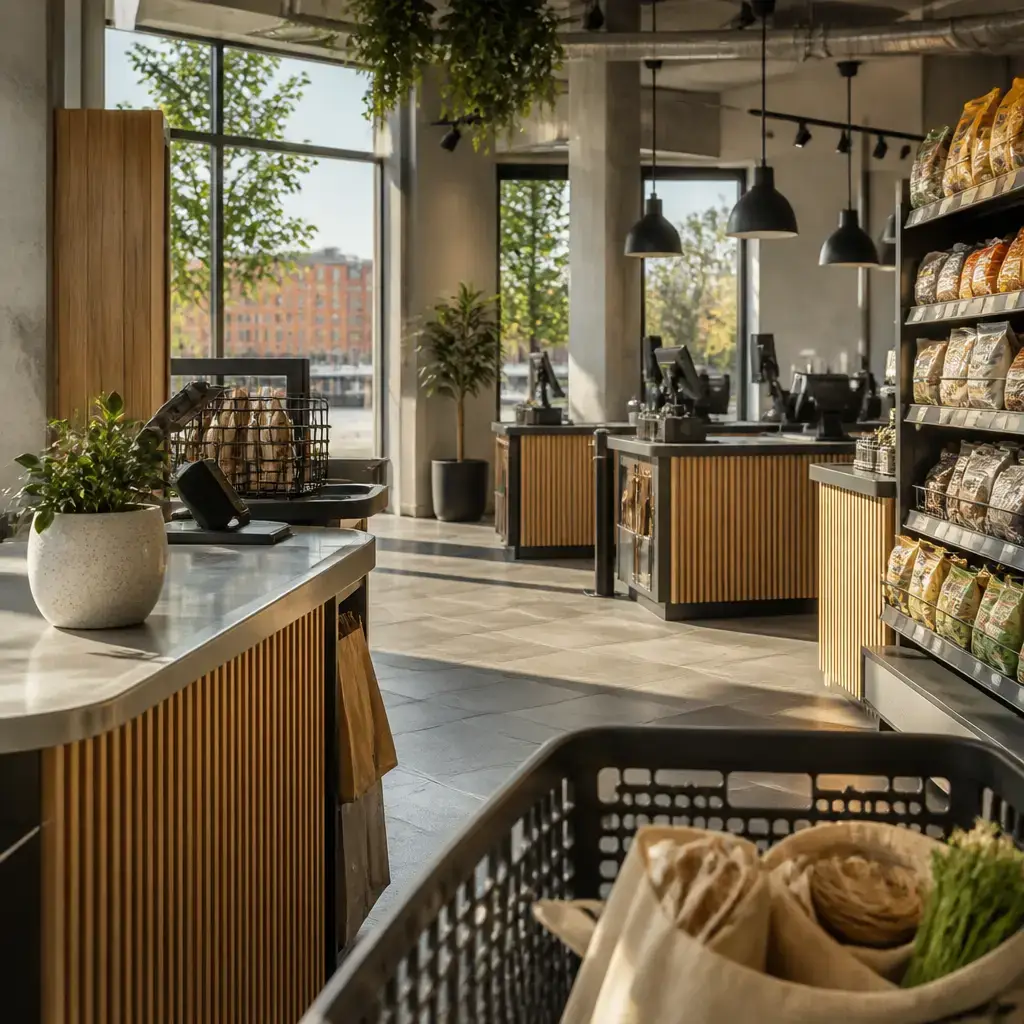
“kassen” means “the checkout” or “the register”, referring to the specific checkout area in the shop. It appears in “gå til kassen” and “Kassen derovre”. Use “gå til kassen” when suggesting that someone go to the checkout.
Køen
“Køen” means “the line” or “the queue”, referring to the specific line currently being discussed. It is the subject in “Køen er lang”. Use “Køen er ...” to describe that particular line.
lang
“lang” means “long” and describes the length of the queue in “Køen er lang”. It gives information about the current line. Use it after “er” when describing something as long.
derovre
“derovre” means “over there” and points to the other checkout area away from the speakers. It appears in “Kassen derovre” and “i kø derovre”. Use “derovre” to indicate a place that can be pointed out in the surrounding area.
en
“en” means “a” or “one” and introduces the queue in “en kortere kø”. It presents this as one queue among the available options. Use “en” before an unspecified singular noun in a phrase such as “en kortere kø”.
kortere
“kortere” means “shorter” and compares this queue with the long queue already mentioned. It appears before “kø” in “en kortere kø”. Use “kortere” when choosing or describing an option with less length than another.
kø
“kø” means “line” or “queue” in “en kortere kø”. In “stille os i kø”, the same word refers to the line that the speakers are going to join. Use “i kø” when describing being in a queue.
stille
“stille” is part of “stille os i kø”, meaning to line up or take a place in the queue. The complete expression gives the communicative action, while “stille” contributes the idea of positioning oneself. Use “stille os i kø” when joining a line.