Undskyld
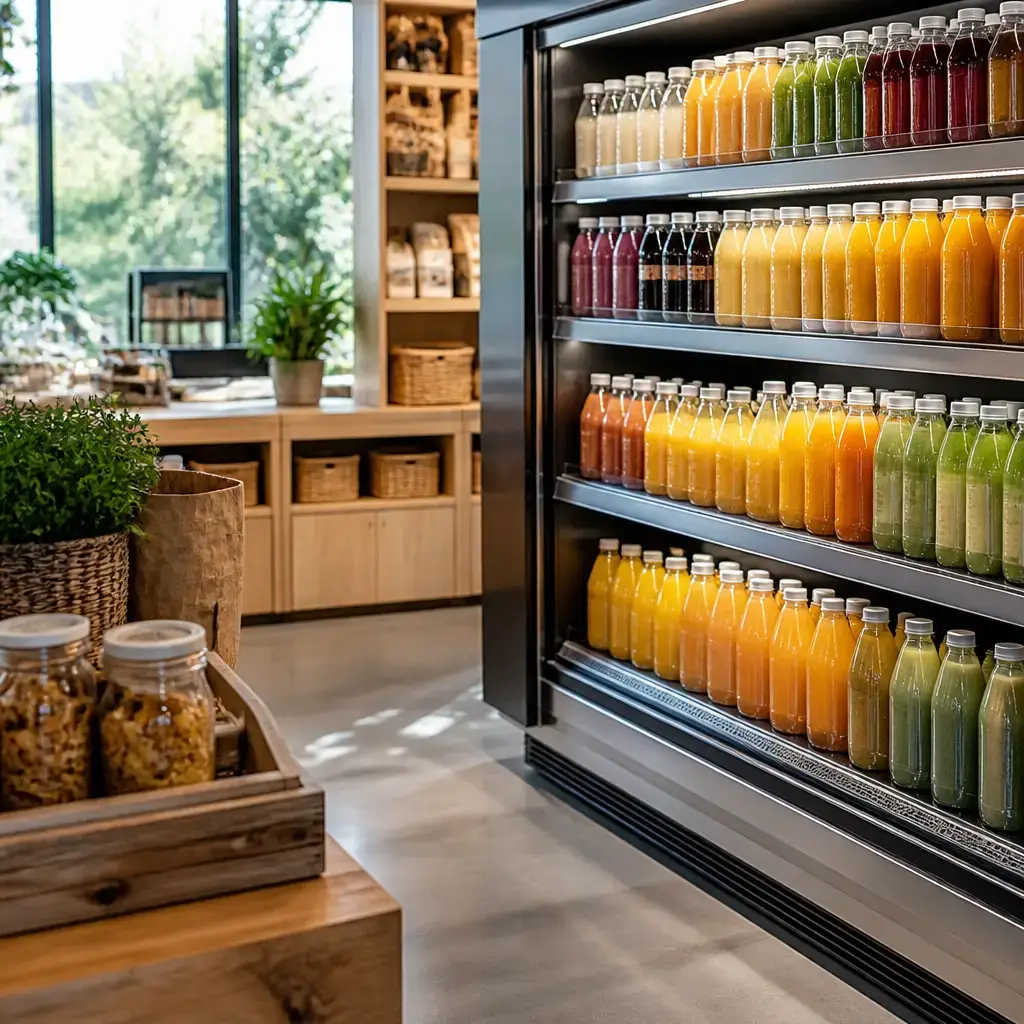
“Undskyld” is a polite way to get someone’s attention, as in “Undskyld, hvor er juicen?” It softens the question and is useful when addressing a shop worker or another person you need to interrupt politely.
hvor
“hvor” means “where” in “hvor er juicen?” It asks about the location of something and commonly comes before “er” in this question pattern. Use it when asking where an item or place is.
er
“er” means “is” in “hvor er juicen?” and “Den er i denne afdeling”. It links an item with its location here. The pattern “hvor er ...?” is useful when asking where something is.
juicen
“juicen” means “the juice” in “hvor er juicen?” The ending “-en” makes “juice” refer to the specific juice being sought; “juice” appears elsewhere in the dialogue. Use this form when asking about that known item.
Den
“Den” means “it” in “Den er i denne afdeling” and refers back to the juice. It lets the staff member give information about the item without repeating “juicen”. The same word appears lowercase as “den” in “den flaske”, where it identifies a particular bottle.
i
“i” means “in” in “i denne afdeling”. It introduces the place where the juice is located. Use “i” before a place or area when saying that something is inside it or located there.
denne
“denne” means “this” in “denne afdeling” and points to the section being identified. It comes directly before the noun “afdeling”. Use it when indicating a particular nearby or current place.
afdeling
“afdeling” means “section” or “department” in “denne afdeling”. It names the part of the shop where the juice is located. The pattern “i denne afdeling” is useful when directing someone to a shop section.
ved
“ved” contributes to the location phrase “ved siden af”, which means “next to” in the dialogue. Here it helps describe the juice’s position relative to the cold drinks. Reuse the complete phrase “ved siden af” before the thing that something is next to.
siden
“siden” means “side” inside the phrase “ved siden af”. Together with “ved” and “af”, it describes the juice as being next to the cold drinks. Use it as part of the complete location expression “ved siden af”, rather than alone for this meaning.
af
“af” completes the phrase “ved siden af de kolde drikkevarer”, meaning “next to the cold drinks”. Its contribution is understood together with “ved siden”. Use the pattern “ved siden af” followed by the object or place beside which something is located.
de
“de” means “the” in “de kolde drikkevarer” and introduces the specific group of cold drinks. It comes before the adjective and noun in this phrase. Use it when referring to that identified group of drinks.
kolde
“kolde” means “cold” and describes “drikkevarer” in “de kolde drikkevarer”. In this shop context, it identifies the drinks kept or served cold. Use it before “drikkevarer” when describing this kind of product.
drikkevarer
“drikkevarer” means “drinks” or “beverages” in “de kolde drikkevarer”. It names the group next to which the juice is located. The pattern “de kolde drikkevarer” is useful when identifying a particular group of drinks in a shop.
Hvad
“Hvad” means “what” in “Hvad anbefaler du?” It opens a question asking for information or a recommendation. Use the pattern “Hvad anbefaler du?” when asking someone what they suggest.
anbefaler
“anbefaler” means “recommend” in “Hvad anbefaler du?” It is used here to ask the staff member for a product suggestion. The complete pattern “Hvad anbefaler du?” is useful when asking for advice in a shop.
du
“du” means “you” in “Hvad anbefaler du?” and identifies the person whose recommendation is requested. Here it addresses the shop worker directly. Use it when asking one person for an opinion or suggestion.
juice
“juice” means “juice” in “Denne juice har en frisk smag”. It names the drink being described by the staff member. The same noun appears as “juicen” when referring to the specific juice in the earlier question.
har
“har” means “has” in “Denne juice har en frisk smag”. It links the juice with a quality it possesses, here a fresh taste. The pattern “har en frisk smag” is useful when describing the taste of a product.
en
“en” means “a” in “en frisk smag”. It introduces the noun phrase describing the juice’s taste and comes before “frisk smag”. Use the pattern “en” + adjective + noun when introducing a described item such as a taste.
frisk
“frisk” means “fresh” in “en frisk smag” and describes the taste of the juice. It gives a positive product description in the recommendation. Use it before “smag” when describing a fresh-tasting product.
smag
“smag” means “taste” or “flavor” in “en frisk smag”. It names the quality that the juice has. The pattern “har en frisk smag” is useful when describing how food or drink tastes.
og
“og” means “and” in “har en frisk smag og er nem at drikke”. It joins the taste description with a second description of the juice. Use it to connect two related descriptions or actions.
nem
“nem” means “easy” in “nem at drikke”. It describes the juice as easy to drink. The pattern adjective + “at” + verb, as in “nem at drikke”, is useful for describing an action that is easy to do.
at
“at” marks the verb phrase “at drikke” in “nem at drikke”. It links the action of drinking to the adjective “nem”. Use the complete pattern “nem at drikke” when describing a drink that is easy to drink.
drikke
“drikke” means “drink” in “at drikke”. It names the action that the juice is easy to perform. After “at”, it completes the phrase “nem at drikke”, which is useful when describing a drink.
Så
“Så” means “then” in “Så tager jeg den flaske”. It signals the customer’s decision after hearing the recommendation. Use it at the start of a response when moving from information or advice to a next action.
tager
“tager” means “get” or “take” in “Så tager jeg den flaske”. With “den flaske”, it expresses choosing or obtaining that bottle. The pattern “tager jeg den flaske” is useful when stating which item you choose.
jeg
“jeg” means “I” in “Så tager jeg den flaske”. It identifies the customer as the person making the choice. Use it as the subject when saying what you yourself will take or choose.
flaske
“flaske” means “bottle” in “den flaske”. It identifies the container the customer chooses. Use it after “den” when referring to a particular bottle, as in “den flaske”.