Mir
“Mir” means “to me” in “Mir ist aufgefallen”, identifying the person who noticed something. This form is used with the expression “Mir ist aufgefallen, dass …” when reporting an observation.
ist
“ist” helps form “Mir ist aufgefallen”, meaning that something came to the speaker’s notice. In this pattern, it is followed by “aufgefallen” and the noticed information introduced by “dass”.
aufgefallen
“aufgefallen” means “noticed” in “Mir ist aufgefallen, dass …”. Together with “ist”, it reports an observation, and the reusable pattern is “Mir ist aufgefallen, dass …”.
dass
“dass” introduces the information that was noticed: “dass mehrere Geräte lange Zeit mit Handtüchern blockiert wurden”. In this construction, the verb comes at the end of the subordinate clause.
mehrere
“mehrere” means “several” and describes more than one item in “mehrere Geräte”. It is commonly placed directly before the plural noun it specifies.
Geräte
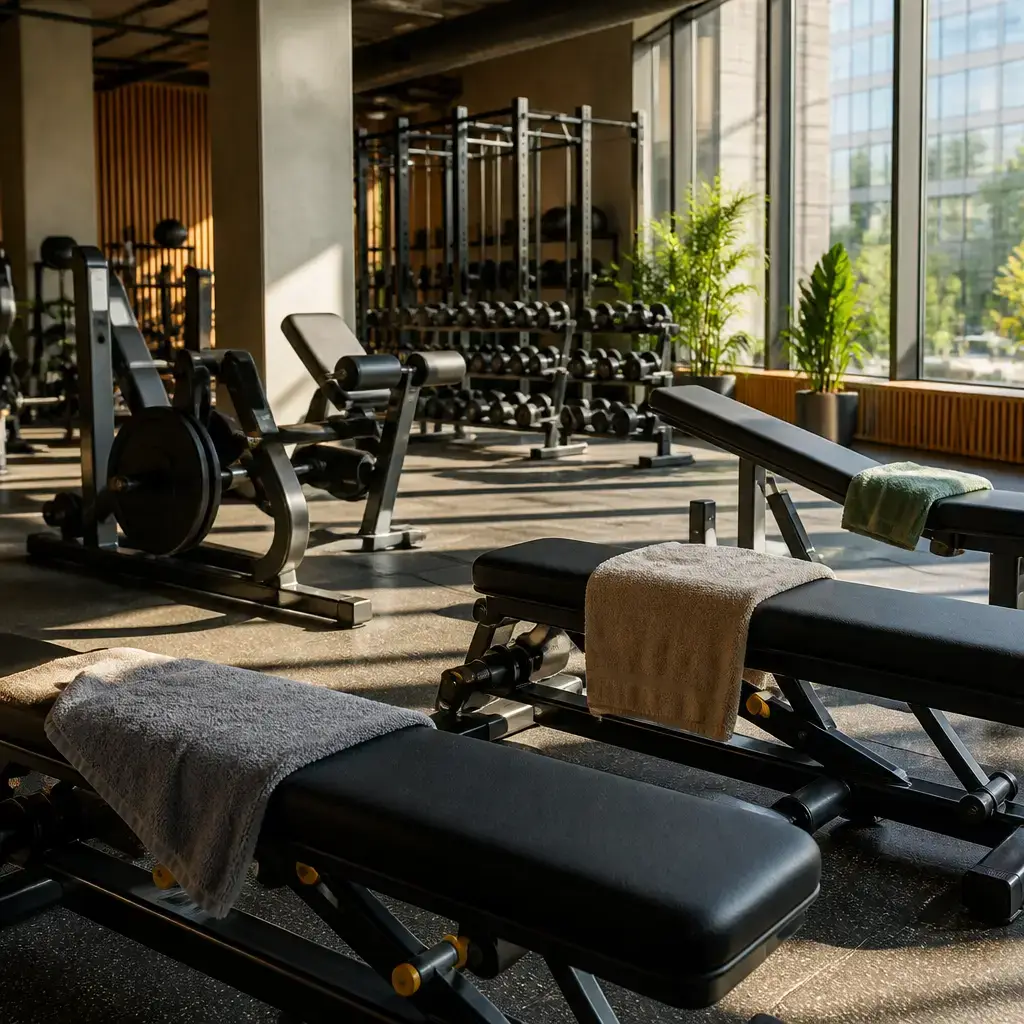
“Geräte” means “machines” or “equipment” in the gym context. It is used here as the subject of “blockiert wurden”, and “Zugang zu den Geräten” later refers to access to this equipment.
lange
“lange” means “for a long” in the time expression “lange Zeit”. The complete expression “lange Zeit” describes how long the machines were blocked.
Zeit
“Zeit” means “time” in “lange Zeit”, which means “for a long time”. This noun commonly follows a duration word such as “lange” in this expression.
mit
“mit” means “with” and describes the towels used to block the machines in “mit Handtüchern”. It commonly introduces the item or means involved in an action.
Handtüchern
“Handtüchern” means “towels” in “mit Handtüchern blockiert”. The form appears after “mit” and identifies what was used to reserve the equipment.
blockiert
“blockiert” means “blocked” or “reserved” in the context of machines being held with towels. In “Geräte lange Zeit mit Handtüchern blockiert wurden”, it describes the state imposed on the equipment.
wurden
“wurden” combines with “blockiert” in “blockiert wurden” to say that the machines were being blocked. In the subordinate clause, this verb form appears at the end.
Das
“Das” refers to the situation just described in “Das kann frustrierend sein” and “Das würde weniger konfrontativ wirken”. It is used at the start of a sentence to comment on a preceding situation.
kann
“kann” expresses that something can be or can feel a certain way in “Das kann frustrierend sein”. It is followed by the infinitive “sein” at the end of the clause.
frustrierend
“frustrierend” means “frustrating” in “Das kann frustrierend sein”. It describes the effect of the crowded gym and is used after “sein”.
sein
“sein” means “be” in “Das kann frustrierend sein”. It follows the modal verb “kann” and completes the description of the situation.
besonders
“besonders” means “especially” and emphasizes the condition “wenn das Fitnessstudio voll ist”. It is useful for highlighting one circumstance as particularly relevant.
wenn
“wenn” introduces the condition “wenn das Fitnessstudio voll ist”, meaning “when” or “if the gym is busy”. It begins a subordinate clause in which “ist” comes at the end.
Fitnessstudio
“Fitnessstudio” means “gym” or “fitness facility”. In “wenn das Fitnessstudio voll ist”, it is the place described as busy or full.
voll
“voll” means “full” and here describes a gym with many people, so it corresponds to “busy”. It is used after “ist” in “das Fitnessstudio voll ist”.
Ich
“Ich” means “I” and identifies the speaker in “Ich wollte niemanden direkt zur Rede stellen”. It is placed at the beginning of this statement about the speaker’s intention.
wollte
“wollte” expresses the speaker’s intention in “Ich wollte niemanden direkt zur Rede stellen”. It is followed by the person affected and the infinitive phrase “zur Rede stellen”.
niemanden
“niemanden” means “no one” in “Ich wollte niemanden direkt zur Rede stellen”. It is the person whom the speaker did not want to confront, and it functions as the object of “stellen” in the expression.
direkt
“direkt” means “directly” and describes how the speaker did not want to confront anyone. It can be placed before the action it modifies, as in “jemanden direkt zur Rede stellen”.
zur Rede stellen
“zur Rede stellen” is the complete expression for confronting someone directly or demanding an explanation. In it, “zur” and “Rede” form the phrase “zur Rede”, while “stellen” completes the expression; a reusable pattern is “jemanden zur Rede stellen”.
Personal
“Personal” means “staff” in “Das Personal kann allgemein daran erinnern”. It refers collectively to the people working at the gym and can be used as the subject of an action.
allgemein
“allgemein” means “generally” and describes a reminder aimed at everyone rather than a particular person. It modifies “daran erinnern” in “allgemein daran erinnern”.
daran
“daran” refers back to the rule or issue being remembered in “daran erinnern”. The reusable construction is “jemanden daran erinnern, dass …” or “an etwas erinnern”.
erinnern
“erinnern” means “remind” in “daran erinnern”, where staff remind members about appropriate equipment use. The pattern “jemanden daran erinnern, dass …” keeps the person and the point of the reminder explicit.
ohne
“ohne” means “without” and introduces the action that is avoided in “ohne jemanden gezielt herauszugreifen”. It is followed here by an infinitive construction.
jemanden
“jemanden” means “someone” in “ohne jemanden gezielt herauszugreifen”. It identifies the person who would otherwise be singled out and is the object of “herauszugreifen”.
gezielt
“gezielt” means “selectively” or “deliberately” in “jemanden gezielt herausgreifen”. It emphasizes that one particular person would be chosen rather than addressing the whole gym.
herauszugreifen
“herauszugreifen” means “to single out” in “jemanden gezielt herauszugreifen”. Together with “ohne”, it expresses avoiding the act of selecting one person, and the object slot can be reused in “jemanden herausgreifen”.
würde
“würde” expresses a hypothetical result in “Das würde weniger konfrontativ wirken”. It combines with the infinitive “wirken”, which appears at the end of the clause.
weniger
“weniger” means “less” and reduces the degree of “konfrontativ” in “weniger konfrontativ”. It is placed directly before the quality being compared.
konfrontativ
“konfrontativ” means “confrontational” in “weniger konfrontativ wirken”. It describes how the general announcement would come across to gym members.
wirken
“wirken” means “seem” or “come across” in “weniger konfrontativ wirken”. It is used after “würde” to describe the impression created by an action or message.
eine
“eine” means “a” or “an” in “eine Durchsage”. It introduces one non-specific announcement before the noun “Durchsage”.
Durchsage
“Durchsage” means “announcement”, specifically a public announcement in the gym. The common pattern “eine Durchsage machen” describes giving such an announcement.
machen
“machen” means “make” or, in this context, “give” in “eine Durchsage machen”. The reusable expression is “eine Durchsage machen”, with the announcement as its object.
und
“und” means “and” and joins the two actions “eine Durchsage machen” and “den Trainingsbereich häufiger kontrollieren”. It links actions that the staff member can carry out.
den
“den” means “the” in “den Trainingsbereich kontrollieren”. It introduces the specific area being monitored in this sentence.
Trainingsbereich
“Trainingsbereich” means “training area” or “gym floor”. In “den Trainingsbereich häufiger kontrollieren”, it is the area staff will check more often.
häufiger
“häufiger” means “more often” and describes the increased frequency of checking the training area. It modifies “kontrollieren” in “häufiger kontrollieren”.
kontrollieren
“kontrollieren” means “monitor” or “check” in “den Trainingsbereich kontrollieren”. The pattern places the area being checked directly after the verb.
sollte
“sollte” expresses an expected or intended result in “Das sollte den Zugang zu den Geräten verbessern”. It is followed by the infinitive “verbessern” and presents the improvement as a likely outcome.
Zugang
“Zugang” means “access” in “den Zugang zu den Geräten verbessern”. The expression focuses on how easily people can use the equipment.
zu
“zu” links “Zugang” with the equipment that people need access to in “Zugang zu den Geräten”. This is a common pattern for naming what access is connected with.
Geräten
“Geräten” means “machines” or “equipment” in “zu den Geräten”. It identifies the equipment whose access should improve.
verbessern
“verbessern” means “improve” in “den Zugang zu den Geräten verbessern”. The thing being improved comes before the verb in the infinitive construction: “den Zugang … verbessern”.
Spannungen
“Spannungen” means “tensions” in “ohne Spannungen zu erzeugen”. It refers to interpersonal conflict that the general approach is intended to avoid.
erzeugen
“erzeugen” means “create” or “cause” in “Spannungen zu erzeugen”. The reusable pattern is “Spannungen erzeugen”, with the result or effect as the object.
Bitte
“Bitte” means “please” at the beginning of “Bitte melde es wieder”. It makes the following instruction a polite request.
melde
“melde” is used here to ask the addressee to report the issue again: “Bitte melde es wieder”. The pattern keeps the thing being reported after the verb, as in “melde es”.
es
“es” means “it” and refers to the equipment problem already being discussed in “Bitte melde es wieder”. It is the object of “melde”.
wieder
“wieder” means “again” in “melde es wieder”. It asks the listener to report the same issue another time if it continues.
dasselbe
“dasselbe” means “the same thing” in “wenn dasselbe weiterhin passiert”. It refers to the same equipment-reservation problem mentioned earlier.
weiterhin
“weiterhin” means “still” or “continuing” in “dasselbe weiterhin passiert”. It shows that the situation has not stopped and is occurring again over time.
passiert
“passiert” means “happens” in “wenn dasselbe weiterhin passiert”. It describes the problem occurring, and because it is in the subordinate clause after “wenn”, it appears at the end.