Benutzt
In “Benutzt gerade jemand dieses Laufband?” it asks whether someone is using the treadmill. “Benutzt” is the verb form placed at the beginning of this yes-or-no question; the citation form is benutzen.
gerade
In “Benutzt gerade jemand dieses Laufband?” gerade means right now or currently. It places the action in the present moment and commonly appears with an action that is happening now.
jemand
In “Benutzt gerade jemand dieses Laufband?” jemand means someone or anyone. It refers to an unspecified person and is useful when asking whether a person is involved in an action.
dieses
In “dieses Laufband” dieses means this and points to the particular treadmill nearby. It is used directly before the noun it identifies.
Laufband
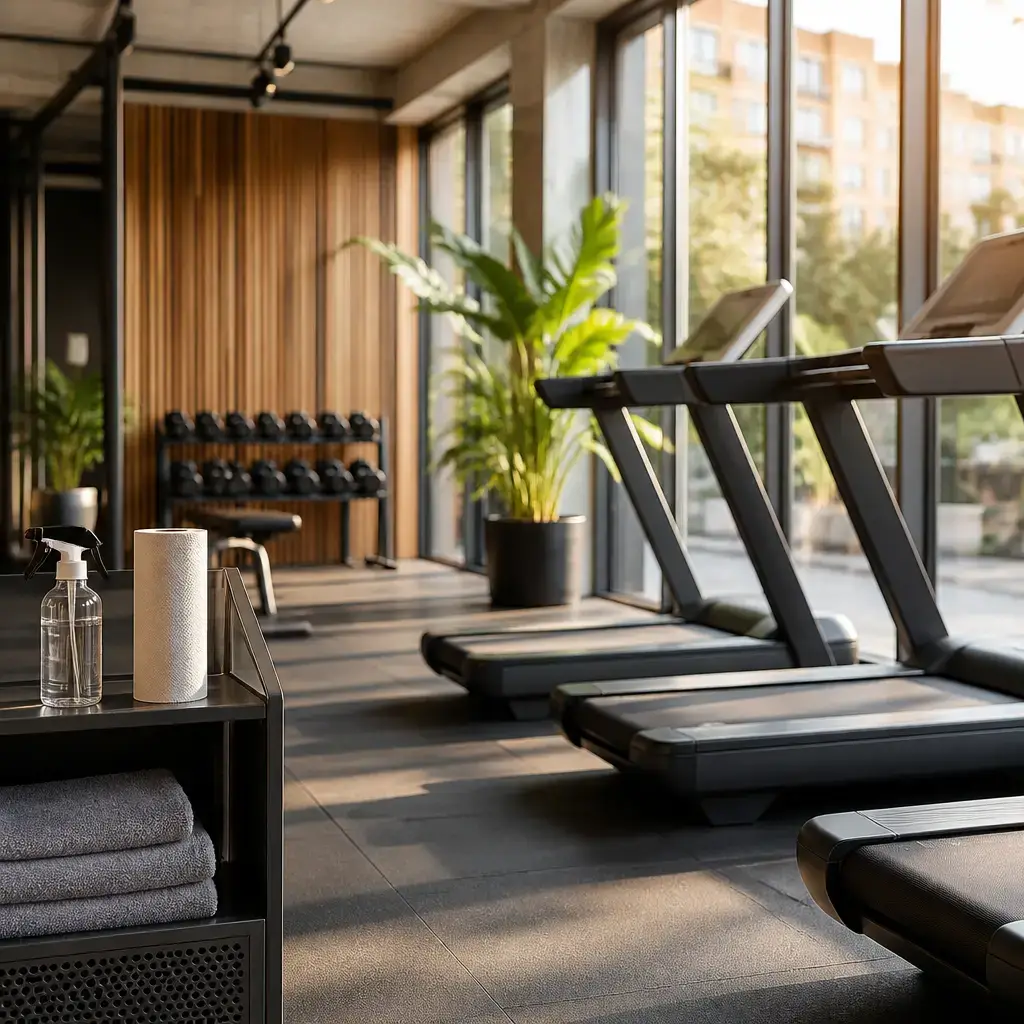
“Laufband” means treadmill, the shared gym equipment being discussed. The word is used as the object of benutzen in “dieses Laufband”.
Es
In “Es sieht frei aus” Es refers to the treadmill and means it. It stands at the beginning of the sentence as the subject of the description.
sieht
In “Es sieht frei aus” sieht means looks or appears. Together with aus, it describes how the treadmill seems rather than stating that it is definitely free; the citation form is sehen.
frei
In “Es sieht frei aus” frei means available for use. It describes the treadmill as not currently occupied, and it follows sieht in this appearance expression.
aus
In “Es sieht frei aus” aus completes the expression meaning looks or appears. This separable verb construction places aus at the end of the main clause.
aber
In “..., aber achte auf die Zeit” aber means but and introduces advice that contrasts with the treadmill looking free. It commonly links two contrasting statements or ideas.
achte
In “achte auf die Zeit” achte tells the listener to pay attention or keep an eye on something. It is a direct instruction to one person, and achten is commonly used with auf for the thing receiving attention.
auf
In “achte auf die Zeit” auf is the preposition used with achten when directing attention to something. The reusable pattern is achten auf plus the thing to monitor.
die
In “die Zeit” die is the article before Zeit, referring to the time being monitored. It connects the noun to the phrase achten auf die Zeit.
Zeit
In “achte auf die Zeit” Zeit means time, specifically the amount of time spent using the treadmill. It is the thing that the listener is told to monitor.
Wie
In “Wie lange soll ich es benutzen?” Wie means how and begins the question about duration. Together with lange, it asks for the length of time.
lange
In “Wie lange soll ich es benutzen?” lange expresses duration and means for how long. The phrase Wie lange commonly asks about the length of an activity or wait.
soll
In “Soll ich es benutzen?” soll asks what the speaker should do or is expected to do. It is used with the infinitive benutzen to ask for guidance about the appropriate action; the citation form is sollen.
ich
In “Soll ich es benutzen?” ich means I and identifies the speaker as the person who may use the treadmill. It is the subject of the action expressed by benutzen.
benutzen
In “Soll ich es benutzen?” benutzen means to use the treadmill. It remains in the infinitive after the modal verb soll; the reusable pattern is Soll ich plus an infinitive.
wenn
In “wenn andere warten” wenn introduces the condition that other people are waiting. It connects the question about usage time to the situation in which others need the equipment.
andere
In “wenn andere warten” andere means other people or others who may be waiting for the treadmill. It refers to people different from the current user and functions as the subject of warten.
warten
In “wenn andere warten” warten means wait. It describes the other people waiting for access, and it follows andere in this subordinate clause.
Begrenze
In “Begrenze deine Zeit” Begrenze gives the direct instruction to limit the amount of time used. It is addressed to one person; the citation form is begrenzen.
deine
In “deine Zeit” deine means your and links the time to the person being addressed. It appears directly before the noun Zeit in this instruction.
etwa
In “etwa zehn Minuten” etwa means around or approximately. It makes the time limit an estimate rather than an exact number and commonly comes before an amount.
Minuten
In “etwa zehn Minuten” Minuten means minutes, the unit used for the suggested time limit. It follows the number zehn to express a duration.
im
In “im Fitnessstudio” im means in the and identifies the location where the situation occurs. It is the contracted form of in dem and appears before Fitnessstudio.
Fitnessstudio
“Fitnessstudio” means gym or fitness studio. In “wenn im Fitnessstudio viel los ist”, it names the place whose level of activity determines the advice.
viel los
In “wenn im Fitnessstudio viel los ist” viel los means busy or with a lot going on. The expression combines viel, a large amount, with los, indicating activity or events; it is used to describe a place that is crowded or active.
ist
In “viel los ist” ist means is and links the gym with the description viel los. It is the verb form used at the end of this subordinate clause; the citation form is sein.
abwischen
In “Soll ich es abwischen?” abwischen means wipe it down, referring to cleaning the treadmill’s surface. It remains in the infinitive after soll, and the reusable pattern is to wipe something with abwischen.
fertig
In “wenn ich fertig bin” fertig means finished or done. It describes the speaker’s state after using the treadmill and commonly appears with sein when someone has completed an activity.
bin
In “wenn ich fertig bin” bin means am and links ich with the state fertig. It is the first-person form of sein and comes at the end because it is in a subordinate clause.
Benutze
In “Benutze das Spray” Benutze instructs one person to use the spray. It is a direct instruction, and the citation form is benutzen.
das
In “das Spray” das is the article before Spray and identifies the particular spray available for cleaning. It connects the instruction Benutze with the cleaning item.
Spray
“Spray” means spray, the cleaning product to be used on the equipment. In “Benutze das Spray”, it is the object of the instruction.
und
In “das Spray und ein Papiertuch” und means and and joins the two cleaning items to be used. It connects nouns or actions without expressing contrast.
ein
In “ein Papiertuch” ein means a or one and introduces a paper towel. It appears directly before the noun Papiertuch to identify one item.
Papiertuch
“Papiertuch” means paper towel, the second item used for cleaning. In “ein Papiertuch aus dem Regal”, it is one of the objects taken for the task.
dem
In “aus dem Regal” dem is the article used after aus for the place from which the paper towel comes. It forms the phrase meaning from the shelf or rack.
Regal
In “aus dem Regal” Regal means shelf or rack. It identifies the place where the paper towel can be found, with aus expressing its source.
mache
In “Ich mache es sauber” mache means make or do and is part of the expression for making the treadmill clean. The citation form is machen, and the object es plus sauber shows what is made clean.
sauber
In “Ich mache es sauber” sauber means clean and describes the result intended for the treadmill. It appears after the object in this construction describing a changed or maintained condition.
bevor
In “bevor ich gehe” bevor means before and introduces the action that must happen first. It connects cleaning with leaving and sends the verb gehe to the end of the subordinate clause.
gehe
In “bevor ich gehe” gehe means go or leave, referring to leaving the gym. It is the first-person form of gehen and appears at the end of the clause after bevor.
So
In “So bleibt das Gerät für die nächste Person bereit” So means that way or therefore and refers to the cleaning just mentioned. It explains the result of the speaker’s action.
bleibt
In “bleibt das Gerät” bleibt means stays or remains. It expresses that the equipment continues to be ready for another user; the citation form is bleiben.
Gerät
“Gerät” means equipment or device and refers here to the treadmill. In “Das Gerät ... bereit”, it is the thing that remains ready for the next person.
für
In “für die nächste Person” für means for and identifies who the ready equipment is intended for. It introduces the person who will use it next.
nächste
In “die nächste Person” nächste means next and identifies the person who comes after the current user. It appears directly before Person in this phrase about future use.
Person
In “für die nächste Person” Person means person and refers to the next gym user. It names the beneficiary of keeping the equipment ready.
bereit
In “das Gerät ... bereit” bereit means ready, describing the equipment’s usable condition for the next person. It functions as the state that remains after the current user cleans it.