Ich
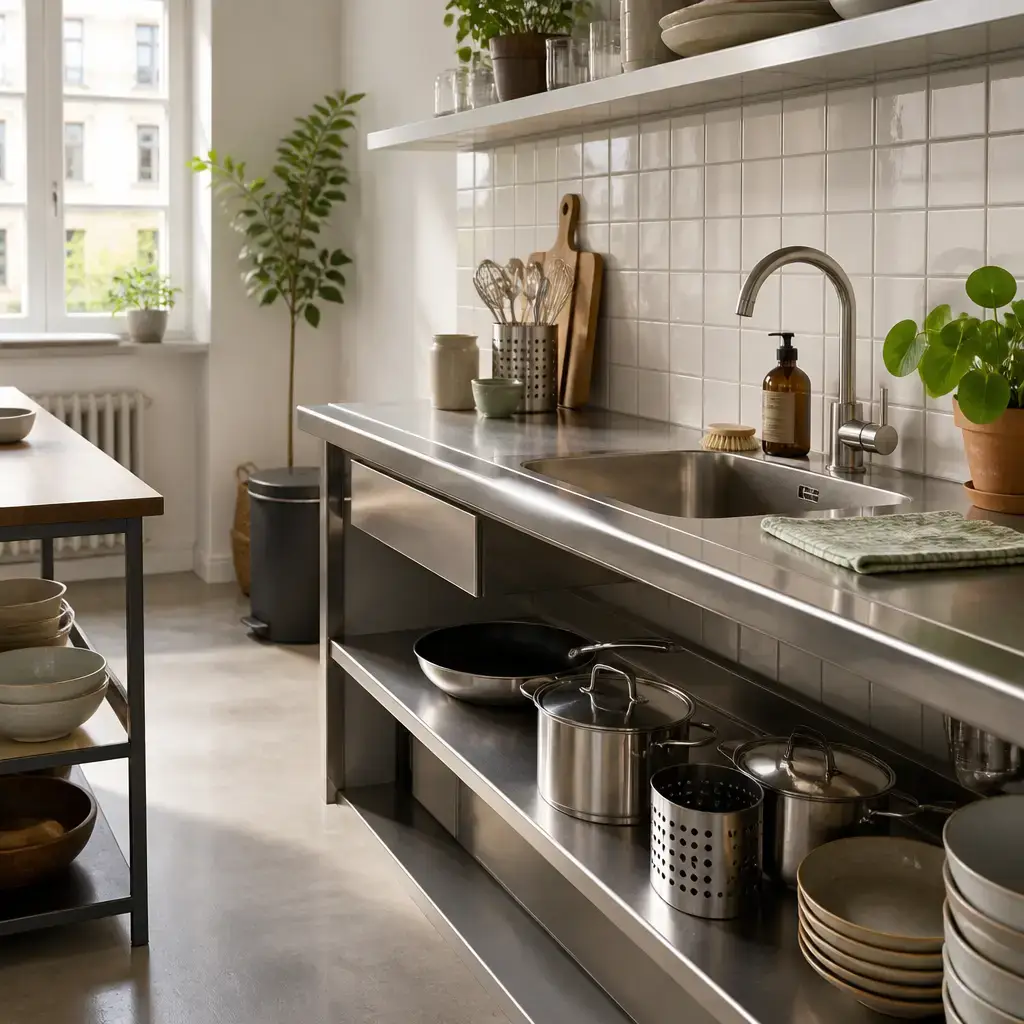
“Ich” means “I” and identifies the speaker in “Ich bin neu”. It is used as the subject when talking about yourself. New example: “Ich komme später.”
bin
“bin” means “am” in “Ich bin neu”. It is the form of “sein” used with “Ich” in a statement about yourself. A reusable pattern is “Ich bin …” followed by a description or situation.
neu
“neu” means “new” in “Ich bin neu in dieser Gemeinschaftsküche”, showing that the speaker is unfamiliar with this shared kitchen. It follows “bin” to describe the speaker’s situation. New example: “Ich bin neu hier.”
in
“in” means “in” and places the speaker within “dieser Gemeinschaftsküche”. Here it introduces the place connected with being new. A reusable pattern is “neu in …” for being new to a place or group.
dieser
“dieser” means “this” in “dieser Gemeinschaftsküche”, referring to this particular shared kitchen. It appears directly before the compound noun it identifies. New example: “in dieser Wohnung” means “in this apartment”.
Gemeinschaftsküche
“Gemeinschaftsküche” means “shared kitchen” and names the kitchen used by several people. It is the specific place in “dieser Gemeinschaftsküche”. A reusable pattern is “in einer Gemeinschaftsküche” when describing being in a shared kitchen.
Was
“Was” means “what” in “Was sollte ich wissen?”. It introduces a question about information the speaker needs. A reusable question pattern is “Was sollte ich …?” when asking what one ought to do or know.
sollte
“sollte” means “should” in “Was sollte ich wissen?”. It asks for advice about what would be useful or appropriate for the speaker to know. A reusable pattern is “Ich sollte …” for something one ought to do.
wissen
“wissen” means “know” in “Was sollte ich wissen?”. It refers to having information about the shared kitchen and its rules. It appears after “sollte”; a reusable pattern is “etwas wissen” for knowing something.
Halte
“Halte” means “keep” in “Halte die Arbeitsflächen frei”. It gives a direct instruction to keep the work surfaces clear. A reusable pattern is “Halte … frei” when telling someone to keep a place or object unobstructed.
die
“die” means “the” in “die Arbeitsflächen”. It introduces the specific work surfaces being discussed. Its meaning here comes from the noun phrase “die Arbeitsflächen”, not from the article alone.
Arbeitsflächen
“Arbeitsflächen” means “work surfaces” or “counters” in “Halte die Arbeitsflächen frei”. It refers to the kitchen surfaces that should remain clear. A reusable pattern is “die Arbeitsflächen reinigen” for cleaning the counters.
frei
“frei” means “clear” in “die Arbeitsflächen frei”. It describes the surfaces as free of items. A reusable pattern is “etwas frei halten” for keeping something clear.
und
“und” means “and” and connects the two instructions in “Halte die Arbeitsflächen frei und räume direkt nach dem Kochen auf”. It links actions that belong to the same kitchen routine. New example: “Wasche die Pfanne und stelle sie weg.”
räume
“räume” contributes the meaning “put away” or “clear up” in “räume direkt nach dem Kochen auf”. Together with “auf”, it tells the listener to tidy up after cooking. A reusable pattern is “etwas aufräumen” for tidying a place or things.
direkt
“direkt” means “right away” in “direkt nach dem Kochen”. It emphasizes that the cleanup should happen immediately after cooking. A reusable pattern is “direkt nach …” for something done immediately after an event.
nach
“nach” means “after” in “nach dem Kochen”. It places the cleanup after the cooking. A reusable pattern is “nach dem …” followed by an activity or event.
dem
“dem” means “the” in “nach dem Kochen”. Together with “nach”, it introduces the cooking activity that comes before the cleanup. Its function is understood within the phrase “nach dem Kochen”.
Kochen
“Kochen” means “cooking” in “nach dem Kochen”. It names the activity after which the listener should tidy up. A reusable pattern is “nach dem Kochen” for routines that happen after cooking.
auf
“auf” completes the separable expression “räumt … auf” in “räume direkt nach dem Kochen auf”. The whole expression means “tidy up” or “clear up”, while “auf” appears at the end of the instruction. A reusable pattern is “Ich räume … auf” with the thing or place being tidied.
Wo
“Wo” means “where” in “Wo soll ich eine Pfanne hinstellen?”. It asks for the location for placing the pan. A reusable question pattern is “Wo soll ich …?” when asking where something should go.
soll
“soll” means “should” or “am I supposed to” in “Wo soll ich eine Pfanne hinstellen?”. It asks about the correct action or location according to the kitchen rules. A reusable pattern is “Wo soll ich …?” for asking where to place something.
eine
“eine” means “a” in “eine Pfanne”. It introduces one pan without identifying a particular pan by name. It appears directly before the noun “Pfanne”.
Pfanne
“Pfanne” means “pan” in “eine Pfanne hinstellen”. It is the kitchen item that should be placed on a shelf after washing and drying. A reusable pattern is “eine Pfanne waschen” for washing a pan.
hinstellen
“hinstellen” means “put” or “place” in “eine Pfanne hinstellen”. It describes placing the pan somewhere, specifically on the shelf mentioned in the answer. A reusable pattern is “etwas hinstellen” when placing an object somewhere.
nachdem
“nachdem” means “after” in “nachdem ich sie gespült habe”. It introduces the action that must be completed before the pan is placed. A reusable pattern is “nachdem ich … habe” for describing one completed action before another.
sie
“sie” means “it” in “nachdem ich sie gespült habe” and refers back to “eine Pfanne”. It is the item being washed. A reusable pattern is to use “sie” to refer back to a feminine noun such as “die Pfanne”.
gespült
“gespült” means “washed” or “rinsed” in “ich sie gespült habe”. It describes the pan after washing. It appears with “habe” in the completed-action expression “gespült habe”.
habe
“habe” means “have” in “ich sie gespült habe”. Together with “gespült”, it places the washing action before the later action of putting the pan away. A reusable pattern is “ich habe … gespült” for saying that you have washed something.
Benutze
“Benutze” means “use” in “Benutze das untere Regal”. It gives a direct instruction to use the lower shelf. A reusable pattern is “Benutze …” when telling someone which object or place to use.
das
“das” means “the” in “das untere Regal”. It introduces the specific lower shelf the listener should use. Its function is part of the noun phrase “das untere Regal”.
untere
“untere” means “lower” in “das untere Regal”. It distinguishes this shelf by its position. A reusable pattern is “das untere …” when identifying the lower of two or more comparable things.
Regal
“Regal” means “shelf” in “das untere Regal”. It names the place where the dry pan should be stored. A reusable pattern is “etwas ins Regal stellen” for putting something on a shelf.
neben
“neben” means “beside” or “next to” in “neben dem Spülbecken”. It locates the shelf next to the sink. A reusable pattern is “neben …” for describing the position of one thing next to another.
Spülbecken
“Spülbecken” means “sink” in “neben dem Spülbecken”. It is the reference point used to identify the shelf’s location. A reusable pattern is “am Spülbecken” for describing something at the sink.
wenn
“wenn” means “when” in “wenn die Pfanne trocken ist”. It introduces the condition or time at which the pan should be put away. A reusable pattern is “wenn … ist” for saying that an action happens when something has a certain state.
trocken
“trocken” means “dry” in “die Pfanne trocken ist”. It describes the pan’s state before it is stored. A reusable pattern is “etwas ist trocken” when stating that an object has dried.
ist
“ist” means “is” in “die Pfanne trocken ist”. Together with “trocken”, it states the pan’s condition. A reusable pattern is “etwas ist …” followed by a description.
Arbeitsfläche
“Arbeitsfläche” means “counter” or “work surface” in “die Arbeitsfläche abwischen”. It refers to the single counter that the speaker asks about wiping. A reusable pattern is “die Arbeitsfläche abwischen” for wiping the counter.
abwischen
“abwischen” means “wipe” in “die Arbeitsfläche abwischen”. It describes wiping the counter clean before leaving. A reusable pattern is “etwas abwischen” for wiping a surface or object.
bevor
“bevor” means “before” in “bevor ich gehe”. It introduces the action that happens later, namely leaving. A reusable pattern is “bevor ich …” for describing something done before your own action.
gehe
“gehe” means “go” or “leave” in “bevor ich gehe”. Here it refers to leaving the shared kitchen. A reusable pattern is “bevor ich gehe” for saying what you do before leaving.
Wisch
“Wisch” means “wipe” in “Wisch sie ab”. It gives a direct instruction to wipe the counter. Together with “ab”, it forms the instruction “Wisch sie ab” for wiping it down.
ab
“ab” completes the separable expression “Wisch sie ab” in the instruction to wipe the counter. The whole expression means “wipe it down”, and “ab” comes at the end. A reusable pattern is “Wisch … ab” with the object being wiped.
alles
“alles” means “everything” in “räume alles weg, was du benutzt hast”. It refers to all items the listener used. A reusable pattern is “alles wegräumen” for putting everything away.
weg
“weg” completes the expression “räume alles weg” and contributes the meaning “away”. The whole expression tells the listener to put everything away. A reusable pattern is “etwas wegräumen” for removing an item from the work area and storing it.
du
“du” means “you” in “was du benutzt hast”. It refers to the person who used the kitchen items. A reusable pattern is “du hast …” when speaking directly to one person about what they have done.
benutzt
“benutzt” means “used” in “was du benutzt hast”. It refers to anything the listener used while working in the kitchen. A reusable pattern is “etwas benutzen” for using an object.
hast
“hast” means “have” in “was du benutzt hast”. Together with “benutzt”, it describes something the listener has used. A reusable pattern is “du hast … benutzt” for saying that someone has used something.
noch
“noch” means “else” or “more” in “Soll ich noch etwas überprüfen?”. It asks whether there is any additional check to make. A reusable pattern is “noch etwas” when asking about something additional.
etwas
“etwas” means “something” in “noch etwas überprüfen”. It refers to an unspecified additional thing to check. A reusable pattern is “etwas überprüfen” for checking something.
überprüfen
“überprüfen” means “check” in “Soll ich noch etwas überprüfen?”. It refers to checking whether anything else in the kitchen needs attention. A reusable pattern is “etwas überprüfen” when verifying an item, condition, or task.
Lass
“Lass” means “leave” in “Lass die Küche für die nächste Person bereit”. It gives an instruction to keep the kitchen in a ready state. A reusable pattern is “Lass … bereit” when telling someone to leave a place ready.
Küche
“Küche” means “kitchen” in “Lass die Küche für die nächste Person bereit”. It names the shared space that should be ready for the next user. A reusable pattern is “die Küche sauber halten” for keeping the kitchen clean.
für
“für” means “for” in “für die nächste Person”. It shows who the ready kitchen is intended for. A reusable pattern is “etwas für jemanden bereit lassen” for leaving something ready for another person.
nächste
“nächste” means “next” in “die nächste Person”. It identifies the person who will use the kitchen after the current speaker. A reusable pattern is “die nächste Person” for referring to the next user or visitor.
Person
“Person” means “person” in “die nächste Person”. It refers to the next individual who will use the shared kitchen. A reusable pattern is “für eine Person” when describing something intended for one person.
bereit
“bereit” means “ready” in “die Küche … bereit”. It describes the kitchen as prepared for the next person to use. A reusable pattern is “etwas bereit lassen” for leaving something prepared.