Welches
“Welches” means “which” here and asks the listener to choose one room in “Welches Zimmer”. The citation form is “welcher”; “Welches” is the form used with “Zimmer” in this question. A useful situation is asking someone to choose between several options.
Zimmer
“Zimmer” means “room” in “Welches Zimmer”. It is the thing being chosen and used for studying. A common reuse pattern is to combine it with a determiner, for example the new example “ein Zimmer” when naming one room.
soll
“soll” asks what the speaker should do in “soll ich ... benutzen?”. The citation form is “sollen”; “soll” is the form used with “ich” here. A useful reuse pattern is the new question “Soll ich warten?” when asking for advice.
ich
“ich” means “I” and is the person who will use the room and study. It is the subject in “soll ich ... benutzen” and also in “Ich werde ... lernen”. Use it when talking about your own action or decision.
zum
“zum” means “for the” in the purpose phrase “zum Lernen”. It is the contraction of “zu” and “dem”, used here before the activity “Lernen”. A useful reuse pattern is “zum” followed by a named activity, as in the new example “zum Arbeiten”.
Lernen
“Lernen” means “studying” in “zum Lernen”. It is the capitalized form of the verb “lernen” used as the name of an activity after “zum”. A useful situation is explaining the purpose of a room or place, such as the new example “ein Platz zum Lernen”.
benutzen
“benutzen” means “to use” and appears as the infinitive after “soll” in “soll ich zum Lernen benutzen”. The reusable pattern is “etwas benutzen”, with the thing being used in the object position. A new example is “ein Wörterbuch benutzen” when talking about a study tool.
Was
“Was” means “what” in the question “Was ist mit dem Schlafzimmer oder der Küche?”. Together with the rest of that question, it asks whether one of the suggested options should be considered. Use this construction when bringing another option into a discussion.
ist
“ist” means “is” in “Was ist mit dem Schlafzimmer oder der Küche?”. It forms the question that asks what should happen with the named options. The citation form is “sein”; “ist” is the form used here with the question expression.
mit
“mit” means “with” in the expression “Was ist mit dem Schlafzimmer oder der Küche?”. In this construction, it introduces the option or matter being suggested for consideration. A useful situation is asking about another possibility, using the reusable pattern “Was ist mit ...?”.
dem
“dem” means “the” before “Schlafzimmer” in “mit dem Schlafzimmer”. The citation form of the definite article is “der”; “dem” is the form used here after “mit”. A common reuse pattern is “mit dem” plus a noun, as in the new example “mit dem Bus”.
Schlafzimmer
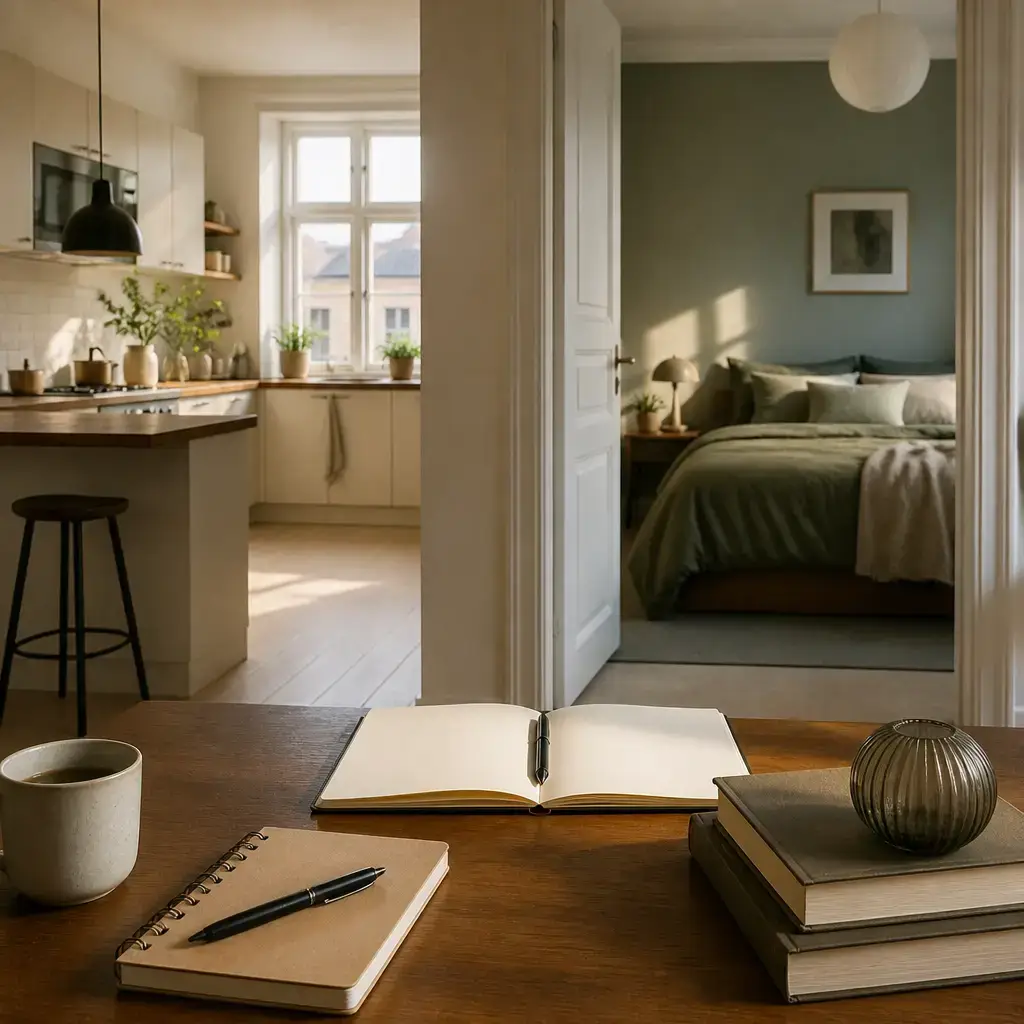
“Schlafzimmer” means “bedroom” in “dem Schlafzimmer” and “im Schlafzimmer”. It is one of the two rooms being compared and later becomes the chosen study room. A useful situation is describing where someone sleeps or studies.
oder
“oder” means “or” and links the two alternatives “dem Schlafzimmer” and “der Küche”. It shows that the speaker is offering a choice between options. Use it when presenting alternatives, as in the new example “Tee oder Kaffee?”.
der
“der” means “the” before “Küche” in “der Küche”. The citation form is also “der”; this form is used here after “mit” with “Küche”. A useful reuse pattern is “mit der” plus a noun, as in the new example “mit der Tür”.
Küche
“Küche” means “kitchen” in “der Küche” and “Die Küche”. It is the other room being compared with the bedroom. A useful situation is describing a location or comparing rooms, as in the new example “in der Küche”.
Die
“Die” means “the” before “Küche” in “Die Küche ist heller”. It identifies the kitchen as the subject of the sentence; the capital letter is also required because it begins the sentence. The citation form of this definite article is “der”, while “Die” is the form used here before “Küche”.
heller
“heller” means “brighter” and describes the kitchen in comparison with the other room. The citation form is “hell”; “heller” is the comparative form used because the rooms are being compared. A useful situation is comparing rooms or places by their amount of light.
aber
“aber” means “but” and introduces a contrast between the kitchen being brighter and the noise there. It connects two opposing points in “heller, aber dort wird es laut”. Use it when one advantage is followed by a drawback.
dort
“dort” means “there” and points back to the kitchen as the place where the noise occurs. It avoids repeating the name of the place in the second part of the sentence. A useful situation is referring to a previously mentioned location, as in the new example “Dort ist es ruhig.”
wird
“wird” means “gets” or “becomes” in “dort wird es laut”. The citation form is “werden”; “wird” is the form used here with the impersonal subject “es”. A useful reuse pattern is “Es wird” followed by an adjective, as in the new example “Es wird dunkel.”
es
“es” is the placeholder subject in “dort wird es laut”, describing the situation becoming noisy rather than referring to a particular object. It works with “wird” and the adjective “laut” to describe a change in the surroundings. A useful situation is describing general conditions, as in the new example “Es wird kalt.”
laut
“laut” means “noisy” or “loud” in “wird es laut”. It describes the sound level that develops in the kitchen. A common reuse pattern is the new expression “laut werden” when something becomes noisy.
Das
“Das” means “the” before “Schlafzimmer” in “Das Schlafzimmer ist ruhiger”. It identifies the bedroom as the subject being described. The citation form of this definite article is “der”; “Das” is the form used here before “Schlafzimmer”.
ruhiger
“ruhiger” means “quieter” and describes the bedroom in comparison with the kitchen. The citation form is “ruhig”; “ruhiger” is the comparative form used in “ist ruhiger”. A useful situation is comparing places by how little noise they have.
und
“und” means “and” and links the two descriptions “ruhiger” and “gemütlicher”. It adds another positive quality of the bedroom without creating a contrast. Use it to connect two qualities, actions, or objects.
gemütlicher
“gemütlicher” means “more comfortable” or “cozier” in “ruhiger und gemütlicher”. The citation form is “gemütlich”; “gemütlicher” is the comparative form used while comparing the rooms. A useful situation is describing a room or home that feels pleasant to spend time in.
muss
“muss” means “need to” or “must” and expresses the speaker’s necessity to concentrate. The citation form is “müssen”; “muss” is the form used with “ich” in “Ich muss mich ... konzentrieren”. A useful reuse pattern is “Ich muss ...” when explaining something that is necessary.
mich
“mich” refers back to “ich” and marks the person who is focusing in “mich konzentrieren”. The citation form is “ich”; “mich” is the form used for this reflexive object here. A useful situation is describing your own concentration, as in the new example “Ich kann mich konzentrieren.”
ohne
“ohne” means “without” and introduces what is absent in “ohne Unterbrechungen”. It shows that the speaker needs to concentrate while interruptions are not present. A useful reuse pattern is “ohne” followed by a noun, as in the new example “ohne Pause”.
Unterbrechungen
“Unterbrechungen” means “interruptions” and names the things that could break the speaker’s concentration. The citation form is “Unterbrechung”; “Unterbrechungen” is the plural form used in “ohne Unterbrechungen”. A useful situation is describing study or work conditions without interruptions.
konzentrieren
“konzentrieren” means “to focus” or “to concentrate” in “mich konzentrieren”. It contributes the focusing action, while “mich” identifies the person doing it, and it appears as an infinitive after “muss”. A new reusable example is “sich auf eine Aufgabe konzentrieren” when focusing on a task.
Dann
“Dann” means “then” and introduces the conclusion that follows from needing a quiet place. It connects the earlier reason with the decision about the room. A useful situation is announcing a decision after considering information, as in the new example “Dann nehmen wir diesen Raum.”
ruhigere
“ruhigere” means “quieter” in “das ruhigere Zimmer”. The citation form is “ruhig”; “ruhigere” is the comparative form used before “Zimmer” to identify the quieter of the rooms. A useful situation is choosing one option because it has less noise than another.
sinnvoller
“sinnvoller” means “more sensible” or “makes more sense” in “ist das ruhigere Zimmer sinnvoller”. The citation form is “sinnvoll”; “sinnvoller” compares this choice with the alternative in light of the need for concentration. A useful situation is explaining why one decision is better, as in the new example “Diese Lösung ist sinnvoller.”
werde
“werde” means “will” in “Ich werde heute im Schlafzimmer lernen”. The citation form is “werden”; “werde” is the form used with “ich” in this future construction. A useful reuse pattern is “Ich werde ...” followed by an infinitive when stating a planned action.
heute
“heute” means “today” and specifies when the speaker will study. It gives the time for the action in “Ich werde heute ... lernen”. A useful situation is making a plan for the current day.
im
“im” means “in the” in “im Schlafzimmer” and marks the location where the studying will happen. It is the contraction of “in” and “dem”. A useful reuse pattern is “im” followed by a place, as in the new example “im Zimmer”.
Schließ
“Schließ” means “close” and gives a direct instruction to one person in “Schließ die Tür”. The citation form is “schließen”; “Schließ” is the imperative form used here. A useful situation is telling someone to close a door when outside noise becomes distracting.
Tür
“Tür” means “door” and is the object of the instruction “Schließ die Tür”. It names the part of the room that should be closed to reduce noise from the hallway. A new reusable example is “die Tür schließen” when giving or describing this action.
wenn
“wenn” means “if” or “when” and introduces the condition in “wenn es im Flur laut wird”. It explains when the instruction to close the door should be followed. A useful situation is giving conditional advice, as in the new example “Ruf mich an, wenn du Zeit hast.”
Flur
“Flur” means “hallway” in “im Flur”. It identifies the place where the noise may develop. A useful situation is describing where sounds or people are, especially inside a home.