Wir
“Wir” means “we” and refers to the speaker together with another person in “Wir sollten ...”. It is commonly used as the subject before a verb when making a joint suggestion, such as “Wir prüfen das.”
sollten
“sollten” expresses what the speakers ought to do: “We should check”. It is a form of “sollen” and is used here with the infinitive “prüfen” at the end: “Wir sollten ... prüfen.”
die
“die” means “the” in the noun phrase “die Ausstattung”. It introduces the specific equipment that the speakers want to check, as in “die Ausstattung prüfen.”
Ausstattung
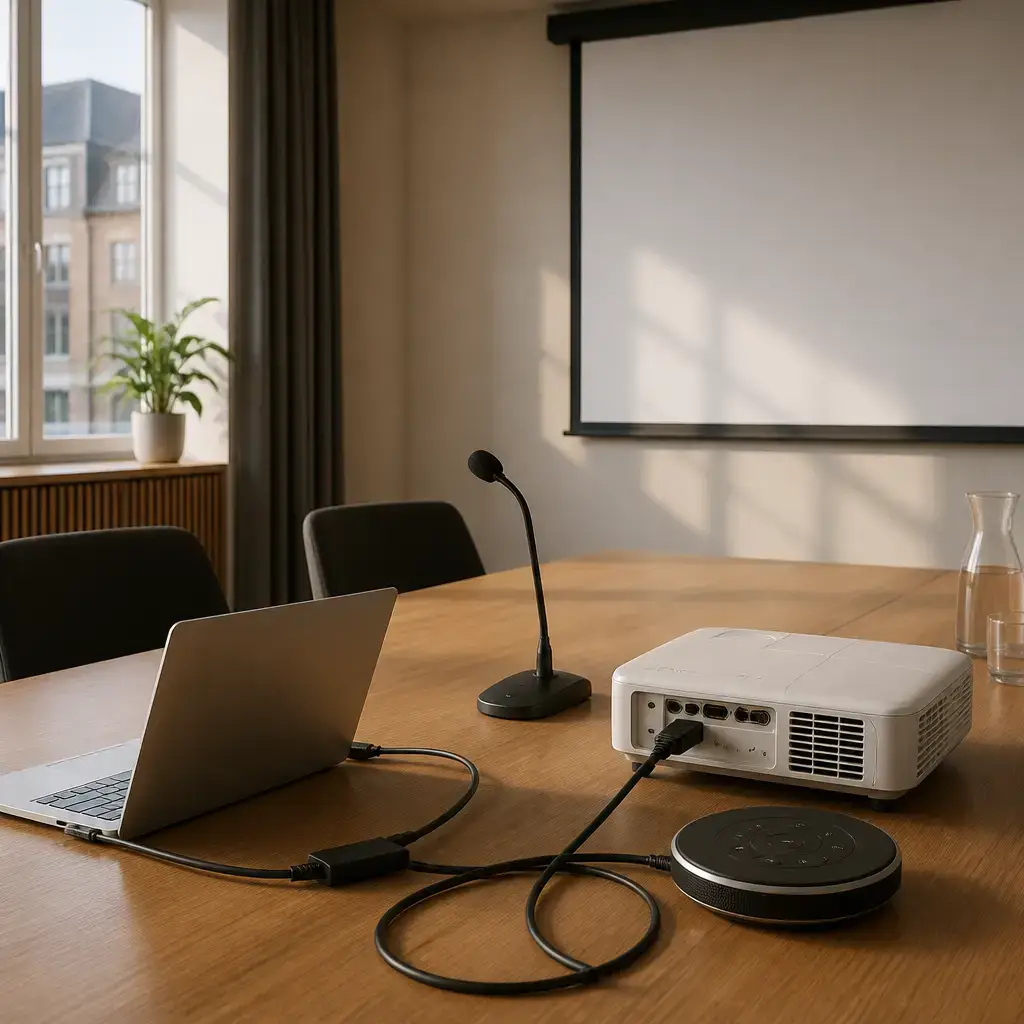
“Ausstattung” means the equipment or facilities available in a place; here it means the meeting-room equipment. It can be used for the equipment of a room or workplace, as in “die Ausstattung im Raum.”
im
“im” means “in the” in “im Besprechungsraum”. It is the contracted form of “in dem” and is commonly used before a place, as in “im Raum.”
Besprechungsraum
“Besprechungsraum” means “meeting room” and identifies the room where the equipment is located. It is useful for naming a room used for a meeting, as in “im Besprechungsraum.”
prüfen
“prüfen” means “to check” in “die Ausstattung ... prüfen”. It is the infinitive used after “sollten”; a reusable pattern is “etwas prüfen”, meaning to check something carefully.
Das
“Das” means “the” in “Das Meeting” and introduces the meeting as the subject of the sentence. The same supplied word also appears as lowercase “das” in “das jetzt machen”, where it refers to the activity being suggested.
Meeting
“Meeting” means “meeting” in “Das Meeting beginnt bald”. It names the event that is about to start and can be used as the subject of a sentence about a meeting.
beginnt
“beginnt” means “starts” in “Das Meeting beginnt bald”. It is a form of “beginnen” and is used with the event that is starting, as in “Der Kurs beginnt.”
bald
“bald” means “soon” and places the start of the meeting in the near future. It can be used with an event or action, as in “Das Meeting beginnt bald.”
Lass
“Lass” helps make the suggestion “Lass uns ...”, meaning “Let’s ...”. It is a form of “lassen” used here to invite another person to do something together.
uns
“uns” means “us” in “Lass uns das jetzt machen” and identifies the people included in the suggestion. The reusable pattern is “Lass uns + infinitive”, as in “Lass uns anfangen.”
jetzt
“jetzt” means “now” and shows that the suggested action should happen immediately. It can be placed with an action to specify its time, as in “Wir machen das jetzt.”
machen
“machen” means “do” in “das jetzt machen”. It is the infinitive after “Lass uns” and commonly takes an object, as in “etwas machen.”
Ist
“Ist” means “is” in the question “Ist der Projektor ... verbunden?”. It is the sentence-initial form of “sein” here because the sentence is asking whether the projector has a certain connection.
der
“der” means “the” in “der Projektor” and introduces the specific projector being checked. It is used before the noun in this subject phrase, as in “der Laptop.”
Projektor
“Projektor” means “projector”, the device being checked for its connection to the laptop. It can be used with a connection or equipment description, as in “Der Projektor ist verbunden.”
mit
“mit” means “with” in “mit dem Laptop” and identifies the device to which the projector is connected. The reusable pattern is “mit etwas verbunden sein”, meaning to be connected to something.
dem
“dem” means “the” in “mit dem Laptop”. It appears as part of the phrase “mit dem Laptop”, which identifies the laptop involved in the connection.
Laptop
“Laptop” means “laptop” and is the device connected to the projector. It can be used after “mit” when describing a connection, as in “mit dem Laptop.”
verbunden
“verbunden” means “connected” in “mit dem Laptop verbunden”. It describes the projector’s connection status, and the reusable pattern is “mit ... verbunden sein.”
Ja
“Ja” means “yes” and confirms that the projector is connected. It is useful as a short answer to a yes-or-no question, such as “Ist der Projektor verbunden?” — “Ja.”
aber
“aber” means “but” and introduces a problem that contrasts with the confirmation in “Ja”. It commonly links a positive statement with an additional limitation, as in “Es funktioniert, aber ...”.
dieses
“dieses” means “this” in “dieses Kabel” and points to the particular cable being examined. It is commonly placed directly before the noun it identifies, as in “dieses Kabel ist locker.”
Kabel
“Kabel” means “cable” and refers here to the cable used in the equipment connection. It can be used as the subject of a condition, as in “Das Kabel ist locker.”
ein
“ein” contributes the indefinite quantity in “ein bisschen”, meaning “a little” or “a bit”. The complete expression “ein bisschen” is used before an adjective or other description to soften the amount.
bisschen
“bisschen” means “a little” in the expression “ein bisschen locker”. Together with “ein”, it indicates a small degree rather than a large problem; the reusable expression is “ein bisschen + adjective.”
locker
“locker” means “loose” in “dieses Kabel ist ein bisschen locker”. It describes a cable that is not firmly fixed, and it can be reused in the pattern “Das Kabel ist locker.”
Mikrofon
“Mikrofon” means “microphone”, the device the speakers want to check before people arrive. It can be used as the object of a testing action, as in “das Mikrofon testen.”
testen
“testen” means “to test” in “das Mikrofon testen”. It is the infinitive after “Lass uns” and commonly takes the device or object being checked, as in “etwas testen.”
bevor
“bevor” means “before” and introduces the time condition “bevor die Leute kommen”. It is used to connect an action with an event that has not happened yet, as in “Wir testen es, bevor die Gäste kommen.”
Leute
“Leute” means “people” in “die Leute kommen”. It refers to the people expected at the meeting and is commonly used for people as a group.
kommen
“kommen” means “come” or “arrive” in “bevor die Leute kommen”. It describes the people arriving and is used here at the end of the clause introduced by “bevor.”
Es
“Es” means “it” in “Es funktioniert” and refers to the microphone just tested. The same supplied word also appears as lowercase “es” in “Ich mache es ...”, where it refers to the volume or sound level being adjusted.
funktioniert
“funktioniert” means “works” in “Es funktioniert”. It is a form of “funktionieren” used to say that a device operates correctly, as in “Das Mikrofon funktioniert.”
Lautstärke
“Lautstärke” means “volume” and refers to how loud the sound is. It is commonly used with a description of its level, as in “Die Lautstärke ist niedrig.”
niedrig
“niedrig” means “low” in “Die Lautstärke ist niedrig”. It describes the volume as being at a low level and can be used after “sein” to describe a measured or noticeable level.
Ich
“Ich” means “I” and identifies the person who will adjust the sound in “Ich mache es ... lauter”. It is used as the subject when the speaker describes their own action.
mache
“mache” means “make” in “Ich mache es ein bisschen lauter” and contributes the action of changing the sound level. It is a form of “machen” used with “es” and “lauter” in the reusable pattern “Ich mache es ...”.
lauter
“lauter” means “louder” and describes the increased volume in “mache es ... lauter”. It is useful when asking or explaining that a sound should be increased, as in “Bitte etwas lauter.”
klingt
“klingt” means “sounds” in “Das klingt besser”. It describes the speaker’s impression of the result, and the common pattern is “Das klingt + adjective.”
besser
“besser” means “better” in “Das klingt besser” and shows that the sound has improved after the adjustment. It can be used after “klingt” to give an evaluation of how something sounds.
Raum
“Raum” means “room” in “Der Raum ist bereit”. It refers to the meeting room as a place, and it can be used with a condition or status, as in “Der Raum ist bereit.”
bereit
“bereit” means “ready” in “Der Raum ist bereit”. It says that the room is prepared for the meeting, and the reusable pattern is “etwas ist bereit.”