Könnte
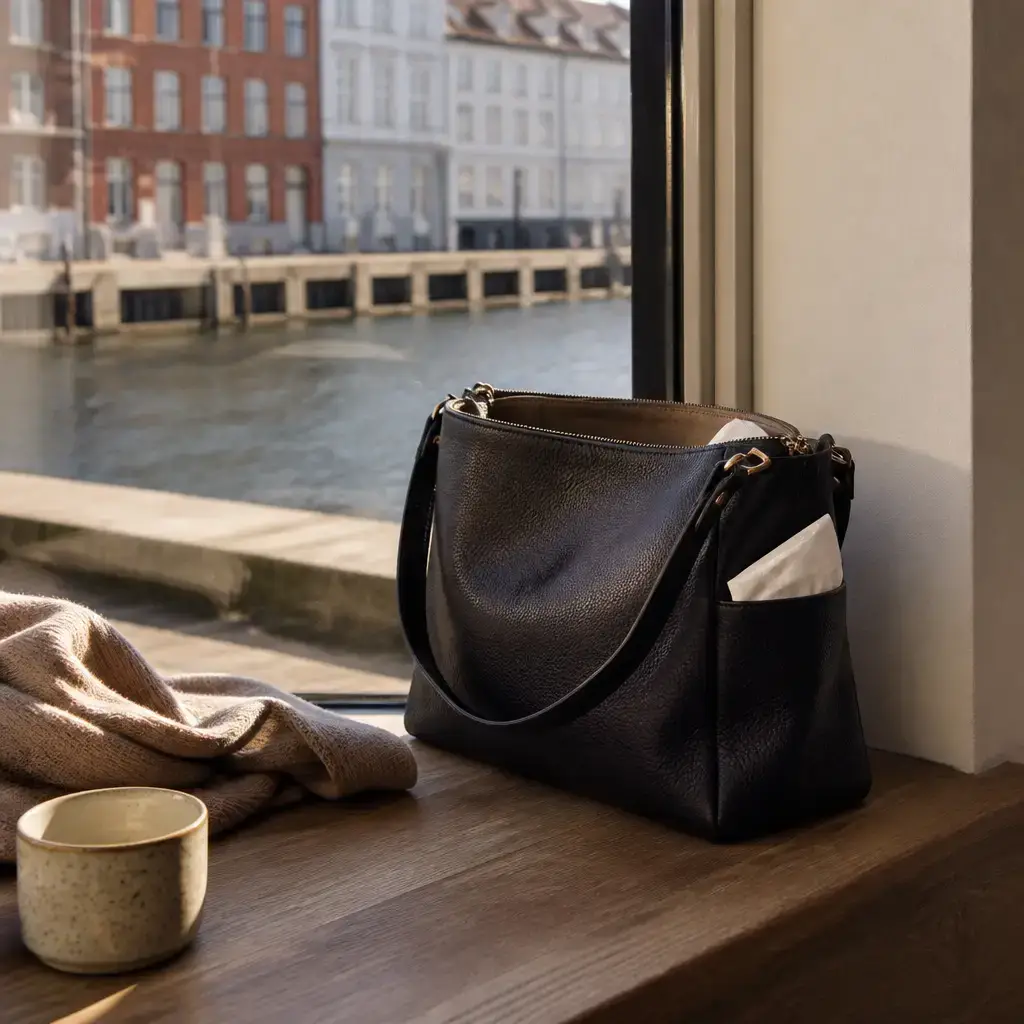
Könnte means “could” here and begins the polite request „Könnte ich ein Taschentuch aus deiner Tasche nehmen?“. Use it when asking another person for permission or help.
ich
ich means “I” and refers to the person speaking, as in „Könnte ich“ and „Ich habe“. It is used as the subject when you describe your own action, request, or possession.
ein
ein means “a” or “one” here, as in „ein Taschentuch“ and „ein weiteres“. Use it before a singular item when introducing one item or an additional item.
Taschentuch
Taschentuch means “tissue” and names the item the speaker wants to take from the bag. It is useful when asking for or referring to a tissue in an everyday situation.
aus
aus means “from” or “out of” in „aus deiner Tasche“. It identifies the bag as the source or container, so use aus with something taken from a place or container.
deiner
deiner means “your” in „aus deiner Tasche“, referring to one person addressed informally. Here it is the possessive form used with Tasche after aus; use it when referring to an informal singular person’s feminine item in this pattern.
Tasche
Tasche means “bag” in „deiner Tasche“. It identifies the container from which the tissue is taken, so it is useful when asking about or locating something in a bag.
nehmen
nehmen means “take” in „ein Taschentuch aus deiner Tasche nehmen“. In this context, taking the tissue from the bag expresses the request to borrow it; use it with an object and its source when describing taking something.
Sie
Sie or sie changes meaning according to its referent in this dialogue: „Sie sind“ refers to the tissues, while „Darf ich sie öffnen?“ and „Bitte schließe sie“ refer to the pocket. Pay attention to the noun or object being referred to when using this pronoun.
sind
sind means “are” in „Sie sind in der Seitentasche“. It describes where the tissues are, so use it with a plural subject to state a location.
in
in means “in” in „in der Seitentasche“ and marks the location of the tissues. Use it to say that something is inside a place or container.
der
der means “the” in „der Seitentasche“ and points to the specific side pocket. Together with in, it identifies the pocket where the tissues are located.
Seitentasche
Seitentasche means “side pocket” and identifies the particular pocket containing the tissues. It is useful when directing someone to a specific compartment of a bag.
Darf
Darf means “may” or “be allowed to” in „Darf ich sie öffnen?“. It is used to ask permission before opening or doing something.
öffnen
öffnen means “open” in „Darf ich sie öffnen?“ and „Du kannst sie öffnen“. It is the action being discussed, so use it with the thing that will be opened.
Möchtest
Möchtest means “would you like” in „Möchtest du lieber eins holen?“. It asks an informal singular person about a preference or choice.
du
du means “you” when addressing one person informally, as in „Möchtest du lieber eins holen?“. Use it when speaking directly to an informal singular interlocutor.
lieber
lieber means “rather” or “preferably” in „Möchtest du lieber eins holen?“. It marks a preference between possible actions, so use it when asking which option someone prefers.
eins
eins means “one” and stands for one tissue in „Möchtest du lieber eins holen?“ and „Ich habe jetzt eins“. Use it as a standalone reference to one item when the item is already understood.
holen
holen means “get” or “fetch” in „eins holen“. It describes going to obtain the tissue, so use it with the item someone is going to get.
kannst
kannst means “can” or “are allowed to” in „Du kannst sie öffnen“. In this dialogue it grants permission to open the pocket; use it with du to say that an action is possible or permitted.
habe
habe means “have” in „Ich habe jetzt eins“. It expresses that the speaker now possesses a tissue, so use it with ich to talk about what you have.
jetzt
jetzt means “now” in „Ich habe jetzt eins“. It locates the possession in the present moment, so use it to emphasize a current situation or result.
Bitte
Bitte means “please” in „Bitte schließe sie“ and makes the request polite. Use it before a request or instruction addressed to another person.
schließe
schließe means “close” in the direct request „Bitte schließe sie“. It tells the informal singular listener to close the pocket after using it.
wenn
wenn means “when” or “if” in „wenn du fertig bist“. It introduces the time or condition for closing the pocket, so use it to connect an action with a condition or point in time.
fertig
fertig means “done” or “finished” in „du fertig bist“. It describes completion, so it is useful when saying that a person has finished an activity.
bist
bist means “are” with du in „du fertig bist“. Because it appears in a wenn-clause, it comes at the end of that clause while stating that the person is done.
vorsichtig
vorsichtig means “carefully” or “cautiously” in „Ich schließe sie vorsichtig“. It describes how the speaker closes the pocket, so use it to show that an action is performed with care.
Nimm
Nimm is a direct informal request meaning “take” in „Nimm ein weiteres mit“. Together with mit, it tells the listener to take an additional tissue along; use this pattern when instructing one informal person to take something.
weiteres
weiteres means “another” or “an additional one” in „ein weiteres“. Here it refers to another tissue, so use ein weiteres when referring to one more item already understood from the context.
mit
mit means “along” in „Nimm ein weiteres mit“. It completes the idea of taking something with you, so it is useful in a request to carry or keep an item with you.
es
es means “it” in „wenn du es brauchst“ and refers back to the additional tissue. Use it to refer to a singular item that has already been mentioned or understood.
brauchst
brauchst means “need” with du in „wenn du es brauchst“. It describes the listener’s need for the tissue, so use it with the item that someone needs.