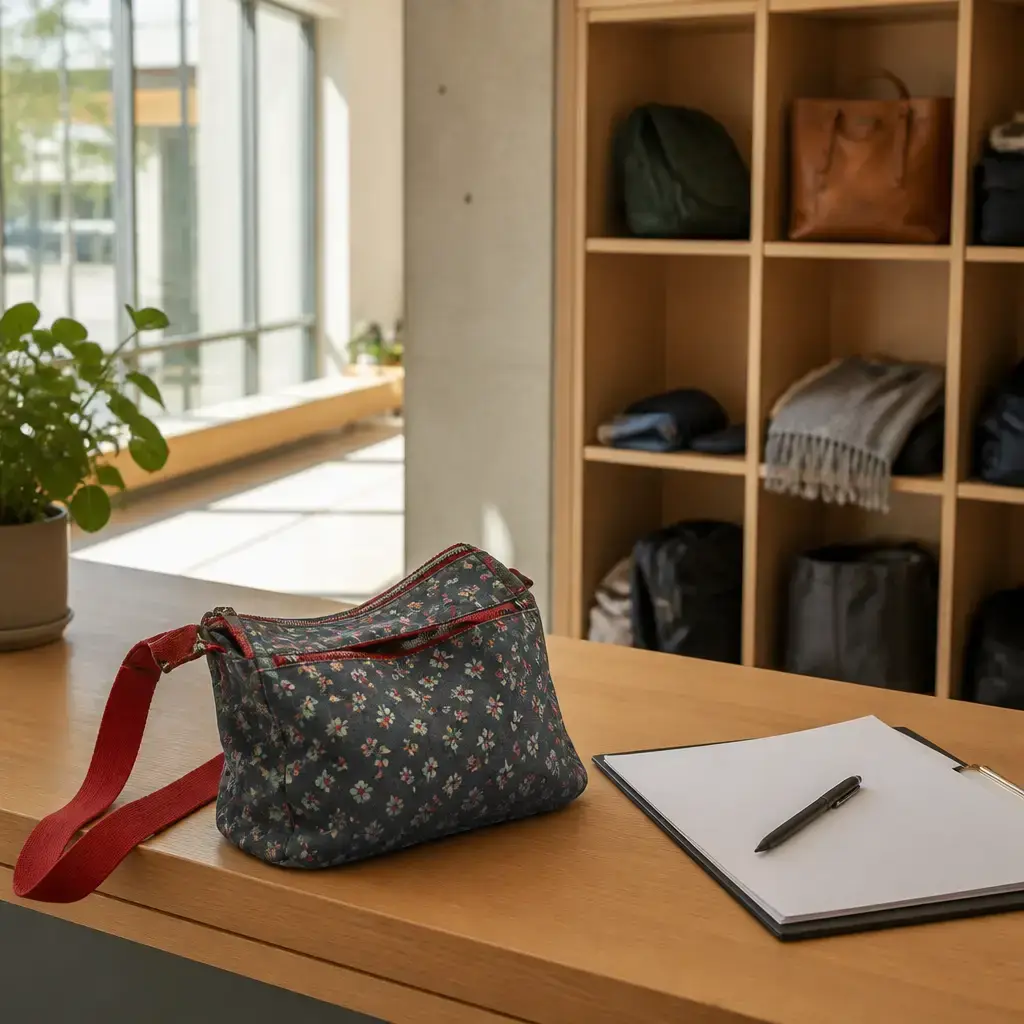
Ich
“Ich” means “I” and identifies the speaker in “Ich suche meine Tasche”. It is used when talking about your own action, such as “Ich suche meinen Schlüssel” in a new example.
suche
“suche” means “am looking for” in “Ich suche meine Tasche”. It is the form used with “Ich” of “suchen”; reuse it before the thing you are looking for, such as “Ich suche meinen Schlüssel” in a new example.
meine
“meine” means “my” before “Tasche”, so “meine Tasche” means “my bag”. This form is used directly before the thing that belongs to the speaker, such as “meine Jacke” in a new example.
Tasche
“Tasche” means “bag” here, the item being sought and identified. You can use it after a possessive word or article, such as “meine Tasche” in this dialogue.
im
“im” means “in the” in “im Fundbüro”. It is the contracted form of “in dem” and is used before this place name in the phrase for being at the lost property office.
Fundbüro
“Fundbüro” means “lost property office”, the place where lost items are kept. Use it after “im” when saying that you are at or in that office, as in “im Fundbüro”.
Können
“Können” means “can” in the polite question “Können Sie sie für mich beschreiben?”. It is the formal “Sie” question form of “können” and is followed by the other verb “beschreiben” at the end.
Sie
“Sie” means formal “you” in “Können Sie sie für mich beschreiben?” and “Bitte unterschreiben Sie dieses Formular”. It addresses an adult politely; with formal “Sie”, the verb form is used for the request or question.
für
“für” means “for” in “für mich”, showing who should benefit from the description. It is commonly followed by the person or thing that the action is for, such as “für meinen Bruder” in a new example.
mich
“mich” means “me” in “für mich”. Together, “für mich” means “for me”; use it after “für” when the speaker is the person concerned.
beschreiben
“beschreiben” means “describe” in “sie für mich beschreiben”. It is the infinitive used after “Können Sie” and takes the item being described, here “sie” referring to the bag.
hat
“hat” means “has” in “Sie hat einen roten Trageriemen”. It is the form of “haben” used with “Sie” here, and it introduces the bag’s features.
einen
“einen” introduces one masculine item after “hat”, as in “einen roten Trageriemen” and “einen kaputten Reißverschluss”. It comes before the adjective and noun that describe the item.
roten
“roten” means “red” in “einen roten Trageriemen”. This exact form comes before the masculine noun after “einen”; use an adjective in the same position when describing an object.
Trageriemen
“Trageriemen” means “strap”, specifically the strap of the bag in “einen roten Trageriemen”. Use it to identify a bag by the strap it has.
und
“und” means “and” and links the two bag features in “einen roten Trageriemen und einen kaputten Reißverschluss”. It is used to join equal descriptions or items.
kaputten
“kaputten” means “broken” in “einen kaputten Reißverschluss”. It appears before the masculine noun after “einen”; use it when identifying an item that does not work or is damaged.
Reißverschluss
“Reißverschluss” means “zipper”, here the broken zipper on the bag. It is used after a describing word in “einen kaputten Reißverschluss” to give a precise identifying detail.
Gibt
“Gibt” means “is there” in the question “Gibt es vorne ein Muster?”. Together with “es”, it asks whether something exists or is present. This question pattern can be reused with another item, such as “Gibt es hier einen Eingang?” in a new example.
es
“es” is the placeholder used in “Gibt es vorne ein Muster?” to form the question “is there a pattern?”. In the construction “Gibt es ...?”, it comes after “Gibt” and before the thing being asked about.
vorne
“vorne” means “on the front” or “at the front” in “Gibt es vorne ein Muster?”. It locates the pattern on the front area of the bag; use it to specify that something is at the front.
ein
“ein” means “a” before “Muster” in “ein Muster”. It introduces one unspecified pattern in the question and comes before the neuter noun.
Muster
“Muster” means “pattern” in “Gibt es vorne ein Muster?”. It identifies a visible design on the front of the bag, and it can be combined with a describing word such as “ein kleines Muster” in a new example.
Da
“Da” means “there” in “Da ist ein kleines Blumenmuster”. It points out the location or presence of the pattern while showing it to the other person.
ist
“ist” means “is” in “Da ist ein kleines Blumenmuster”. It states that the pattern is present, and it is used after “Da” in this way to point something out.
kleines
“kleines” means “small” in “ein kleines Blumenmuster”. This exact form comes before the neuter noun after “ein”; use it to give the size of a neuter item.
Blumenmuster
“Blumenmuster” means “flower pattern”, the design found on the bag. It is a compound word combining “Blumen” with “Muster”, and it names the specific pattern used for identification.
Das
“Das” means “this” or “that” in “Das könnte Ihre sein”. It points to the bag being shown or considered at the lost property desk.
könnte
“könnte” means “might” or “could” in “Das könnte Ihre sein”. It expresses a possibility rather than certainty; use it when suggesting that an identified item may belong to someone.
Ihre
“Ihre” means “yours” in “Das könnte Ihre sein”, referring to the feminine noun “Tasche”. Its capital letter marks the polite formal “your”; it is used here without repeating “Tasche” because the item is already understood.
sein
“sein” means “be” in “Das könnte Ihre sein”. It completes the possibility expressed by “könnte” and is placed after the possessive word to mean that the bag might be yours.
ganz
“ganz” strengthens “sicher” in “ganz sicher”, making the statement emphatic. In this dialogue, it helps express strong certainty that the bag is the speaker’s.
sicher
“sicher” means “certain” or “sure” in “ganz sicher”. Together, “ganz sicher” means “definitely”, which the speaker uses to confirm ownership with confidence.
Bitte
“Bitte” means “please” at the beginning of “Bitte unterschreiben Sie dieses Formular”. It makes the following instruction polite and is used when asking someone to do something.
unterschreiben
“unterschreiben” means “sign” in “Bitte unterschreiben Sie dieses Formular”. With formal “Sie”, the infinitive appears before “Sie” in this polite request, followed by the document to be signed.
dieses
“dieses” means “this” before “Formular” in “dieses Formular”. It identifies one specific form that is present and comes directly before the neuter noun.
Formular
“Formular” means “form”, the document the person must sign before taking the bag. It is used after “dieses” in “dieses Formular” to identify the required document.
bevor
“bevor” means “before” and introduces the condition in “bevor Sie sie mitnehmen”. It connects the signing action with the later action of taking the bag.
mitnehmen
“mitnehmen” means “take it along” in “bevor Sie sie mitnehmen”, referring to taking the bag away from the desk. It is used after “Sie” with the object “sie” and appears at the end of this subordinate clause.