Halten
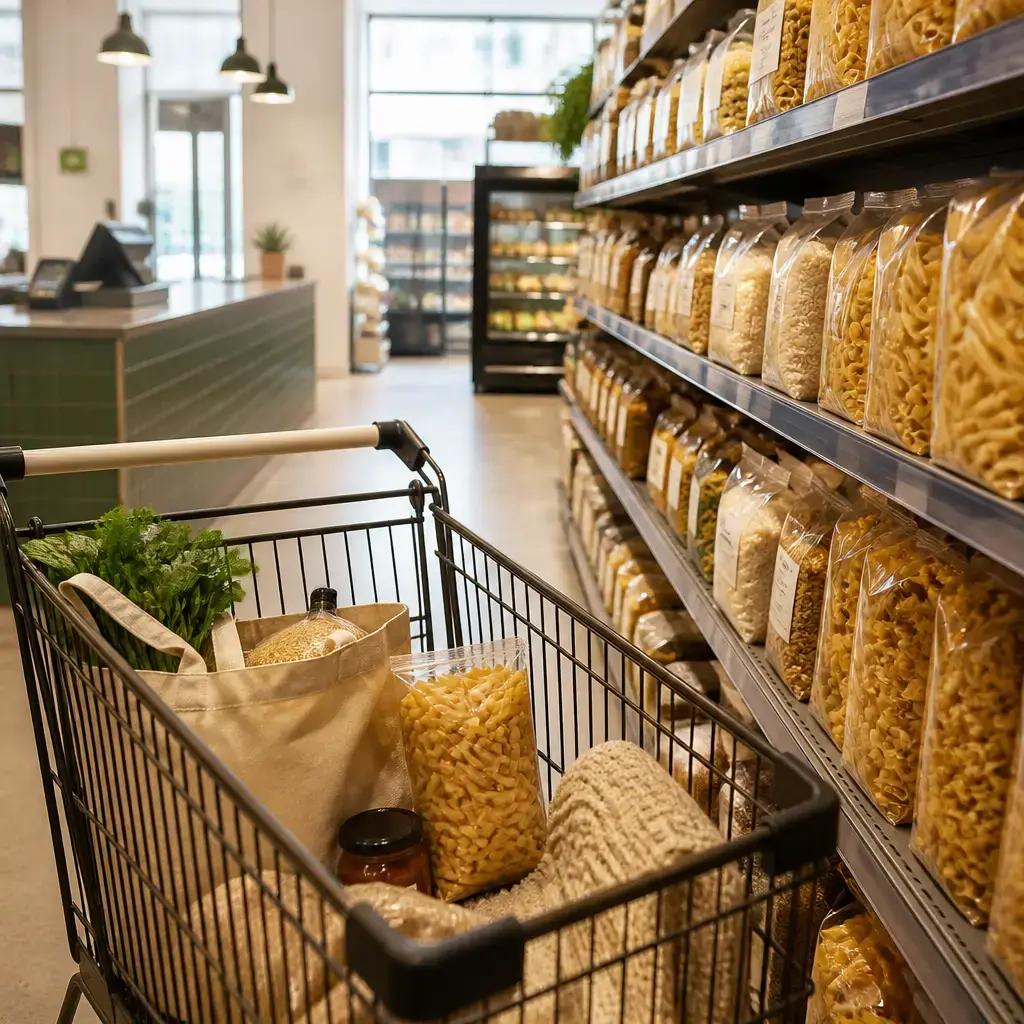
In “Halten wir uns an die Einkaufsliste”, “Halten” proposes that we stick to something. It is used with “sich an etwas halten”, followed here by “an die Einkaufsliste”; use this when suggesting that people follow a rule or plan.
wir
“wir” means “we” in “Halten wir uns an die Einkaufsliste” and includes the speaker and another person. It appears with the verb form “Halten” in this suggestion; use it when proposing a shared action.
uns
“uns” refers to the speaker and the other person as the people who should stick to the list. Together with “Halten” and “an” in “Halten wir uns an die Einkaufsliste”, it forms the expression for keeping to something; use this construction for following a plan or rule.
an
In “Halten wir uns an die Einkaufsliste”, “an” is the preposition used in the expression for sticking to something. The reusable pattern is “sich an etwas halten”, with the thing being followed after “an”; here that thing is “die Einkaufsliste”.
die
In “die Einkaufsliste” and “die Nudeln”, “die” means “the”. It accompanies a feminine singular noun in “die Einkaufsliste” and a plural noun in “die Nudeln”; use the form before these kinds of noun phrases.
Einkaufsliste
“Einkaufsliste” means “grocery list” in “die Einkaufsliste”. The compound names a list used for shopping; it is used here after “an” in “sich an die Einkaufsliste halten”.
So
“So” means “that way” in “So kaufen wir hoffentlich nicht zu viel”. It connects the suggested action with its expected result; use it at the beginning of a sentence to refer to a way of doing something.
kaufen
“kaufen” means “buy” in “So kaufen wir hoffentlich nicht zu viel”. With “wir”, it describes the shared shopping action; use it with the thing being bought, such as “kaufen wir Milch” in a new sentence.
hoffentlich
“hoffentlich” means “hopefully” and expresses a wish or expectation in “So kaufen wir hoffentlich nicht zu viel”. It comments on the whole statement rather than naming an item; use it when you hope that an event will have a particular result.
nicht
“nicht” makes the buying action negative in “kaufen wir hoffentlich nicht zu viel”. Here it helps say that the shoppers will hopefully avoid buying too much; use it to negate an action or statement.
zu
In the exact expression “zu viel”, “zu” marks an excessive amount. Together, “zu viel” means “too much”, and this phrase can follow a verb such as “kaufen” when the amount is more than wanted.
viel
In “zu viel”, “viel” supplies the meaning of a large amount, while “zu” makes it excessive. The phrase “nicht zu viel” means “not too much”; use it when limiting the amount of something.
Wo
“Wo” means “where” in “Wo sind die Nudeln und der Reis?”. It asks about the location of the pasta and rice; use it at the beginning of a question about where something is.
sind
“sind” means “are” in “Wo sind die Nudeln und der Reis?”. It links the plural items to their location, which is then supplied by the answer; use it with “sie” or another plural subject when asking or stating where things are.
Nudeln
“Nudeln” means “pasta” or “noodles” in “die Nudeln”. It names one of the grocery items being located and later identified; use it when referring to pasta products in a shopping context.
und
“und” means “and” in “die Nudeln und der Reis”. It joins the two grocery items as one coordinated list; use it to connect nouns or other parts of a sentence.
der
In “der Reis”, “der” means “the” and accompanies “Reis”. It is the definite article used here before this singular noun; use the complete noun phrase when referring to the rice.
Reis
“Reis” means “rice” in “der Reis”. It is the second grocery item in the question “Wo sind die Nudeln und der Reis?”; use it when discussing rice as a food item.
Sie
“Sie” means “they” in “Sie sind im Gang mit den trockenen Lebensmitteln” and refers to the pasta and rice. It is used with “sind” for a plural subject; use it to refer back to plural items already mentioned.
im
“im” means “in the” in “im Gang mit den trockenen Lebensmitteln”. It is the contracted form of “in dem” and marks the location of the items; use it before a masculine or neuter location noun in a fixed location phrase.
Gang
“Gang” means “aisle” in “im Gang mit den trockenen Lebensmitteln”. It identifies the part of the grocery shop where the items are located; use it with “im” when giving a supermarket aisle location.
mit
“mit” means “with” in “mit den trockenen Lebensmitteln”. Here it connects the aisle with the food items found there, giving the aisle’s contents; use it to name what is associated with or contained in a place.
den
In “den trockenen Lebensmitteln”, “den” means “the” and accompanies the plural noun phrase after “mit”. It is part of the phrase describing which food items are in the aisle; keep it with “trockenen Lebensmitteln” in this construction.
trockenen
“trockenen” means “dry” in “den trockenen Lebensmitteln”. It describes the kind of food items found in the aisle; use it before a food noun when specifying that the food is dry rather than fresh.
Lebensmitteln
“Lebensmitteln” means “food items” or “groceries” in “den trockenen Lebensmitteln”. It names the contents associated with the aisle and appears after “mit” in this location description; use it when referring to food supplies in general.
Das
“Das” means “this” in “Das sind die Nudeln, die wir letztes Mal gekauft haben”. It points out or identifies the pasta being discussed; use “Das sind ...” to identify items, followed by the noun phrase that names them.
letztes
“letztes” means “last” in “letztes Mal”. Together, “letztes Mal” refers to the previous occasion, here the previous shopping occasion; use this expression when referring to something that happened on the previous occasion.
Mal
“Mal” means “time” or “occasion” in “letztes Mal”. The phrase “letztes Mal” means “last time” and is used here to locate the earlier purchase; use it with a modifier when referring to a particular occasion.
gekauft
“gekauft” means “bought” in “die wir letztes Mal gekauft haben”. It describes the earlier purchase of the pasta and appears with “haben” in this past-time construction; use it with the object bought, such as “die Nudeln gekauft haben”.
haben
“haben” is the helping verb in “die wir letztes Mal gekauft haben”, completing the expression for having bought something. It appears at the end of this clause with “gekauft”; use this pattern to describe a completed purchase.
Legen
In “Legen wir eine Packung in den Einkaufswagen”, “Legen” proposes that we put or place something somewhere. It is used with the object “eine Packung” and the destination “in den Einkaufswagen”; use this form when suggesting a shared placing action.
eine
“eine” means “a” or “one” in “eine Packung”. It introduces the single pack being placed in the cart; use it before a singular feminine noun when naming one item.
Packung
“Packung” means “pack” or “package” in “eine Packung”. It identifies the unit of pasta to put into the cart; use it when buying or referring to goods sold in packages.
in
In “in den Einkaufswagen”, “in” means “into” because it introduces the destination of the placing action. Use “in” with a place or container when something is moved into it; here the destination is the shopping cart.
Einkaufswagen
“Einkaufswagen” means “shopping cart” in “den Einkaufswagen”. It is the container into which the pack is placed; use it in grocery-shopping sentences about putting items into or taking them from a cart.
Danach
“Danach” means “after that” in “Danach brauchen wir nur noch Milch”. It refers to the action of putting the pack in the cart and introduces the next step; use it to sequence one action after another.
brauchen
“brauchen” means “need” in “brauchen wir nur noch Milch”. With “wir”, it states what the shoppers still require; use it with the needed item, as in “wir brauchen Milch” in a new sentence.
nur
In “nur noch Milch”, “nur” means “only” and limits what is still needed to milk. The complete phrase “nur noch Milch” is useful when saying that one remaining item is all that is required.
noch
In “nur noch Milch”, “noch” shows that milk remains to be obtained or is additionally still needed. Together with “nur”, the phrase means that milk is the only remaining item; use it when describing what is left to do or obtain.
Milch
“Milch” means “milk” in “nur noch Milch”. It is the final grocery item still needed before checkout; use it when naming milk as a shopping item or ingredient.
Dann
“Dann” means “then” in “Dann können wir direkt zur Kasse gehen”. It introduces the next action after getting the milk; use it to show what can happen next in a sequence.
können
“können” means “can” or “be able to” in “können wir direkt zur Kasse gehen”. It expresses that the shoppers are able or free to go to checkout once the shopping is finished; use it with an infinitive such as “gehen”.
direkt
“direkt” means “straight” or “directly” in “direkt zur Kasse gehen”. It shows that they will go straight to checkout without another shopping stop; use it to describe a direct route or action.
zur
“zur” means “to the” in “zur Kasse”. It is the contracted form of “zu der” and marks the destination of going; use the phrase “zur Kasse gehen” when saying that someone is going to checkout.
Kasse
“Kasse” means “checkout” or “cash desk” in “zur Kasse”. It names the place where the shopping will be paid for; use it with “zur” in the common destination phrase “zur Kasse gehen”.
gehen
“gehen” means “go” in “zur Kasse gehen”. It is the action that follows “können” and takes “zur Kasse” as its destination; use the pattern “zu einem Ort gehen” when saying where someone is going.