Ich
“Ich” means “I” and is the person who wants to order the lunch set. It is used as the subject, as in “Ich möchte …”. Use it when speaking about yourself.
möchte
“möchte” expresses a polite wish: “would like”. Here it introduces what the speaker wants to do. A common pattern is “Ich möchte” followed by a thing or an action.
ein
“ein” means “a” or “one” before “Mittagsmenü”. It presents one lunch set as the thing being ordered. Use it before a singular noun when referring to one item.
Mittagsmenü
“Mittagsmenü” means “lunch set”, a meal offered as a set. In “ein Mittagsmenü” it is the item being ordered. Use it when choosing or ordering a set lunch.
für
“für” means “for” and shows who the lunch set is intended for in “für uns”. It commonly introduces the person or people who will receive something, as in “für dich” or “für meine Familie”.
uns
“uns” means “us” in “für uns”, referring to the speaker and another person. It appears after “für” to show who the order is for. Use “für uns” when ordering or preparing something for a group that includes yourself.
bestellen
“bestellen” means “to order” in this dialogue. It is the action the speaker wants to carry out after “möchte”. Use it for ordering food, drinks, or other items.
Möchtest
“Möchtest” asks one person politely what they would like or prefer. Here it introduces a choice between chicken and fish. Use “Möchtest du …?” when asking a familiar person about a preference.
du
“du” means “you” when addressing one familiar person. It is the person being asked to choose between the two main options. Use it in direct questions to someone you address informally.
lieber
“lieber” means “rather” or “preferably” and marks a preference between alternatives. In “Möchtest du lieber Hähnchen oder Fisch?” it helps present the choice. Use “lieber … oder …” when asking which of two options someone prefers.
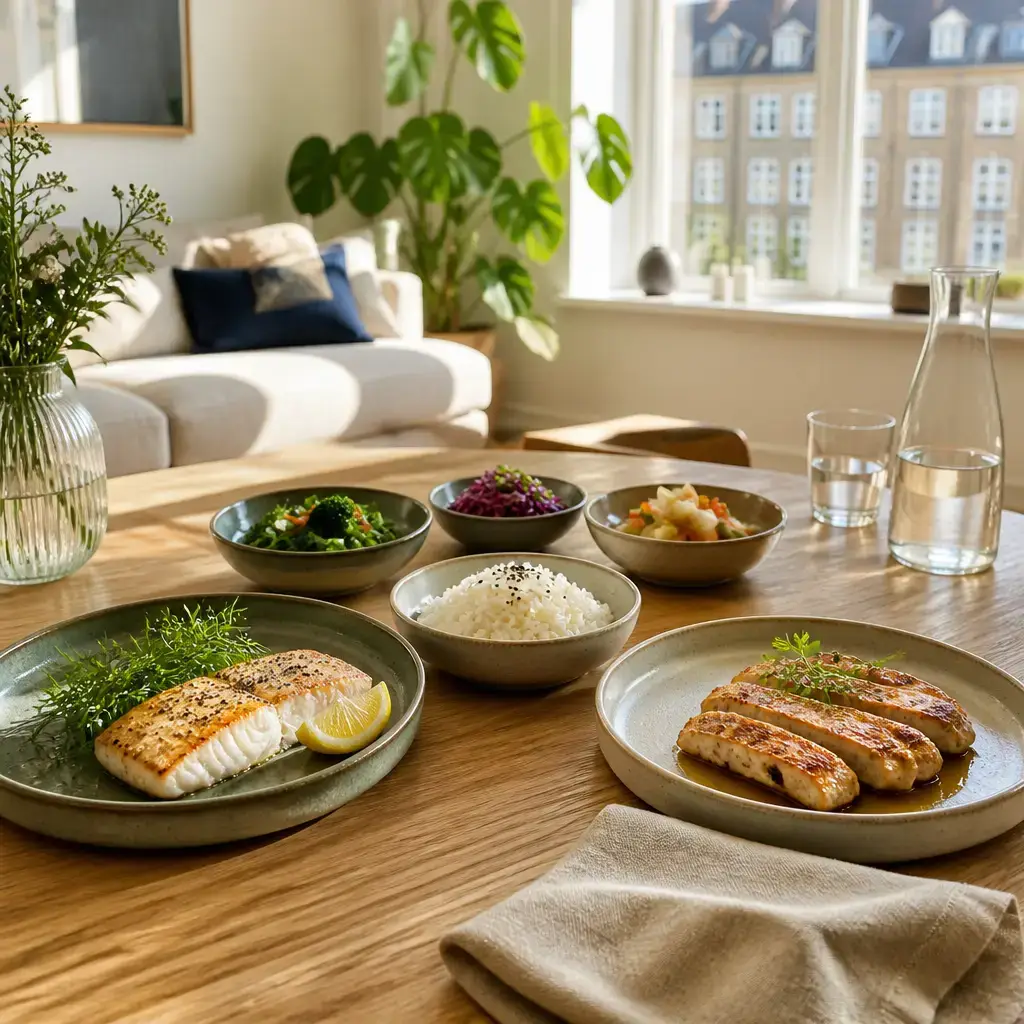
Hähnchen
“Hähnchen” means “chicken” as a food choice. It is one of the two options in the question. Use it when ordering or discussing chicken as a meal.
oder
“oder” means “or” and connects the two alternatives “Hähnchen” and “Fisch”. It is used to offer a choice between options. Use it between alternatives in a question or statement.
Fisch
“Fisch” means “fish” and is the option chosen in the following reply. Here it is the food that sounds better to the speaker. Use it when ordering or discussing fish as a dish.
klingt
“klingt” means “sounds” in “Fisch klingt heute für mich besser.” It describes how the option seems to the speaker, not an actual sound. Use “klingt” with an opinion or description, such as “Das klingt gut” for “That sounds good.”
heute
“heute” means “today” and limits the preference to the current day in “heute für mich besser”. It helps show that the choice may be specific to now. Use it when talking about what happens or feels appropriate today.
mich
“mich” means “me” in “für mich”, showing whose personal preference is being expressed. The preposition “für” is followed here by “mich”. Use “für mich” when giving your own view or preference.
besser
“besser” means “better” and compares fish with the alternative previously mentioned. In this sentence, fish is the option that seems better to the speaker today. Use it when saying that one choice suits you more than another.
Dazu
“Dazu” means “with it” or “in addition to that”, referring to the meal option already being discussed. In “Dazu gibt es Reis und eine kleine Beilage”, it introduces items served alongside it. Use “Dazu gibt es …” to mention what comes with a dish or offer.
gibt
“gibt” is part of “gibt es”, which means “there is”, “there are”, or “comes with” in this context. The expression presents the rice and side as included with the meal. Use “gibt es” to say that something is available or included.
es
“es” is part of the expression “gibt es”, used here to present what comes with the meal. Together, “gibt es” introduces “Reis und eine kleine Beilage”. Use it in statements such as “Hier gibt es …” when saying what is available.
Reis
“Reis” means “rice”, one of the items served with the meal. It is listed after “gibt es” as part of what comes with the order. Use it when choosing or describing a rice side.
und
“und” means “and” and joins “Reis” with “eine kleine Beilage”. It connects items that are included together. Use it to link words, phrases, or actions that belong together.
eine
“eine” means “a” or “one” before “kleine Beilage”. It introduces one side dish as an included item. Use it before a singular item when referring to one of something.
kleine
“kleine” means “small” and describes the side dish in “eine kleine Beilage”. It gives information about the size of the included item. Use it before a noun when describing something as small.
Beilage
“Beilage” means “side dish”, an additional food served with the main option. In the dialogue, one small side is included and the vegetables are considered as a possible choice. Use it when discussing side dishes in a meal.
Welche
“Welche” means “which” and asks the listener to select one side from the available options. It appears before “Beilage” in “Welche Beilage sieht am besten aus?” Use it when asking someone to identify or choose one item from a group.
sieht
“sieht” begins the expression “sieht am besten aus”, meaning “looks best”. It asks for an evaluation based on appearance. Use “sieht … aus” to describe how something looks.
am
“am” is part of “am besten”, the expression meaning “best” or “the most”. Here it helps compare the possible side dishes. Use “am” with a superlative expression when saying how something ranks among options.
besten
“besten” is part of “am besten”, meaning “best” in the question about the side dishes. It identifies the option that appears most appealing. Use “am besten” when choosing the best-looking or most suitable option.
aus
“aus” is the separated final part of “sieht … aus”, the expression meaning “looks”. In “sieht am besten aus”, it completes the description of appearance. Keep it at the end when using this verb with a description.
Das
“Das” means “the” before “Gemüse” in “Das Gemüse”. It identifies the vegetables being discussed as a specific side option. Use it before a known item or option.
Gemüse
“Gemüse” means “vegetables” and is the side dish selected in the dialogue. In “Das Gemüse sieht frisch und einfach aus”, it is being evaluated by appearance. Use it when talking about vegetables as food or as part of a meal.
frisch
“frisch” means “fresh” and describes the vegetables in “Das Gemüse sieht frisch … aus”. It gives a positive description of their appearance or condition. Use it for food that appears recently prepared or not stale.
einfach
“einfach” means “simple” in the description of the vegetables. Here it presents them as uncomplicated or plain in appearance or preparation. Use it when describing something as simple rather than elaborate.
Dann
“Dann” means “then” and signals the next step after discussing the side options. In “Dann wählen wir das Gemüse”, it moves from evaluation to decision. Use it to connect one action or decision to what happens next.
wählen
“wählen” means “choose” in “Dann wählen wir das Gemüse”. It describes making a selection from the available side dishes. Use it when choosing food, an option, or another item.
wir
“wir” means “we” and refers to the two people making the lunch decision together. It is the subject of the choice in “Dann wählen wir das Gemüse”. Use it when including yourself and at least one other person.
die
“die” means “the” before “Bestellung” in “die Bestellung”. It identifies the specific order that the speakers have just decided on. Use it before a known item or action result.
Bestellung
“Bestellung” means “order”, referring to the meal order that can now be submitted. It is the object of the action in “die Bestellung … aufgeben”. Use it when talking about an order in a restaurant, shop, or delivery context.
jetzt
“jetzt” means “now” and shows that the order can be placed at this moment. It marks the timing of the action. Use it when an action is happening immediately or is ready to happen.
kann
“kann” means “can” and expresses the speaker’s ability or possibility to place the order. It is used with the action “aufgeben” later in the sentence. A common pattern is “Ich kann” followed by an action in the infinitive.
aufgeben
“aufgeben” means “to place” or “to submit” in “die Bestellung jetzt aufgeben”. Together with “Bestellung”, it means to place an order. Use it when submitting an order, such as a food order, after the choices have been made.