Soll
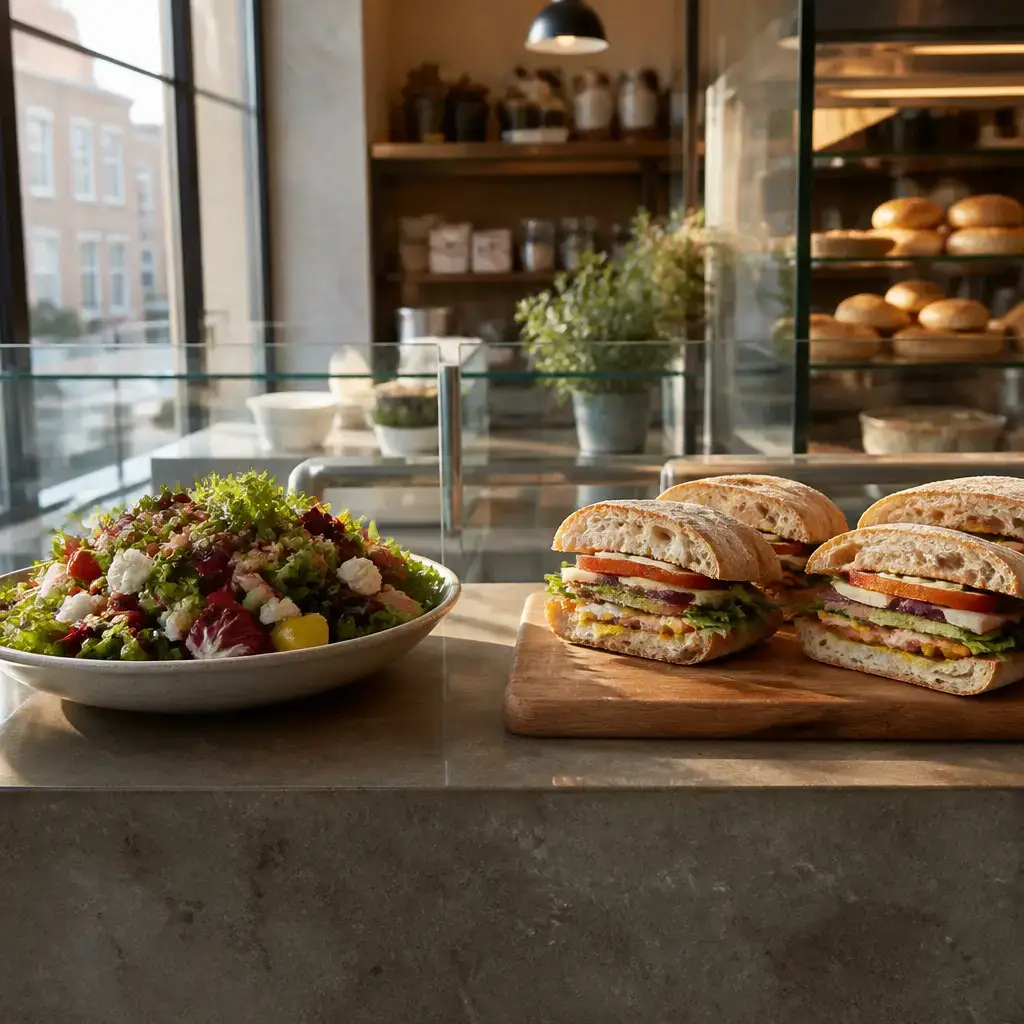
“Soll” asks whether the speaker should choose something in “Soll ich ein Sandwich oder einen Salat wählen?”. It is the form of “sollen” used to ask for advice or a decision. Use “Soll ich …?” when asking what action you should take.
ich
“ich” means “I” and refers to the person asking the question. In “Soll ich … wählen?”, it identifies who would make the choice. Use it as the subject for your own actions or wishes.
ein
“ein” means “a” in “ein Sandwich”, introducing one sandwich as a possible choice. It comes directly before the food noun here. Use “ein” before a singular noun when referring to one unspecified item.
Sandwich
“Sandwich” means sandwich and names one of the two food choices. In “ein Sandwich”, it is the item the speaker may choose. Use it after a suitable article when ordering or discussing this food.
oder
“oder” means “or” and separates the two alternatives in “ein Sandwich oder einen Salat”. It is used to present a choice between options. Use it between alternatives when asking someone to choose.
einen
“einen” means “a” or “one” before “Salat” in “einen Salat”. It introduces the salad as the other item the speaker could choose. Use this exact form before a singular masculine food or object when it is the selected object in a sentence.
Salat
“Salat” means salad and names the lighter food option in the dialogue. It appears in “einen Salat” as one possible choice and in “Der Salat” as the known dish. Use it when ordering or talking about a salad.
wählen
“wählen” means “choose” in “Soll ich ein Sandwich oder einen Salat wählen?”. It names the action being considered, and it stays after “Soll ich” in this question. Use “wählen” when selecting between alternatives.
Der
“Der” means “the” in “Der Salat” and points to the salad already under discussion. It comes directly before “Salat” to introduce the known dish as the topic. Use it before a known singular masculine noun in a similar context.
ist
“ist” means “is” and links “Der Salat” with its description in “Der Salat ist eine leichtere Wahl”. It states what the salad is considered to be here. Use it to connect a subject with a description or identification.
eine
“eine” means “a” or “one” in “eine leichtere Wahl”. It introduces the salad as one choice or option. Use it before a singular feminine noun such as “Wahl” when presenting an unspecified choice.
leichtere
“leichtere” means “lighter” in “eine leichtere Wahl”, describing the salad as the less heavy option. Its form appears directly before “Wahl” in this phrase. Use it before a noun when comparing an option by how light it is.
Wahl
“Wahl” means “choice” or “option” in “eine leichtere Wahl”. The whole phrase presents the salad as a lighter choice, while “Wahl” names the choice itself. Use it when describing or discussing an available option.
habe
“habe” means “have” in “Ich habe nicht sehr viel Hunger”. Together with “Hunger”, it expresses how hungry the speaker is. Use “Ich habe …” for something you have or experience, including hunger.
nicht
“nicht” means “not” and negates the statement in “Ich habe nicht sehr viel Hunger”. It shows that the speaker does not have very much hunger. Place it before the amount or expression being negated, as here.
sehr
“sehr” means “very” and strengthens “viel” in “nicht sehr viel Hunger”. The phrase says that the speaker does not have a very large amount of hunger. Use it before an adjective, adverb, or quantity to add strong emphasis.
viel
“viel” means “much” or “a lot of” in “sehr viel Hunger”. It describes the amount of the uncounted feeling “Hunger”. Use it before an uncounted noun when talking about a large amount.
Hunger
“Hunger” means “hunger” in “Ich habe nicht sehr viel Hunger”. German expresses this state with “haben”, so the phrase means that the speaker is not very hungry. Use “Hunger haben” when talking about being hungry.
Dann
“Dann” means “then” and connects the reply to the speaker’s statement about having little hunger. In “Dann passt er vielleicht besser zu dir”, it means that the next conclusion follows from that information. Use it to introduce a result or next step.
passt
“passt” means “suits” or “fits” in “passt er vielleicht besser zu dir”. It says that the salad may be a better match for the other person. Use “passt … zu” when something is suitable for a person or situation.
er
“er” means “he” or “it”; here it refers to “Der Salat”, so it means “it”. In “er … zu dir”, it keeps the salad as the subject of the statement. Use it to refer back to a masculine noun that has already been mentioned.
vielleicht
“vielleicht” means “perhaps” or “maybe” and makes the suggestion less certain in “passt er vielleicht besser zu dir”. It signals that the speaker is offering a possibility rather than a definite conclusion. Use it when making a tentative suggestion.
besser
“besser” means “better” in “passt er vielleicht besser zu dir”. It compares how well the salad suits the person with another option. Use it when saying that one option is more suitable than another.
zu
“zu” contributes the meaning “to” or “for” in the construction “passt … zu dir”. Together, “passt … zu dir” means that something suits you. Use “passen” with “zu” when describing what matches or is suitable for someone or something.
dir
“dir” means “you” in “passt er vielleicht besser zu dir”. It identifies the person for whom the salad may be suitable. Use “zu dir” when saying that something suits or matches you.
Was
“Was” means “what” in “Was nimmst du?”. It asks which item the other person is getting or choosing. Use it at the start of a question when asking about an unspecified thing.
nimmst
“nimmst” means “take” or “get” in “Was nimmst du?”. In this food-counter context, it asks which item the person will choose. It is a form of “nehmen”; use “Was nimmst du?” to ask someone what they are selecting.
du
“du” means “you” and refers to the person being asked in “Was nimmst du?”. It identifies who is choosing or getting something. Use it when speaking directly to one person in this informal form of address.
möchte
“möchte” means “would like” or “want” in “Ich möchte etwas Größeres”. It expresses the speaker’s polite desire for something bigger. Use “Ich möchte …” when saying what you would like to order or have.
etwas
“etwas” means “something” in “etwas Größeres”. It leaves the exact item unspecified while indicating that the speaker wants an item of some kind. Use it before a description when referring to an unspecified thing.
Größeres
“Größeres” means “something bigger” in “etwas Größeres”. It describes the unspecified item from “etwas” as larger than the available smaller option. Use “etwas” with a capitalized description like “Größeres” when naming an unspecified thing by its quality.
nehme
“nehme” means “take” or, in this food-counter context, “choose” in “Ich nehme das Sandwich”. It announces the speaker’s decision about what to order. It is a form of “nehmen”; use “Ich nehme …” when selecting an item.
das
“das” means “the” in “das Sandwich” and points to the specific sandwich being chosen. It comes directly before the food item in the selection statement. Use it before a known item when identifying exactly what you will take.
für
“für” means “for” in the phrase “für mich”. Together, “passt für mich” expresses that the salad works for the speaker personally. Use “für” before a person when stating who something is suitable for or intended for.
mich
“mich” means “me” in “passt für mich”. It identifies the speaker as the person for whom the salad is suitable. Use “für mich” when expressing your own preference, suitability, or intended use.
Lass
“Lass” is used in “Lass uns bestellen” to suggest a joint action: “Let’s order”. It is a form of “lassen” used to invite someone to do something together. Use “Lass uns …” to make an informal suggestion for a shared action.
uns
“uns” means “us” in “Lass uns bestellen”. It refers to the speaker and the person being addressed as the group that will order. Use it after “Lass” in the pattern “Lass uns …” for a suggestion involving both people.
bestellen
“bestellen” means “order” in “Lass uns bestellen”. It names the shared action they will take at the food counter. Use it when ordering food or drinks from service staff.
wenn
“wenn” means “when” in “wenn die Bedienung zurückkommt”. It introduces the time condition for ordering. Use it before a clause that says when an action will happen.
die
“die” means “the” in “die Bedienung” and identifies the service worker already relevant at the food counter. It comes directly before “Bedienung”. Use it before a known feminine noun in a similar situation.
Bedienung
“Bedienung” means “server” or “food-service staff” in “die Bedienung”. It refers to the person who will return so the two people can order. Use it when referring to service staff in a restaurant or food-service setting.
zurückkommt
“zurückkommt” means “comes back” in “wenn die Bedienung zurückkommt”. It describes the server returning to the counter or table, and the exact form appears at the end of the clause after “wenn”. Use it when saying that a person or thing returns.