Kannst
“Kannst” means “can” in the request “Kannst du meinen Platz kurz freihalten?” It is the form of “können” used with “du”; “Kannst du ...?” is a common way to ask someone to do something.
du
“du” means “you” when speaking to one person informally. In “Kannst du meinen Platz kurz freihalten?”, it is the person being asked.
meinen
“meinen” means “my” before “Platz” in “meinen Platz”. It is the form of “mein” used with this exact noun phrase; a reusable pattern is “meinen” plus a masculine object, such as “meinen Platz”.
Platz
“Platz” means “place” or “spot” here, specifically the speaker’s place in the line. “einen Platz freihalten” is a reusable expression for keeping a place available.
kurz
“kurz” means “briefly” in “meinen Platz kurz freihalten”. It indicates that the place only needs to be held for a short time, and “kurz” can similarly modify a brief action.
freihalten
“freihalten” means to keep a place available or hold someone’s spot in this dialogue. In “meinen Platz kurz freihalten”, it appears as an infinitive after “kannst”; a reusable pattern is “jemandem einen Platz freihalten” when someone is temporarily away.
Ich
“Ich” means “I” and identifies the person speaking in “Ich kann deinen Platz freihalten”. It is used as the subject when the speaker describes their own action or ability.
kann
“kann” means “can” in “Ich kann deinen Platz freihalten”. It is the form of “können” used with “ich”; “Ich kann ...” is a common way to offer or describe an ability.
deinen
“deinen” means “your” before “Platz” in “deinen Platz”. It is the form of “dein” used with this exact noun phrase; a reusable pattern is “deinen” plus a masculine object.
während
“während” means “while” in “während du weg bist”. It introduces the time during which something happens, and the verb comes at the end of the clause after “während”.
weg
“weg” means “away” in “du weg bist”. Together with “bist”, it describes the other person’s absence; “weg sein” is a reusable pattern for being away.
bist
“bist” means “are” in “du weg bist”. It is the form of “sein” used with “du” and completes the expression “weg sein”, meaning to be away.
habe
“habe” is “have” in “Ich habe meine Brieftasche liegen lassen”. Here it helps form the completed statement that the speaker left the wallet behind; “Ich habe ...” is a common way to begin a statement about something the speaker has done.
meine
“meine” means “my” before “Brieftasche” in “meine Brieftasche”. It is the form of “mein” used with this exact noun phrase; a reusable pattern is “meine” plus a noun referring to something belonging to the speaker.
Brieftasche
“Brieftasche” means “wallet” in “meine Brieftasche”. It names the object the speaker needs to retrieve; “meine Brieftasche” is a reusable phrase for referring to the speaker’s wallet.
liegen
“liegen” contributes the idea of being left lying in “meine Brieftasche liegen lassen”. With “lassen”, the phrase means that the speaker left the wallet where it was; “liegen lassen” is a reusable construction for leaving something in place.
lassen
“lassen” means “leave” in “meine Brieftasche liegen lassen”. Together with “liegen”, it expresses leaving the wallet behind rather than taking it along; a reusable pattern is “etwas liegen lassen” for accidentally leaving something somewhere.
Versuch
“Versuch” means “try” in the request “Versuch, bald zurückzukommen”. It is the informal singular imperative of “versuchen”; “Versuch, ...” is a common way to encourage one person to make an effort.
bald
“bald” means “soon” in “bald zurückzukommen”. It indicates that the return should happen after only a short time; it can be placed before an action to express this timing.
zurückzukommen
“zurückzukommen” means “to come back” in “Versuch, bald zurückzukommen”. It is the infinitive with “zu” after “Versuch”; a reusable pattern is “Versuch, ... zurückzukommen” when encouraging someone to return.
hole
“hole” means “get” or “fetch” in “Ich hole sie jetzt”. It describes the speaker going to get the wallet; “Ich hole ...” is a reusable pattern for saying that the speaker will fetch a specific object.
sie
“sie” means “it” in “Ich hole sie jetzt” and refers back to the wallet, “Brieftasche”. It is used here as the object of “hole” when the speaker says they will fetch that previously mentioned item.
jetzt
“jetzt” means “now” in “Ich hole sie jetzt”. It places the action at the present moment; it can be added to a sentence to show that an action is starting immediately.
bleibe
“bleibe” means “stay” or “remain” in “Ich bleibe hier in der Schlange”. It is the form of “bleiben” used with “ich”; “Ich bleibe hier” is a reusable way to say that the speaker will remain in a place.
hier
“hier” means “here” in “Ich bleibe hier in der Schlange”. It points to the speaker’s current location, the line; it can be used with verbs such as “bleiben” to say where someone remains.
in
“in” means “in” in the location phrase “in der Schlange”. Together with “der Schlange”, it places the speaker inside or as part of the line; “in” is commonly used with places and locations.
der
“der” means “the” in “in der Schlange”. It is the article form used with “Schlange” in this location phrase; learning “in der Schlange” as a whole is useful for saying that someone is in line.
Schlange
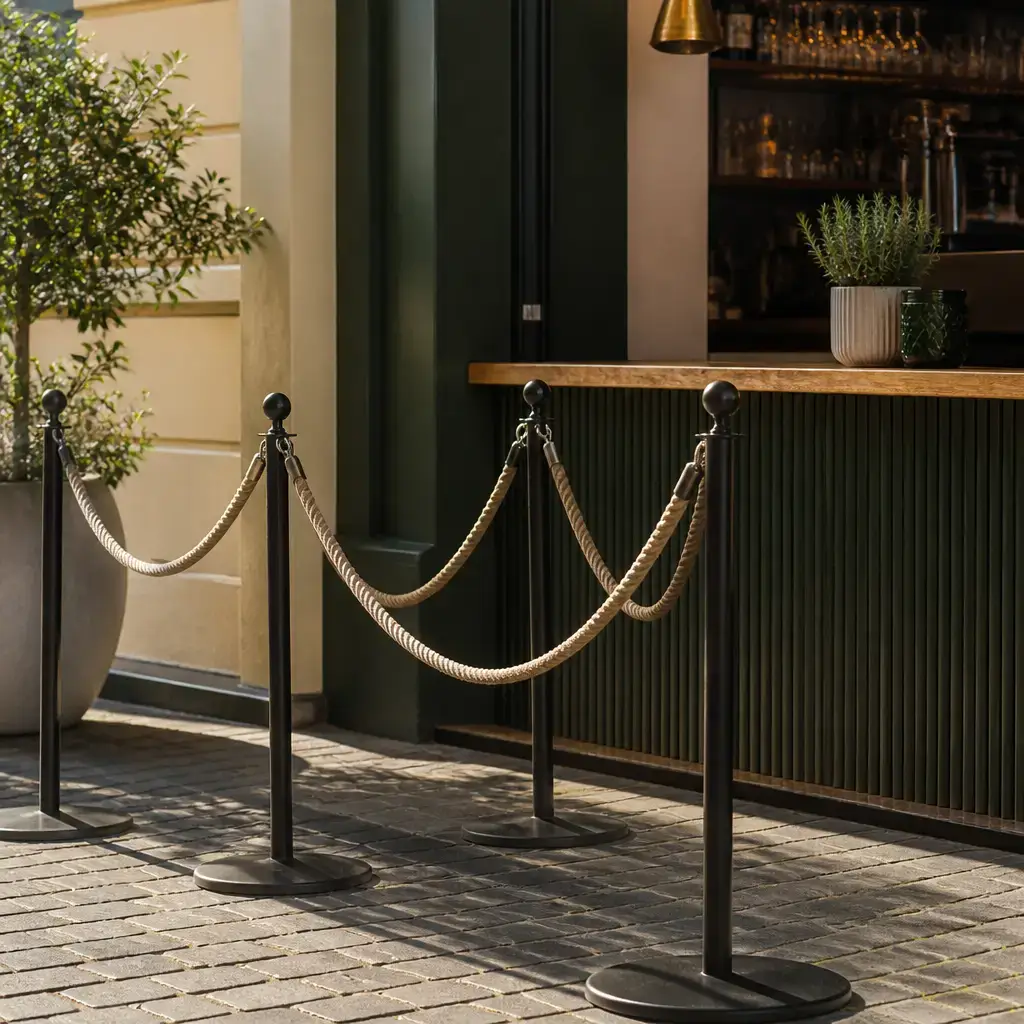
“Schlange” means “line” or “queue” in “in der Schlange”. In this dialogue it refers to people waiting, not to an animal; “in der Schlange” is a reusable expression for being in line.
gefunden
“gefunden” means “found” in “Ich habe sie gefunden”. It is the completed form of “finden” used with “habe”; a reusable pattern is “Ich habe etwas gefunden” when saying that the speaker has found something.
und
“und” means “and” in “Ich habe sie gefunden und bin gleich zurückgekommen”. It links the finding of the wallet with the return; it can connect two actions performed by the same speaker.
bin
“bin” means “am” in form, but in “bin gleich zurückgekommen” it helps express “came back”. It is the form of “sein” used with “ich” as part of “bin ... zurückgekommen”; a reusable pattern is “Ich bin zurückgekommen” for saying that the speaker returned.
gleich
“gleich” means “right away” in “bin gleich zurückgekommen”. It emphasizes that the speaker returned immediately after finding the wallet; it can be placed before an action to show that it happened without delay.
zurückgekommen
“zurückgekommen” means “come back” or “returned” in “bin gleich zurückgekommen”. It is used with “bin” to describe the speaker’s completed return; “Ich bin zurückgekommen” is a reusable pattern for saying that one has come back.
dich
“dich” refers to “you” in “Du kannst dich hier wieder anstellen”. Together with “anstellen”, it forms the reflexive expression “sich anstellen”, meaning to join or enter a line; with “du”, the corresponding form is “dich”.
wieder
“wieder” means “again” or “back” in “dich hier wieder anstellen”. It shows that the person is joining the line again after being away; it can be used with an action that is repeated or resumed.
anstellen
“anstellen” means “join the line” in “Du kannst dich hier wieder anstellen”. With “dich”, it forms “dich anstellen”, and after “kannst” it appears as an infinitive; “sich anstellen” is a reusable expression for getting into a queue.