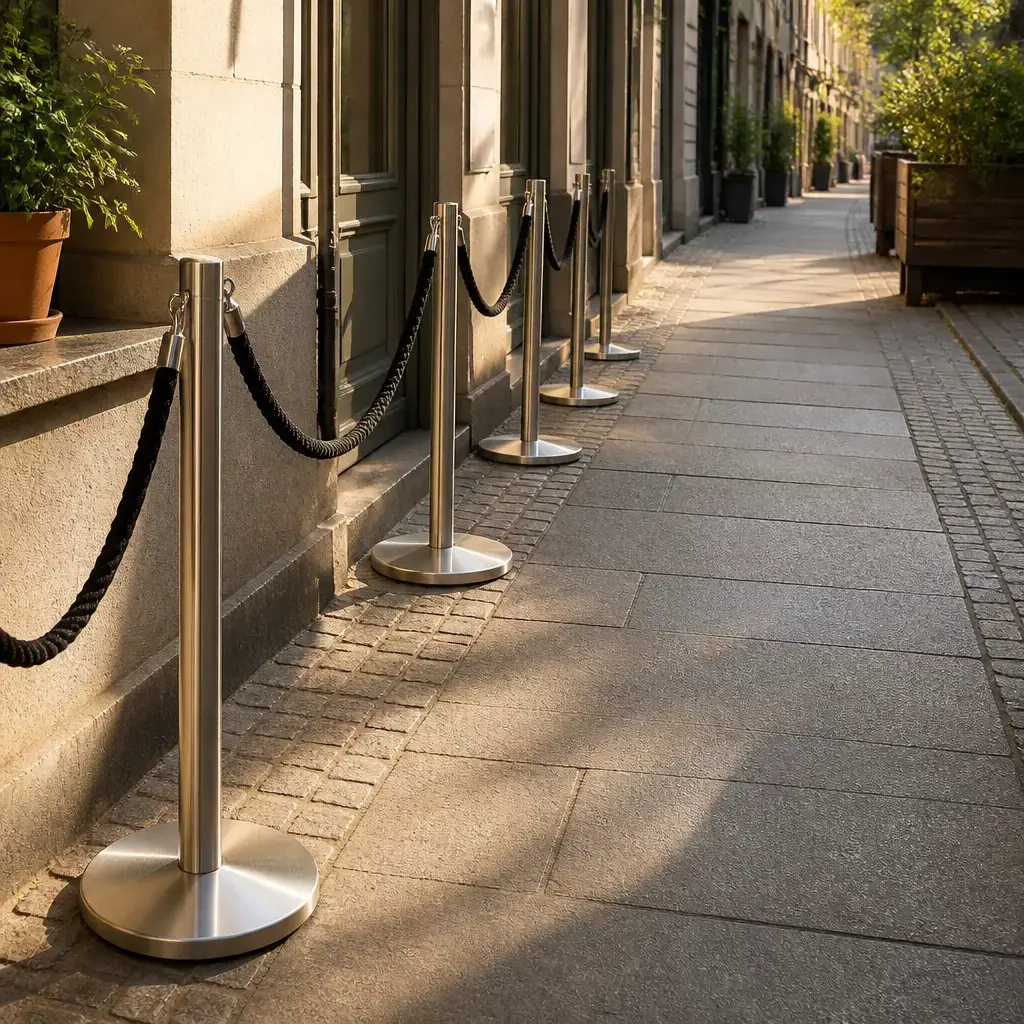
Diese
“Diese” means “this” and points to the line being discussed in “Diese Schlange”. Use it before a noun when identifying one specific nearby thing, such as “Diese Schlange” in a crowded-line situation.
Schlange
“Schlange” means “line” or “queue” here, not an animal. In “Diese Schlange”, it names the line that is becoming crowded. Use it when talking about waiting in a queue.
wird
“Wird” shows that the line is becoming crowded in “Diese Schlange wird wirklich voll.” It is used with an adjective to describe a change of state. Use this pattern when something gradually becomes a certain way.
wirklich
“Wirklich” means “really” and emphasizes how crowded the line is. It comes before “voll” in “wird wirklich voll”. Use it to strengthen a statement when the situation feels especially clear or serious.
voll
“Voll” means “full” or “crowded” in “Diese Schlange wird wirklich voll.” It describes the line’s condition after the change expressed by “wird”. Use it for a space or container that has little room left.
Lassen
“Lassen” in “Lassen wir an der Seite etwas Platz” introduces a suggestion to leave space. Together with “wir”, it functions like “let’s leave”. Use it to suggest a joint action, especially when making room for other people.
wir
“Wir” means “we” and includes the speaker and the other person in “Lassen wir”. It identifies who should carry out the suggested action. Use it with a verb when proposing something for both people to do.
an
In “an der Seite”, “an” places the space at the side of the line. This location pattern is used to say where something is positioned. The dialogue also uses “an der Wand” for a position next to the wall.
der
“Der” means “the” in “an der Seite” and belongs with “Seite”. It helps identify the specific side being discussed. Learn it as part of the location phrase “an der Seite” when indicating where to leave space.
Seite
“Seite” means “side” in “an der Seite”. It identifies the part of the area where space should be left. Use it when directing someone toward one side of a line, room, or path.
etwas
“Etwas” means “some” or “a little” in “etwas Platz”. It indicates an unspecified small amount of space. Use it before a noun when asking for or describing a modest amount of something.
Platz
“Platz” means “space” or “room” in “etwas Platz”. It refers to the open area being left beside the line. Use it when asking someone to make room or describing available space.
Soll
“Soll” asks whether the speaker should do something in “Soll ich ein bisschen zurückgehen?” It presents a possible action for confirmation. Use it with “ich” and an action when asking what you should do.
ich
“Ich” means “I” and identifies the person asking about their own movement in “Soll ich”. It is used when the speaker is the one who may perform the action. Use it before a verb when speaking about yourself.
ein
In “ein bisschen”, “ein” helps express a small amount, roughly “a little”. The complete phrase gives the quantity, while “bisschen” names the small amount. Use this phrase before an action or description when a small degree is intended.
bisschen
“Bisschen” means a small amount in “ein bisschen zurückgehen”. It softens the amount of the movement, so the speaker asks about moving back only a little. Use “ein bisschen” with actions or descriptions when the degree is small.
zurückgehen
“Zurückgehen” means “to move or go back” in “Soll ich ein bisschen zurückgehen?” It describes moving away from the current position toward the back. Use it after a modal verb when asking or saying that someone should move back.
Dann
“Dann” means “then” and links moving back with the result in “Dann können die Leute leichter vorbeigehen.” It shows what will be possible after the proposed action. Use it to introduce a consequence or next step.
können
“Können” means “can” or “be able to” in “Dann können die Leute leichter vorbeigehen.” It says that the people will have an easier opportunity to pass. Use it with a person and an infinitive to describe ability or possibility.
die
“Die” means “the” and refers to the people in “die Leute”. It identifies a specific group of people in the situation. Use it with a noun when referring to known people or things.
Leute
“Leute” means “people” in “die Leute”. It refers to the other people who need to pass through the space. Use it when speaking generally about people as a group.
leichter
“Leichter” means “more easily” in “leichter vorbeigehen”. It describes the improved ease of passing after space is created. Use it to compare how easy an action is in two situations.
vorbeigehen
“Vorbeigehen” means “to pass by” or “walk past” in “die Leute leichter vorbeigehen”. It describes people moving past the line through the open space. Use it after a modal verb when talking about passing a person, place, or obstacle.
Ist
“Ist” means “is” in the question “Ist das weit genug?” It asks about the current state or adequacy of the distance. Use it at the beginning of a yes-or-no question about whether something has a certain quality.
das
“Das” refers to the current distance or position in “Ist das weit genug?” It can be understood as “that” or “it” in this question. Use it to point to a situation, position, or result that is being evaluated.
weit
“Weit” means “far” in “weit genug”. It describes the distance created by moving back. Use it when asking or saying how far something is from a place or person.
genug
“Genug” means “enough” in “weit genug”. It asks whether the distance is sufficient for the purpose of letting people pass. Use it after an adjective or adverb to say that the required degree has been reached.
Jetzt
“Jetzt” means “now” in “Jetzt ist der Weg frei.” It marks the new situation after the space has been created. Use it to describe what is true at the present moment.
Weg
“Weg” means “path” or “way” in “der Weg”. Here it refers to the route people can use to pass. Use it for a physical path or route through a place.
frei
“Frei” means “clear” or “open” in “der Weg frei”. It says that the path has no obstruction and can now be used. Use it to describe an open route or an area with enough space.
kann
“Kann” means “can” in “Ich kann näher an der Wand stehen.” It expresses that the speaker is able or able to choose to stand in that position. Use it with “ich” and an infinitive to describe your own ability or possibility.
näher
“Näher” means “closer” in “näher an der Wand”. It describes a position with less distance from the wall than before. Use it with “an” and a location when saying that someone or something should be closer to that place.
Wand
“Wand” means “wall” in “an der Wand”. It names the surface beside which the speaker can stand. Use it when describing a position next to a wall indoors or outdoors.
stehen
“Stehen” means “to stand” or “be standing” in “Ich kann näher an der Wand stehen.” It describes the speaker’s position after moving closer to the wall. Use it after a modal verb when talking about being in a standing position.
So
“So” means “in this way” or “so” in “So bleibt der Durchgang frei.” It connects the suggested position with its practical result. Use it to explain how an action or arrangement produces a result.
bleibt
“Bleibt” means “stays” or “remains” in “Der Durchgang bleibt frei.” It says that the passage continues to be open. Use it when describing a condition that continues after an action or change.
Durchgang
“Durchgang” means “passage” or “walkway” in “der Durchgang”. It refers to the space people use to walk through. Use it when talking about keeping a route open between people or obstacles.