Ist
“Ist” means “is” here and asks about the current situation in “Ist das hier die Schlange für den Schalter?”. It is the form used with “das” in a question about whether something is the line for the counter. A new example is: “Ist das frei?”
das
“Das” means “this” or “that” here and points to the line being discussed in “Ist das hier die Schlange für den Schalter?”. It is used with “ist” to ask what something is or whether it has a certain function. A new example is: “Das ist mein Platz.”
hier
“Hier” means “here” and identifies the place where the speaker is standing in “Ist das hier die Schlange für den Schalter?”. It is useful for pointing out a nearby place or object. A new example is: “Ich warte hier.”
die
“Die” means “the” before “Schlange” in “die Schlange für den Schalter”. It is the article used with this feminine noun in the dialogue. A new example is: “Die Tür ist offen.”
Schlange
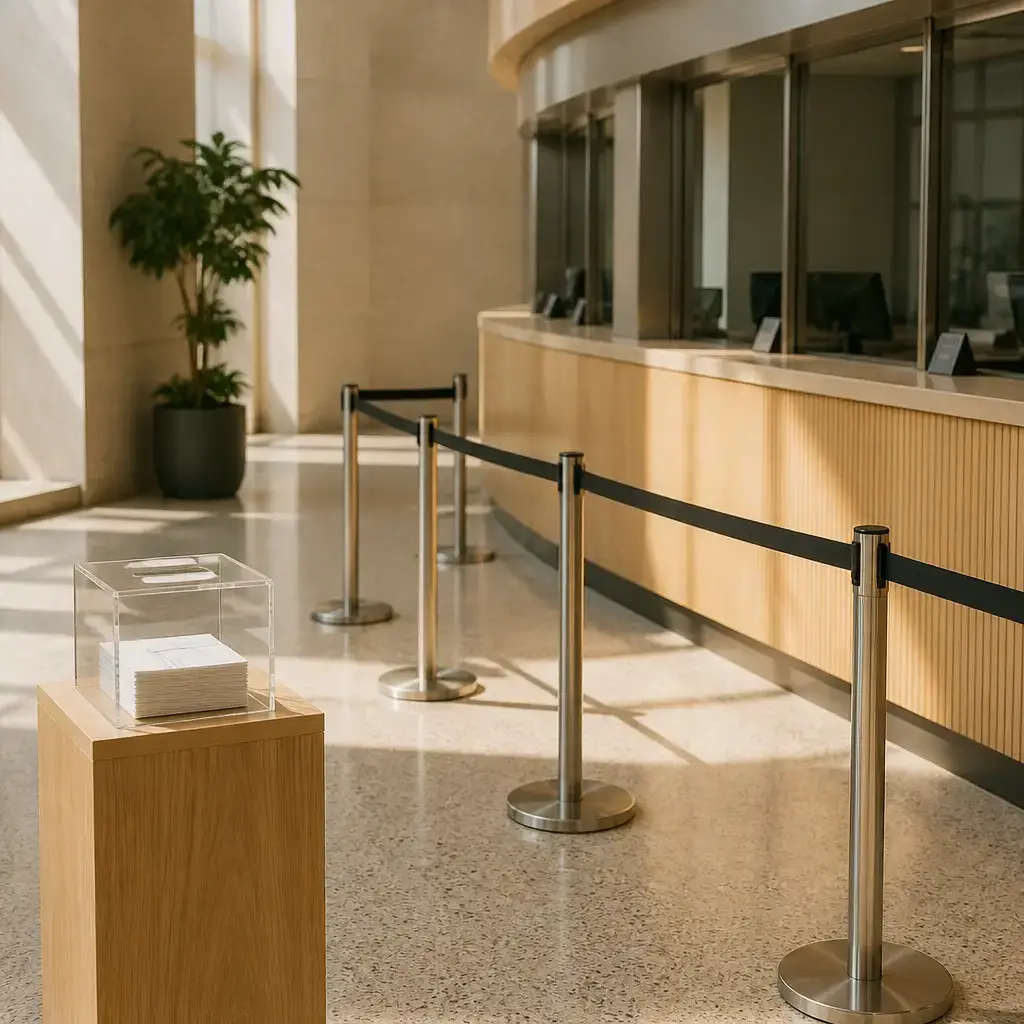
“Schlange” means “line” or “queue” in “die Schlange für den Schalter” and “Hier beginnt die Schlange.” It names the people waiting in order for service. A new example is: “Die Schlange ist lang.”
für
“Für” means “for” in “die Schlange für den Schalter” and shows what the line is intended for. It can be reused before the person, place, or service that something is for. A new example is: “Das ist für Sie.”
den
“Den” means “the” before “Schalter” in “für den Schalter”. It belongs to the noun phrase naming the counter or service desk. A new example is: “Ich suche den Eingang.”
Schalter
“Schalter” means “counter” or “service desk” in “die Schlange für den Schalter”. It identifies the place where the people in the line will receive service. A new example is: “Der Schalter ist dort.”
beginnt
“Beginnt” means “starts” or “begins” in “Hier beginnt die Schlange.” It tells someone where the line starts. A new example is: “Der Film beginnt um acht Uhr.”
Brauche
“Brauche” means “need” in the question “Brauche ich eine Nummer?”. It is used with the person who needs something and the needed item, as in “Brauche ich eine Nummer?”. A new example is: “Brauche ich einen Termin?”
ich
“Ich” means “I” and identifies the speaker in “Brauche ich eine Nummer?” and “Ich warte hier.” It is used when the speaker describes their own need or action. A new example is: “Ich bin hier.”
eine
“Eine” means “a” or “one” before “Nummer” in “eine Nummer”. It introduces one queue number without identifying a specific number. A new example is: “Ich brauche eine Karte.”
Nummer
“Nummer” means “number” in “Brauche ich eine Nummer?” and “Nehmen Sie eine Nummer aus dieser Box.” In this scene, it refers to the number used to wait for a turn. A new example is: “Meine Nummer ist fünf.”
Nehmen
“Nehmen” means “take” in the instruction “Nehmen Sie eine Nummer aus dieser Box.” Together with “Sie”, it gives a formal instruction. A new example is: “Nehmen Sie bitte Platz.”
Sie
“Sie” means “you” when addressing one person formally in “Nehmen Sie eine Nummer aus dieser Box” and “Sie sind nach dieser Person dran.” It is used when speaking politely to an adult or someone whose name is not known. A new example is: “Sind Sie schon dran?”
aus
“Aus” means “from” or “out of” in “eine Nummer aus dieser Box”. It shows the source from which the number is taken. A new example is: “Ich nehme das Buch aus der Tasche.”
dieser
“Dieser” means “this” in “dieser Box” and points to the box near the speakers. It is used before a noun when identifying a particular nearby item. A new example is: “Dieser Platz ist frei.”
Box
“Box” means “box” in “aus dieser Box”. It names the container from which the person should take a number. A new example is: “Die Box steht hier.”
Wann
“Wann” means “when” in “Wann bin ich dran?”. It asks for the time or point at which the speaker’s turn comes. A new example is: “Wann beginnt der Kurs?”
bin
“Bin” means “am” in “Wann bin ich dran?”. Here it is part of “bin ich dran”, the expression used to ask when it is the speaker’s turn. A new example is: “Ich bin hier.”
dran
“Dran” contributes the idea of being next or having a turn in “Wann bin ich dran?” and “Sie sind nach dieser Person dran.” The reusable expression is “dran sein”, used when asking or saying whose turn it is. A new example is: “Wer ist jetzt dran?”
sind
“Sind” means “are” in “Sie sind nach dieser Person dran.” Together with “Sie” and “dran” it states the person’s position in the waiting order. A new example is: “Sie sind hier.”
nach
“Nach” means “after” in “Sie sind nach dieser Person dran.” It shows that the speaker’s turn comes later than the named person’s turn. A new example is: “Ich komme nach Ihnen.”
Person
“Person” means “person” in “dieser Person” and “Die Person vor Ihnen”. It identifies an individual in the waiting order without naming them. A new example is: “Die Person wartet dort.”
warte
“Warte” means “wait” in “Ich warte hier.” It describes the speaker staying in the indicated place while waiting for service. A new example is: “Ich warte draußen.”
vor
“Vor” means “ahead of” or “in front of” in “Die Person vor Ihnen”. It identifies the person positioned before you in the line. A new example is: “Das Auto steht vor dem Haus.”
Ihnen
“Ihnen” means “you” in the formal expression “vor Ihnen”. It refers politely to the person being addressed and identifies their position in the line. A new example is: “Ich komme nach Ihnen.”
fast
“Fast” means “almost” in “ist fast fertig.” It shows that something is close to being finished but is not finished yet. A new example is: “Der Bus ist fast da.”
fertig
“Fertig” means “finished” or “done” in “Die Person vor Ihnen ist fast fertig.” Here it describes the person’s service as nearly complete. A new example is: “Ich bin fertig.”