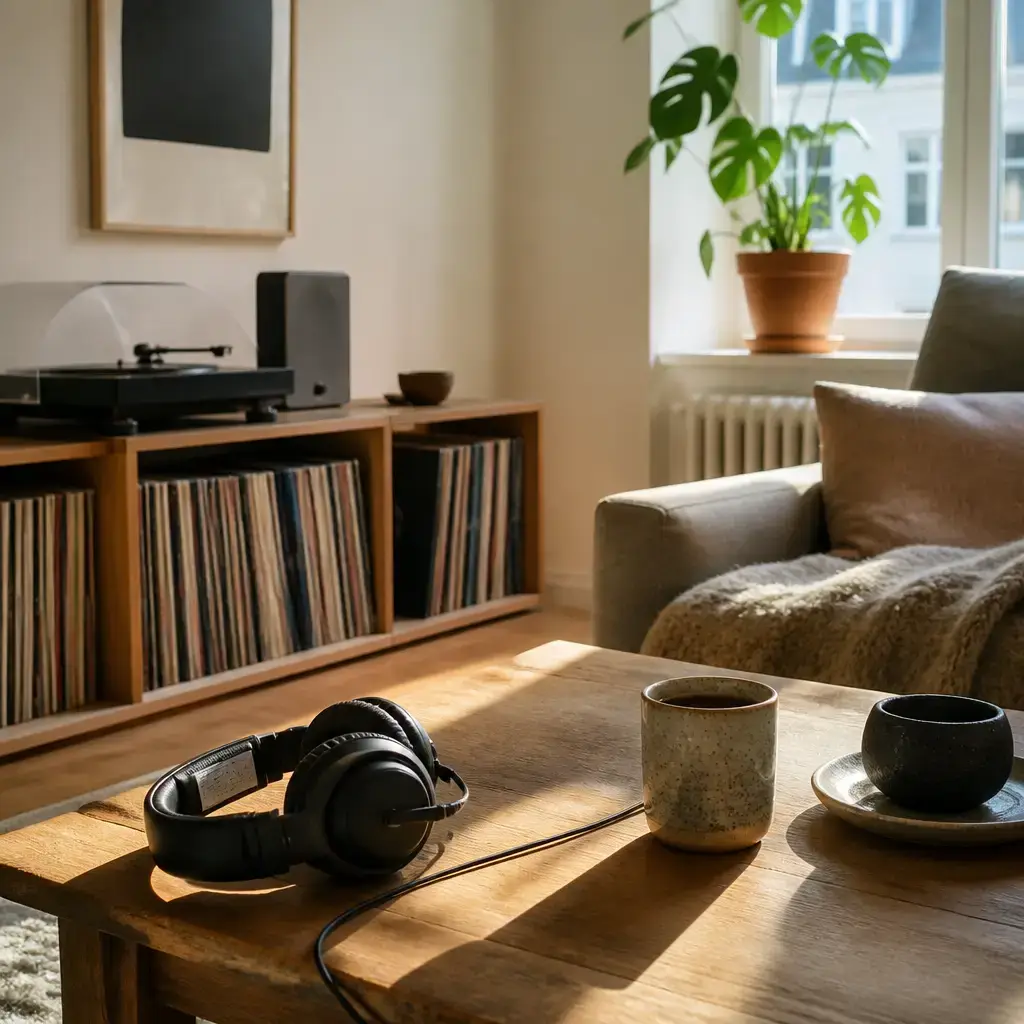
Hörst
“Hörst” means “listen” in the question “Hörst du Musik?” It is the form of hören used with du here. This form is useful when asking someone directly whether they listen to something.
du
“du” means “you” in “Hörst du Musik?” and addresses one person informally. It appears with the verb form “Hörst” in this question. Use it when speaking directly to one person in an informal situation.
Musik
“Musik” means “music” in “Hörst du Musik?” and “Ich höre in meiner Freizeit Musik.” It names what someone listens to, and it is used without an article in these sentences. Use it when talking generally about music as an activity or interest.
Ich
“Ich” means “I” in “Ich höre in meiner Freizeit Musik.” and the other statements beginning with “Ich”. It marks the speaker as the person doing or feeling something. Use it at the beginning of a statement about your own actions or preferences.
höre
“höre” means “listen” in “Ich höre in meiner Freizeit Musik.” It is the form of hören used with Ich in this statement. It commonly appears before the thing being listened to, such as Musik.
in
“in” means “in” in “in meiner Freizeit” and places the activity within a period of time. Together with “meiner Freizeit”, it describes when the speaker listens to music. Use it in time expressions that say an activity happens within a particular period.
meiner
“meiner” means “my” in “in meiner Freizeit”. It identifies the free time as belonging to the speaker. This form appears directly before “Freizeit” in this time expression, which is useful for saying when you do an activity.
Freizeit
“Freizeit” means “free time” in “in meiner Freizeit”. The expression tells us that listening happens when the speaker is not occupied with other duties. Use it when describing hobbies or activities done during free time.
Welche
“Welche” asks “which” in “Welche Musik magst du?” and points to the music being selected or discussed. It appears directly before “Musik”. Use this question word before a noun when asking which item or type someone means or prefers.
magst
“magst” means “like” in “Welche Musik magst du?” It is the form of mögen used with du in this question. Use it to ask one person about a preference, followed by the thing they may like.
mag
“mag” means “like” in “Ich mag langsame Lieder.” It is the form of mögen used with Ich in this statement. Use it before the person’s preferred thing, such as “langsame Lieder” in the dialogue.
langsame
“langsame” means “slow” in “Ich mag langsame Lieder.” and describes the songs. Its form agrees with the noun “Lieder” in this phrase. Use this adjective before a noun when describing music with a slow character.
Lieder
“Lieder” means “songs” in “Ich mag langsame Lieder.” It names the music that the speaker likes. Use it after a describing word such as “langsame” when talking about more than one song.
Benutzt
“Benutzt” means “use” in the question “Benutzt du Kopfhörer?” It is the form of benutzen used with du here. Use it to ask directly whether someone uses an object or device.
Kopfhörer
“Kopfhörer” means “headphones” in “Benutzt du Kopfhörer?” It names the device used for listening to music. Use it as the object of a verb such as the verb meaning “use” in this question.
benutze
“benutze” means “use” in “Ich benutze sie, wenn ich mich entspannen möchte.” It is the form of benutzen used with Ich. Use it before the object being used, or before “sie” when that object has already been mentioned.
sie
“sie” means “them” in “Ich benutze sie, wenn ich mich entspannen möchte.” It refers back to the headphones mentioned in the previous question. Use it when referring to objects already understood from the conversation.
wenn
“wenn” means “when” in “wenn ich mich entspannen möchte.” It introduces the condition or time at which the speaker uses the headphones. Use it to connect an action with a situation that triggers or accompanies it.
mich
“mich” refers to the speaker as the person affected in “ich mich entspannen möchte”. It is part of the expression meaning “relax myself”, rather than the object being used. It appears with the verb “entspannen” when the speaker describes relaxing personally.
entspannen
“entspannen” means “relax” in “mich entspannen möchte”. It is the action the speaker wants to do. Here it follows “möchte”; use this construction to describe wanting to relax.
möchte
“möchte” expresses “want to” in “ich mich entspannen möchte”. It shows the speaker’s wish or intention to relax. Use it before another verb in its unchanged form when describing what someone wants to do.
Kann
“Kann” means “can” in “Kann ich etwas hören?” and introduces a question about whether the speaker may or is able to hear something. It appears at the beginning of this question before “ich”. Use this question structure when asking for permission or asking whether an action is possible.
etwas
“etwas” means “something” in “Kann ich etwas hören?” It refers to an unspecified thing that the speaker may hear. Use it when the exact object is not named or is not yet known.
hören
“hören” means “hear” in “Kann ich etwas hören?” It is the unchanged verb form used after “Kann”. Use it after a modal verb such as “Kann” when asking whether someone can hear something.
spiele
“spiele” contributes the meaning “play” in “Ich spiele ein ruhiges Lied ab.” Together with “ab”, it forms the expression for playing a song or track. It is the form of spielen used with Ich; use it before the object that is played, with “ab” completing the expression.
ein
“ein” introduces “ein ruhiges Lied” as one unspecified song in “Ich spiele ein ruhiges Lied ab.” It appears before the adjective and noun that identify what is played. Use it when referring to one non-specific item.
ruhiges
“ruhiges” means “quiet” or “calm” in “ein ruhiges Lied”. It describes the song that the speaker will play. Use this adjective before a noun when describing something as quiet or peaceful.
Lied
“Lied” means “song” in “ein ruhiges Lied”. It is the specific item being played. Use it after a describing word such as “ruhiges” when naming one song.
ab
“ab” completes the expression “Ich spiele ein ruhiges Lied ab.” and gives “spiele ... ab” the meaning “play a song or track”. It is separated from the verb by the object in this sentence. Keep the object between the verb and “ab” when using this expression in a main statement.