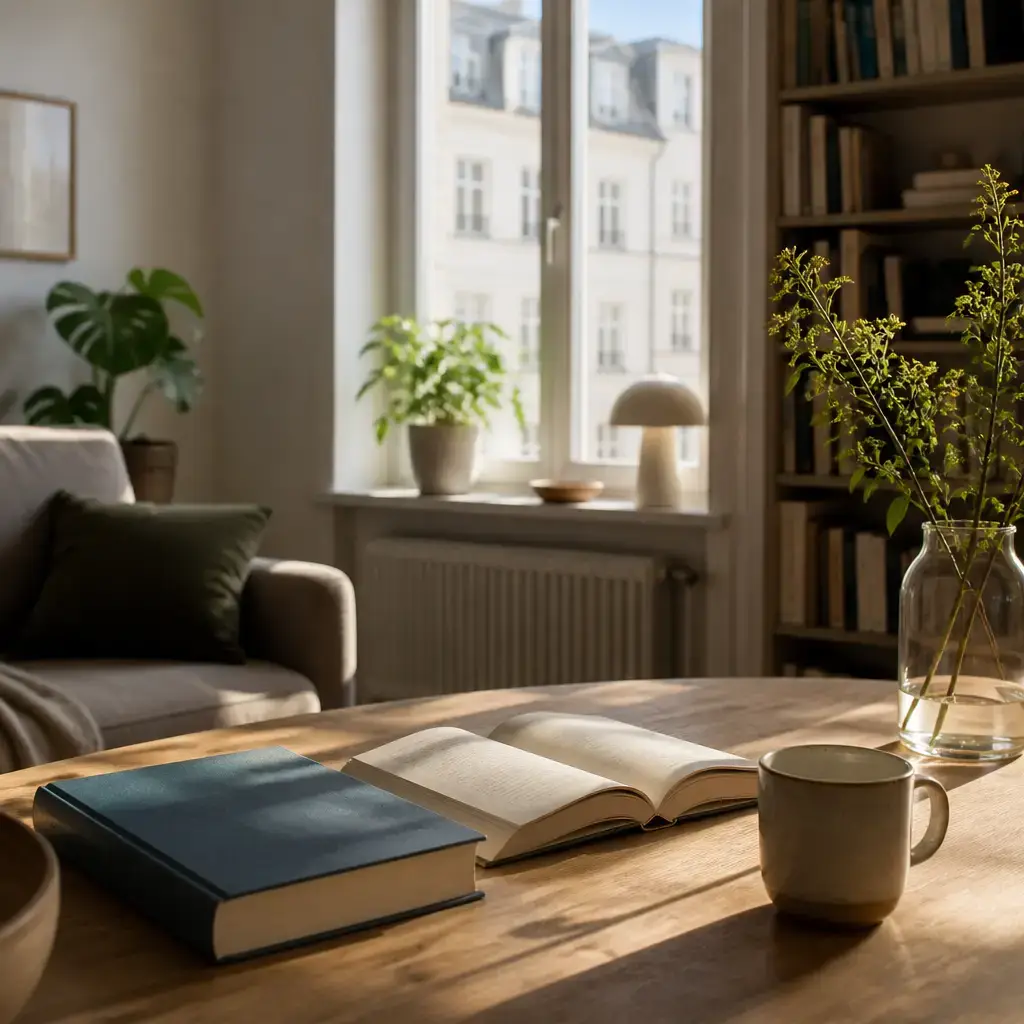
Was
Was asks for the thing being read in Was liest du?; here it means 'what.' It is useful at the start of a question with a verb and the person being asked, for example in a conversation about a book.
liest
liest means 'read' or 'are reading' in Was liest du? It is the present-tense form of lesen used with du, and you use it when asking someone about their current reading.
du
du refers to the person being asked in Was liest du? and means 'you.' It is used when speaking directly to one person in this informal question.
Ich
Ich identifies the speaker in Ich lese ein kurzes Buch and means 'I.' It is placed before lese here and is useful when telling someone what you are reading.
lese
lese means 'read' or 'am reading' in Ich lese ein kurzes Buch. It is the present-tense form of lesen used with Ich, and you use it when describing your current reading activity.
ein
ein introduces the singular indefinite noun Buch in ein kurzes Buch, so it means 'a' here. It is useful before a singular item when you mention it without identifying a particular one.
kurzes
kurzes means 'short' in ein kurzes Buch and describes Buch. It is the form of kurz used before Buch in this phrase, useful when describing the length of a book.
Buch
Buch means 'book' in ein kurzes Buch. It is the thing being read, and you use it when talking about reading material.
Gefällt
Gefällt expresses that the story pleases the other person in Gefällt dir die Geschichte?, so the question means 'Do you like the story?' It is the present-tense form of gefallen used with the singular subject die Geschichte, and you use this question to ask for someone’s reaction to a story.
dir
dir identifies the person who experiences the liking in Gefällt dir die Geschichte?; here it means 'to you.' It is the dative form used with gefallen, and you use it when asking one person whether something is pleasing to them.
die
die marks Geschichte as the definite noun in die Geschichte, meaning 'the.' It is useful before a specific story that both speakers can identify, as in a question about the story being read.
Geschichte
Geschichte means 'story' in die Geschichte. Here it is the story that someone may like and follow, and you use it when discussing the content of a book.
Man
Man refers to people in general in Man kann der Geschichte leicht folgen and means 'one' or 'people in general.' It is useful for general statements rather than naming a particular person; a common pattern is man kann plus an infinitive.
kann
kann expresses ability or possibility in Man kann der Geschichte leicht folgen and means 'can.' It is the present-tense form of können used with man and is followed here by the infinitive folgen; you use man kann plus an infinitive to describe what people can do.
der
der marks Geschichte in der Geschichte as the noun connected to folgen. In this use, folgen is paired with a dative noun, and the exact pattern der Geschichte leicht folgen is useful when talking about following a story.
leicht
leicht means 'easily' in der Geschichte leicht folgen and describes how the story can be followed. It is placed before the infinitive phrase here, useful when saying that an action can be done without difficulty.
folgen
folgen means 'follow' in der Geschichte leicht folgen. It is the infinitive after kann and is used here with der Geschichte; you use it when talking about keeping up with a story or explanation.
Wo
Wo asks for the place in Wo liest du normalerweise? and means 'where.' It is useful at the start of a question about the location of an activity.
normalerweise
normalerweise means 'usually' in Wo liest du normalerweise? and describes what happens regularly. It is useful when asking or saying where an activity normally takes place.
in
in places the reading activity inside in einem ruhigen Zimmer and means 'in.' Here it introduces a location, and you use it when describing where an activity happens.
einem
einem introduces Zimmer in in einem ruhigen Zimmer and means 'a' in this location phrase. It is the form of ein used here after in for a static location, useful as part of an indefinite location phrase.
ruhigen
ruhigen means 'quiet' in in einem ruhigen Zimmer and describes Zimmer. It is the form of ruhig used before Zimmer in this phrase, useful when describing the atmosphere or condition of a place.
Zimmer
Zimmer means 'room' in in einem ruhigen Zimmer. It names the place where the speaker reads, and you use it when talking about a room in a home or another building.
zu
In zu Hause, zu is part of the fixed expression meaning 'at home'; in zu genießen, it introduces the infinitive meaning 'enjoy.' These are two different uses: zu Hause gives a location, while zu plus an infinitive describes an action in Es hilft mir, meine Freizeit zu genießen.
Hause
Hause refers to home in zu Hause, the expression meaning 'at home.' It appears in this fixed location phrase rather than as a standalone description, and you use zu Hause when saying that an activity happens at home.
Das
Das refers back to the quiet reading situation in Das klingt ruhig and means 'that.' It is useful as a subject for reacting to a previously mentioned situation; a reusable pattern is Das klingt plus a description.
klingt
klingt means 'sounds' in Das klingt ruhig. It is the present-tense form of klingen used with Das, and you use the pattern Das klingt plus a description when responding to how an idea or situation seems.
ruhig
ruhig describes the impression made by the situation in Das klingt ruhig and means 'calm' or 'quiet.' Here it follows klingt as the description, while ruhigen in in einem ruhigen Zimmer describes the room; you use it to comment on a calm sound or atmosphere.
Es
Es refers to the reading activity or situation in Es hilft mir, meine Freizeit zu genießen and means 'it.' It is the subject of hilft, used when a previously mentioned activity or situation is the thing providing help.
hilft
hilft means 'helps' in Es hilft mir, meine Freizeit zu genießen. It is the present-tense form of helfen used with Es, and you use it when describing what something helps a person do.
mir
mir identifies the person receiving the help in Es hilft mir, meine Freizeit zu genießen and means 'me' or 'to me.' It is the dative form used with helfen, useful when saying who benefits from help.
meine
meine marks Freizeit as belonging to the speaker in meine Freizeit and means 'my.' It is the form of mein used before Freizeit in this phrase, and you use it before something that belongs to you.
Freizeit
Freizeit means 'free time' in meine Freizeit. It is the time the speaker enjoys, and you use it when talking about activities outside work or other obligations.
genießen
genießen means 'enjoy' in meine Freizeit zu genießen. It is the infinitive after zu in Es hilft mir, meine Freizeit zu genießen, and you use it when describing taking pleasure in an activity or period of time.