About This Lesson
Use Talking about drawing in free time to practice German conversation, pronunciation, vocabulary, grammar, and quizzes.
Dialogue
A
Was machst du in deiner Freizeit?
vahs MAHKST doo in DYE-ner FRY-tsight? What do you do in your free time?
B
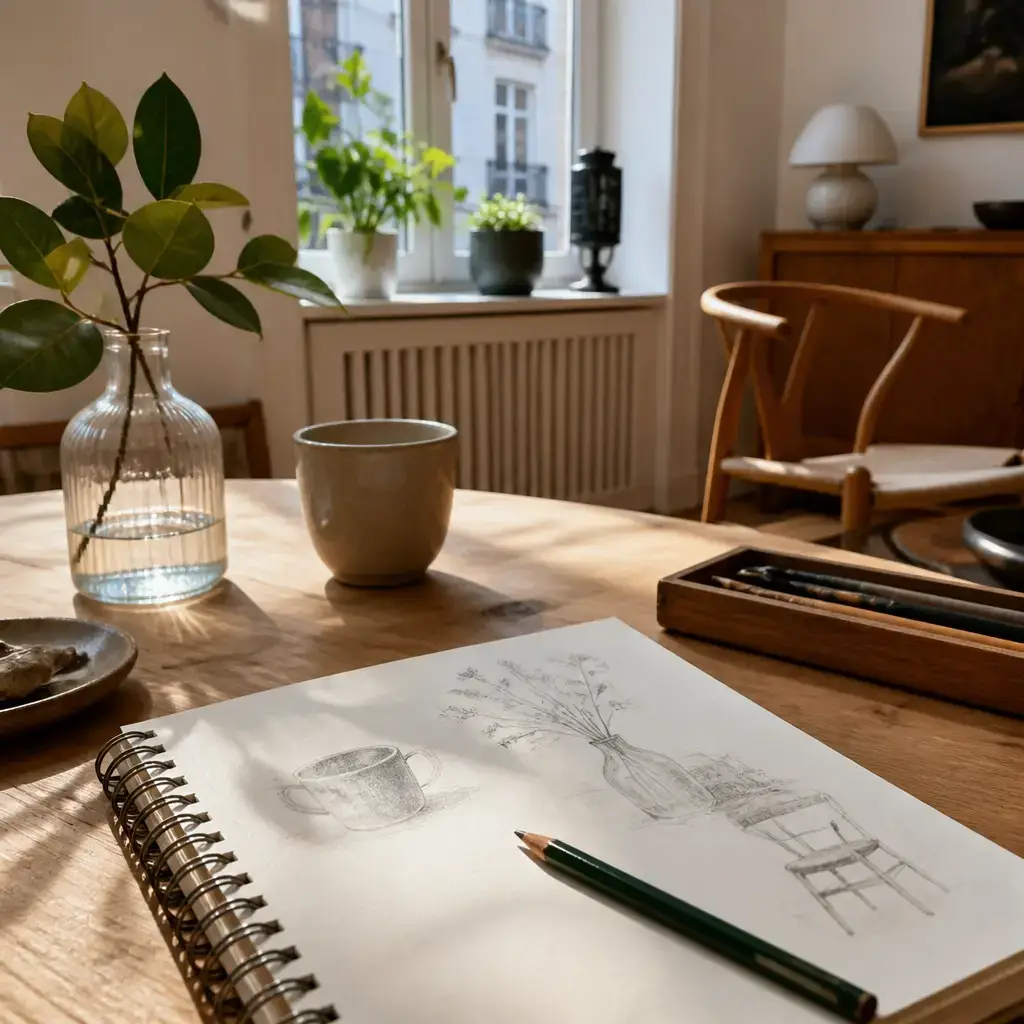
Ich zeichne gern zu Hause.
ikh TSYKH-nuh gairn tsoo HOW-zuh. I enjoy drawing at home.
A
Das klingt nach einem entspannenden Hobby.
dahs KLINGT nahkh EYE-num ent-SHPAN-en-den HOH-bee. That sounds like a relaxing hobby.
B
Ich zeichne meistens kleine Dinge in meinem Notizbuch.
ikh TSYKH-nuh MY-stens KLY-nuh DING-uh in MY-num noh-TEETS-bookh. I usually sketch small things in my notebook.
A
Übst du oft?
UEPST doo awft? Do you practice often?
B
Ein bisschen, meistens wenn ich Zeit habe.
eyne BISS-khen, MY-stens ven ikh tsight HAH-buh. A little, mostly when I have time.
A
Vielleicht kann ich es auch versuchen.
fih-LYKHt kahn ikh ess owkh fair-TSOO-khen. Maybe I can try it too.
B
Du kannst meinen alten Bleistift benutzen.
doo kahnst MY-nen AHL-ten BLAY-shtift buh-NUT-sen. You can use my old pencil.Word by Word
Was
“Was” asks what is being done in “Was machst du in deiner Freizeit?”. It is useful at the start of a question when asking about someone’s activity, for example in the reusable pattern “Was machst du ...?”. This is used when asking one person about their plans or routine.
machst
“machst” means “do” in “Was machst du in deiner Freizeit?”. It is the form used with “du” in this question and comes before the subject “du”. Use the pattern “Was machst du ...?” when asking one person about an activity.
du
“du” means “you” for the person being addressed in “Was machst du in deiner Freizeit?”. It is the subject of the question and appears after “machst”. Use “du” when speaking directly to one person in this conversational setting.
in
“in” means “in” in “in deiner Freizeit” and “in meinem Notizbuch”. It introduces the time period or place connected with the activity. Reuse “in” before a time or place phrase when saying when or where something happens.
deiner
“deiner” means “your” in “in deiner Freizeit”, identifying the free time as belonging to the person being addressed. It comes before “Freizeit” in this phrase. Use a possessive form before a noun when identifying whose time or object you mean.
Freizeit
“Freizeit” means “free time” in “in deiner Freizeit”. It names the time available for activities outside other obligations. Use “in deiner Freizeit” when asking or talking about what someone does in their free time.
Ich
“Ich” means “I” in “Ich zeichne gern zu Hause.” and identifies the speaker as the subject. It appears at the beginning of the statement. Use “Ich” when describing your own activity or preference.
zeichne
“zeichne” means “draw” in “Ich zeichne gern zu Hause.”. It describes the speaker’s activity and follows “Ich” here. Reuse “Ich zeichne gern ...” when saying that you enjoy drawing in a particular place or situation.
gern
“gern” shows that the speaker enjoys drawing in “Ich zeichne gern zu Hause.”. It is placed after “zeichne” and makes the activity sound like something the speaker likes doing. Use the pattern verb + “gern” to express enjoyment of an activity.
zu
In “zu Hause”, “zu” contributes to the expression meaning “at home”. Its meaning here comes from the whole expression together with “Hause”. Use the exact expression “zu Hause” when saying that an activity happens at home.
Hause
In “zu Hause”, “Hause” is the part that refers to home. Together with “zu”, the expression means “at home”, as in “Ich zeichne gern zu Hause.”. Use “zu Hause” when describing an activity done at home.
Das
“Das” means “that” in “Das klingt nach einem entspannenden Hobby.” and refers to the drawing activity just mentioned. It begins the response to the previous statement. Use “Das” to refer back to something that has just been said.
klingt
“klingt” means “sounds” in “Das klingt nach einem entspannenden Hobby.”. With “nach”, it gives the speaker’s impression of the activity. Reuse “Das klingt nach ...” when saying what something seems like from the information you have heard.
nach
In “klingt nach einem entspannenden Hobby”, “nach” introduces what the activity sounds like. Its meaning here is part of the pattern “klingt nach” rather than an isolated comparison. Use “klingt nach” before a noun phrase when describing an impression.
einem
“einem” contributes the meaning “a” in “einem entspannenden Hobby”. It comes before the describing word and the noun in this phrase. Use this form in a noun phrase such as “einem ... Hobby” when describing one hobby in this construction.
entspannenden
“entspannenden” means “relaxing” and describes “Hobby” in “einem entspannenden Hobby”. It appears directly before the noun it describes. Use it when describing a hobby as calming or relaxing.
Hobby
“Hobby” means “hobby” in “einem entspannenden Hobby”. It names a regular free-time activity. Use “Hobby” when talking about an activity someone does for enjoyment, especially in the pattern “ein ... Hobby”.
meistens
“meistens” means “usually” or “mostly” in “Ich zeichne meistens kleine Dinge ...”. It shows that the speaker draws small things on most occasions. Use the pattern subject + “meistens” + verb when describing a usual routine.
kleine
“kleine” means “small” in “kleine Dinge”. It describes the size of the things the speaker usually draws. It comes directly before “Dinge”, so use it in this phrase when describing small objects.
Dinge
“Dinge” means “things” in “kleine Dinge”. It refers generally to the objects the speaker draws without naming specific objects. Use “kleine Dinge” when talking about unspecified small objects or subjects.
meinem
“meinem” means “my” in “in meinem Notizbuch”, identifying the notebook as belonging to the speaker. It comes directly before “Notizbuch”. Use a possessive form before a noun when identifying your own place or object.
Notizbuch
“Notizbuch” means “notebook” in “in meinem Notizbuch”. It is the place where the speaker draws the small things. Use “in meinem Notizbuch” when saying that writing or drawing happens in your notebook.
Übst
“Übst” means “practice” in the question “Übst du oft?”. It asks whether the person regularly works on the drawing activity. Reuse “Übst du ...?” when asking one person whether they practice an activity.
oft
“oft” means “often” in “Übst du oft?”. It asks about the frequency of the practice. Use “oft” with an activity verb when asking or saying that something happens frequently.
Ein
In “Ein bisschen”, “Ein” contributes to the quantity expression meaning “a little”. It does not mean “one” by itself in this reply. Use the full expression “Ein bisschen” when giving a small amount as an answer.
bisschen
In “Ein bisschen”, “bisschen” means “bit” or “little”. Together with “Ein”, it gives the reply “a little” about how much the speaker practices. Use “ein bisschen” before an activity or description when referring to a small amount.
wenn
“wenn” means “when” in “wenn ich Zeit habe”. It introduces the circumstance under which the speaker practices. In this clause, the verb is at the end, as in the exact pattern “wenn ich Zeit habe”. Use “wenn” when an activity depends on a time or condition.
Zeit
“Zeit” means “time” in “wenn ich Zeit habe”, specifically time that is available for practicing. It forms the expression “Zeit haben” with “habe”. Use “Zeit haben” when saying that you have enough available time to do something.
habe
“habe” means “have” in “wenn ich Zeit habe”. It appears at the end of the clause because it is inside “wenn ich Zeit habe”. Use this form with “ich” when saying that you have time available.
Vielleicht
“Vielleicht” means “maybe” in “Vielleicht kann ich es auch versuchen.”. It presents the idea as a possibility rather than a firm plan. Use “Vielleicht” at the beginning of a suggestion or tentative statement.
kann
“kann” means “can” in “kann ich es auch versuchen” and expresses the speaker’s possibility of trying the activity. The other verb, “versuchen”, stays at the end of this phrase. Use “kann” with an infinitive when saying what you are able or willing to do.
es
“es” means “it” in “kann ich es auch versuchen.” and refers back to the drawing activity being discussed. It is the thing the speaker wants to try. Use “es” when referring back to an activity or thing already clear from the conversation.
auch
“auch” means “too” or “also” in “kann ich es auch versuchen.”. It adds the speaker to the activity that the other person already does. Use “auch” when saying that someone joins an activity or shares an action.
versuchen
“versuchen” means “try” in “kann ich es auch versuchen.”. It follows “kann” as the action the speaker may carry out. Reuse “kann ich ... versuchen” when saying that you may try an activity or method.
kannst
“kannst” means “can” in “Du kannst meinen alten Bleistift benutzen.” and addresses one person directly. It introduces the action “benutzen”. Use “Du kannst ...” when offering someone the possibility or permission to do something.
meinen
“meinen” means “my” in “meinen alten Bleistift”, identifying the pencil as belonging to the speaker. It comes before “alten Bleistift”. Use a possessive form before an object when identifying it as yours.
alten
“alten” means “old” in “meinen alten Bleistift”. It describes the pencil being offered for drawing. Use it before a noun when describing an object as old, as in this exact phrase.
Bleistift
“Bleistift” means “pencil” in “meinen alten Bleistift”. It is the object that the other person can use for trying drawing. Use “Bleistift” when offering or discussing a pencil as a drawing or writing tool.
benutzen
“benutzen” means “use” in “Du kannst meinen alten Bleistift benutzen.”. It is the action that follows “kannst” and takes the pencil as its object. Reuse “Du kannst ... benutzen” when telling someone they can use a particular item.
Grammar Points
Verb + gern
zeichnen gern
TSYKH-nen gairnenjoy drawing
German uses gern after a verb to express that someone enjoys doing an activity.
German Vocabulary
Ding
noun
DING
thing
Dinge
entspannend
adj
ent-SHPAN-ent
relaxing
Freizeit
noun
FRY-tsight
free time
gern
adv
gairn
gladly; enjoy doing
Hobby
noun
HOH-bee
hobby
klein
adj
KLYN
small
kleine
klingen
verb
KLING-en
to sound
klingt
machen
verb
MAH-khen
to do
machst
meistens
adv
MY-stens
usually; mostly
nach
prep
nahkh
like; after
zeichnen
verb
TSYKH-nen
to draw
zeichne
zu Hause
phrase
tsoo HOW-zuh
at home
Quiz
Word Order
Arrange the words in the correct order.
What do you do in your free time?
Show Answer
Was machst du in deiner Freizeit?I enjoy drawing at home.
Show Answer
Ich zeichne gern zu Hause.That sounds like a relaxing hobby.
Show Answer
Das klingt nach einem entspannenden Hobby.Spelling
Tap the letters to spell the word.
free time
Show Answer
Freizeitgladly; enjoy doing
Show Answer
gernto draw
Show Answer
zeichnelike; after