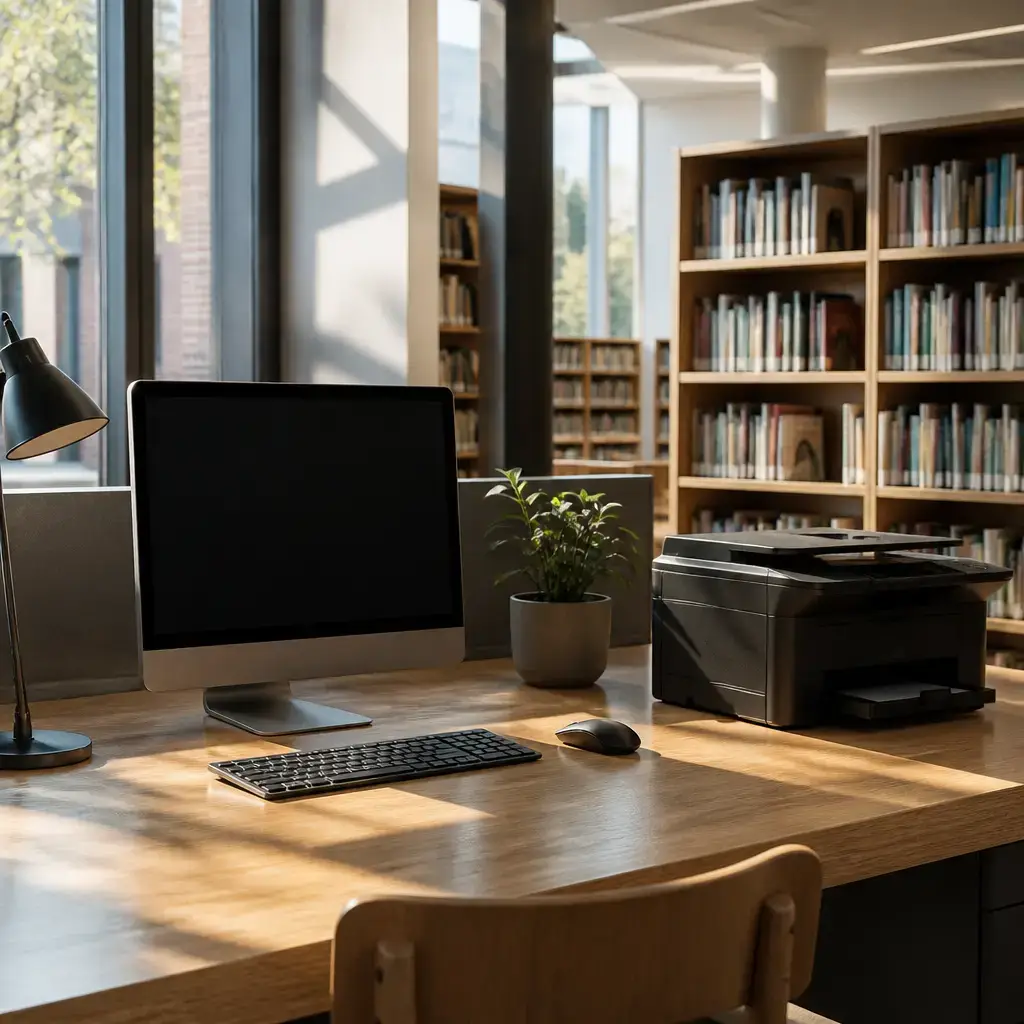
Kann
“Kann” means “can” here and begins a polite question asking for permission to use the computer. It is the form used with “ich” in “Kann ich diesen Computer benutzen?”. A reusable pattern is “Kann ich … benutzen?” when asking to use something.
ich
“ich” means “I” and identifies the person asking to use the computer or printer. It appears directly after “Kann” in the question “Kann ich diesen Computer benutzen?”. Use “ich” when referring to yourself as the person doing an action.
diesen
“diesen” means “this” and points to the specific computer being indicated. It comes directly before “Computer” in “diesen Computer”. Use it before a specific masculine noun when identifying one particular item.
Computer
“Computer” means “computer” and refers to the available machine in the library. The dialogue uses it in “diesen Computer” and “Der Computer”. It can be used with a determiner when asking about or identifying a particular computer.
benutzen
“benutzen” means “to use” and describes using the computer or printer. It appears as the infinitive after “Kann ich” in “Kann ich diesen Computer benutzen?”. A reusable pattern is “etwas benutzen” for saying that someone uses an object.
Der
“Der” means “the” and introduces the computer as a specific masculine noun in “Der Computer ist frei.”. It is also the form used at the start of the sentence, where German nouns are capitalized. Use “Der” before a specific masculine noun in this kind of statement.
ist
“ist” means “is” and links the computer with the description “frei”. It appears in “Der Computer ist frei.”. Use “ist” to describe the current state or condition of one thing.
frei
“frei” means “free” in the sense of available for use, so the computer is not occupied. In “Der Computer ist frei.” it describes the computer’s current availability. This is useful when telling someone that a seat, device, or place is available.
Bildschirm
“Bildschirm” means “screen” and refers to the computer display. In “Der Bildschirm ist sehr hell.” it is the thing being described as bright. Use it as the subject when talking about a screen’s appearance or condition.
sehr
“sehr” means “very” and strengthens the description “hell”. The phrase “sehr hell” means that the screen is very bright. Use “sehr” directly before an adjective when making a description stronger.
hell
“hell” means “bright” here and describes the screen’s strong light. It appears after “ist” in “Der Bildschirm ist sehr hell.”. Use “hell” to describe a screen, room, or other place that has a lot of light.
Du
“Du” means “you” and addresses the other person directly in the informal conversation. It begins “Du kannst die Helligkeit hier niedriger stellen.”. Use “du” when speaking informally to one person you address directly.
kannst
“kannst” means “can” and tells the other person that they are able or allowed to adjust the brightness. It appears with “Du” in “Du kannst die Helligkeit hier niedriger stellen.”. A reusable pattern is “Du kannst …” followed by an infinitive to give a suggestion or permission.
die
“die” means “the” and introduces “Helligkeit” as the specific brightness being adjusted. It appears in “die Helligkeit”. Use “die” before a specific noun such as the brightness or another identified thing.
Helligkeit
“Helligkeit” means “brightness” and names the setting that can be adjusted on the computer. In “die Helligkeit hier niedriger stellen”, it is the thing being set lower. Use it when talking about the brightness of a screen or another light source.
hier
“hier” means “here” and directs the listener to the place or control where the brightness can be adjusted. It appears in “die Helligkeit hier niedriger stellen.”. Use “hier” to point to the current location or a control available at that location.
niedriger
“niedriger” means “lower” and indicates that the brightness should be set to a lower level. It appears in “die Helligkeit hier niedriger stellen”. Use it with a setting when explaining that the setting should be reduced.
stellen
“stellen” means “set” or “adjust” here and completes the instruction about changing the brightness. It is the infinitive at the end of “Du kannst die Helligkeit hier niedriger stellen.”. A reusable pattern is “etwas niedriger stellen” when adjusting a setting downward.
auch
“auch” means “also” or “too” and adds the printer to the earlier request about using the computer. In “Kann ich auch den Drucker benutzen?”, it shows that the speaker wants to use the printer as well. Place it before the additional object or activity you are adding to a request.
den
“den” means “the” and introduces “Drucker” as the specific printer being used. It appears in “den Drucker benutzen”. Use “den” in this object phrase when referring to that particular printer.
Drucker
“Drucker” means “printer” and refers to the printer available near the desk. It appears as the object in “den Drucker benutzen”. Use it when asking about, locating, or using a printer.
in
“in” contributes the location meaning “in” within “in der Nähe vom Schreibtisch”, which identifies where the printer is. Here it is part of the location expression rather than meaning that the printer is inside the desk. Use “in der Nähe” to introduce information about something being nearby.
Nähe
“Nähe” means “vicinity” or “nearby area” and helps locate the printer. The full phrase “in der Nähe vom Schreibtisch” means near the desk. Use “in der Nähe” when giving the approximate location of a person or object.
vom
“vom” means “from the” and appears in the location phrase “in der Nähe vom Schreibtisch”, meaning near the desk. It is the contracted form of “von dem” in this expression. Use “vom” before a masculine or neuter noun when a location is described with “von dem”.
Schreibtisch
“Schreibtisch” means “desk” and is the reference point for the printer’s location. In “in der Nähe vom Schreibtisch”, it identifies what the printer is near. Use it after a location expression when specifying a desk as the nearby reference point.
werde
“werde” helps express the speaker’s future plan in “Ich werde Kopfhörer benutzen.”. It is the form used with “Ich” in this future statement. Use “Ich werde …” followed by an infinitive when saying what you plan or intend to do.
Kopfhörer
“Kopfhörer” means “headphones” and refers to the device the speaker will use for audio. It appears in “Ich werde Kopfhörer benutzen.”. Use it when explaining how you will listen privately or avoid disturbing people nearby.
wenn
“wenn” means “if” here and introduces the condition for using headphones: playing audio. It begins “wenn ich Audio abspiele.”. Use “wenn” to introduce a condition under which an action will happen.
Audio
“Audio” means “audio” and refers to sound content that may be played in the library. In “wenn ich Audio abspiele”, it is the object of the action. Use it when referring generally to audio content rather than naming a particular recording.
abspiele
“abspiele” means “play” in the clause “wenn ich Audio abspiele”. It is the form used with “ich” and appears as one word in this subordinate clause. A reusable pattern is “ich … abspiele” with an audio object when saying that you play audio.
Das
“Das” means “that” here and refers to the preceding plan of using headphones when playing audio. In “Das hält den Raum ruhig.” it is the subject of the sentence. Use “Das” to refer back to an action or situation just mentioned.
hält
“hält” means “keeps” and expresses maintaining the room in a quiet state. In “Das hält den Raum ruhig.”, it connects the headphone use with that result. A reusable pattern is “etwas hält … ruhig” when an action or object keeps a place quiet.
Raum
“Raum” means “room” and refers to the library room whose quiet condition is being protected. It appears in “den Raum ruhig”. Use it when describing the condition or use of a particular room.
ruhig
“ruhig” means “quiet” and describes the state in which the room remains. In “Das hält den Raum ruhig.” it completes the description of the room’s condition. Use “ruhig” when asking for or describing a quiet room or environment.