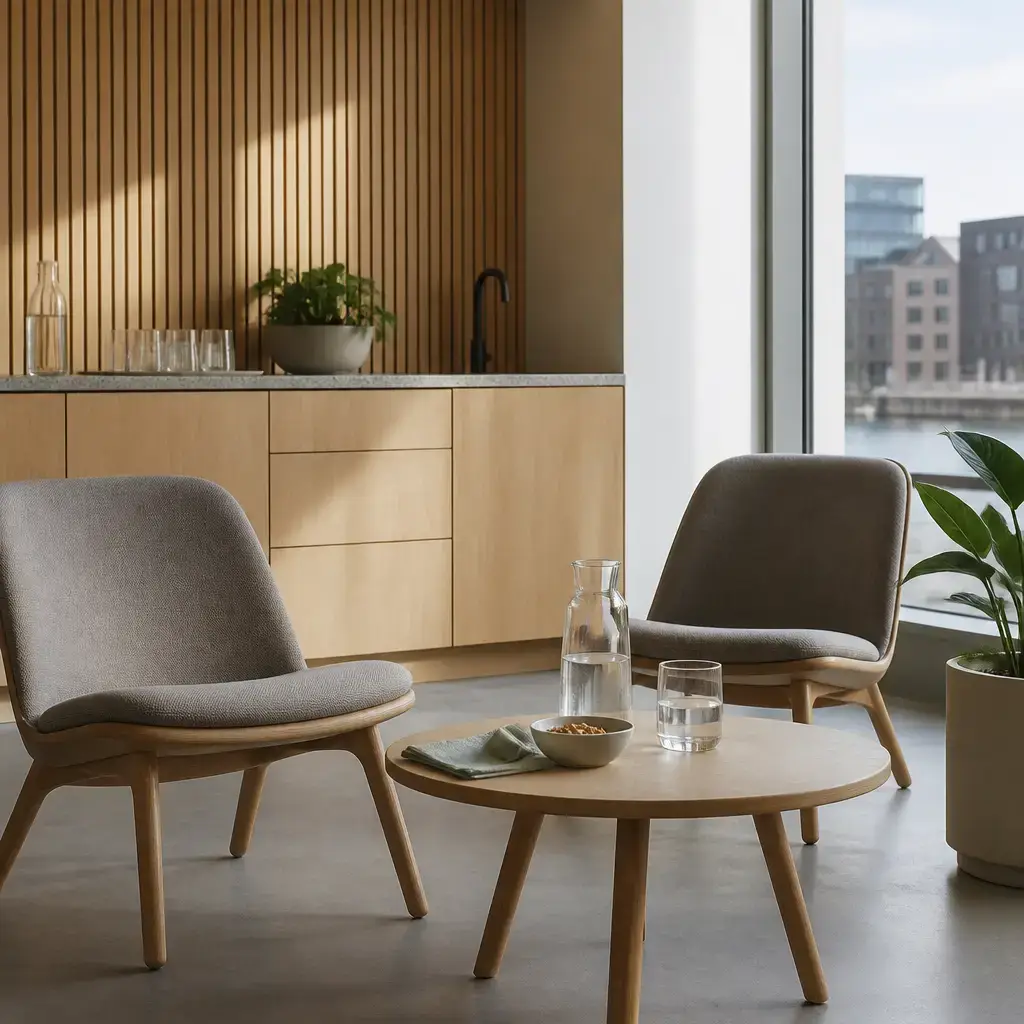
Ich
“Ich” means “I” and is the speaker’s subject in “Ich bin müde.” It is used before a verb when talking about yourself, as in “Ich hole etwas Wasser.”
bin
“bin” means “am” in “Ich bin müde” and describes the speaker’s state. It is the form of “sein” used with “Ich”; the pattern “Ich bin + adjective” describes how you are feeling or what state you are in.
müde
“müde” means “tired” in “Ich bin müde.” It is an adjective used after “bin” to describe the speaker’s condition, and you can use “Ich bin müde” when telling someone you need rest.
Machen
“Machen” means “make” here, but at the start of “Machen wir eine kurze Pause” it introduces a suggestion: “Let’s take a short break.” The reusable suggestion pattern is “Machen wir + activity,” as in “Machen wir eine kurze Pause.”
wir
“wir” means “we” and refers to both people in “Machen wir eine kurze Pause.” It is the subject used when suggesting that you and another person do something together, as in “Dann können wir uns hier kurz ausruhen.”
eine
“eine” means “a” in “eine kurze Pause.” It introduces the nonspecific noun phrase “eine kurze Pause” and comes before the adjective and noun; the same pattern is “eine + adjective + noun.”
kurze
“kurze” means “short” in “eine kurze Pause.” Its form belongs to the phrase before “Pause,” and it describes a break that lasts for a short time.
Pause
“Pause” means “break” in “eine kurze Pause” and “die Pause.” It names a period when people stop working or acting, and “eine kurze Pause” is useful when suggesting a brief rest.
Ist
“Ist” means “is” in the question “Ist dieser Stuhl frei?” Because it begins the question, it comes before the subject “dieser Stuhl.” The pattern “Ist + noun + adjective?” asks about a current state.
dieser
“dieser” means “this” in “dieser Stuhl” and points to a particular chair. It comes directly before the noun, as in “Ist dieser Stuhl frei?”, when identifying something nearby.
Stuhl
“Stuhl” means “chair” in “dieser Stuhl.” It is the thing whose availability is being asked about, and the phrase “dieser Stuhl” identifies a particular chair.
frei
“frei” means “free” or “available” in “Ist dieser Stuhl frei?” Here it asks whether nobody is using the chair. You can use “Ist ... frei?” to ask whether a seat or place is available.
Du
“Du” means informal singular “you” in “Du kannst hier sitzen.” It refers to the person being addressed and is used at the beginning of a sentence before the verb in this statement.
kannst
“kannst” means “can” in “Du kannst hier sitzen.” It is the form of “können” used with “Du” and is followed by the infinitive “sitzen”; this pattern expresses that someone is able or allowed to do something.
hier
“hier” means “here” and identifies the place in “Du kannst hier sitzen.” It usually comes near the action it locates, and “Du kannst hier sitzen” gives someone permission or an invitation to sit in this place.
sitzen
“sitzen” means “sit” in “Du kannst hier sitzen.” It is the infinitive used after “kannst,” and it stays at the end of this sentence; the pattern “kannst ... sitzen” expresses the possibility of sitting.
habe
“habe” means “have” in “Ich habe einen kleinen Snack für die Pause mitgebracht.” It is the form of “haben” used with “Ich” and works with “mitgebracht” to say that the speaker brought something. The dialogue pattern is “Ich habe ... mitgebracht.”
einen
“einen” means “a” in “einen kleinen Snack.” It introduces the nonspecific object “Snack” and is used here before a masculine noun phrase; the pattern is “einen + adjective + noun.”
kleinen
“kleinen” means “small” in “einen kleinen Snack.” It describes the snack and has the form used inside the phrase “einen kleinen Snack”; this pattern places an adjective between the determiner and noun.
Snack
“Snack” means “snack” in “einen kleinen Snack.” It names the small amount of food brought for the break, and “einen kleinen Snack” can be used when mentioning food for a short break.
für
“für” means “for” in “für die Pause” and shows the intended use of the snack. It comes before a noun phrase, as in “für die Pause,” to say what something is intended for.
die
“die” means “the” in “die Pause.” It introduces the specific break already being discussed and comes directly before “Pause”; the phrase “für die Pause” means “for the break.”
mitgebracht
“mitgebracht” means “brought along” in “Ich habe einen kleinen Snack für die Pause mitgebracht.” It is the past participle of “mitbringen” and appears at the end with “habe”; the reusable pattern is “Ich habe ... mitgebracht.”
hole
“hole” means “get” or “fetch” in “Ich hole etwas Wasser.” It is the form of “holen” used with “Ich” and can be followed by the thing being fetched, here “etwas Wasser.”
etwas
“etwas” means “some” in “etwas Wasser,” referring to an unspecified amount. It comes before a substance or thing when the exact amount is not given, as in “Ich hole etwas Wasser.”
Wasser
“Wasser” means “water” in “etwas Wasser.” It names the drink that the speaker will fetch, and “etwas Wasser” refers to some water without specifying an amount.
es
“es” fills the subject position in “Hier ist es ruhig,” while “hier” identifies the place and “ruhig” describes it. The pattern “Hier ist es + adjective” describes the condition of a place or situation.
ruhig
“ruhig” means “quiet” in “Hier ist es ruhig.” It describes the place or situation as calm and without much noise, and the pattern “ist es ruhig” can be used when assessing how quiet a place is.
Dann
“Dann” means “then” in “Dann können wir uns hier kurz ausruhen.” It links the quiet situation with the next suggestion or consequence, and it commonly comes at the beginning when introducing what happens next.
können
“können” means “can” or “are able to” in “Dann können wir uns hier kurz ausruhen.” It is used with “wir” and is followed by the infinitive “ausruhen,” making the rest possible in this situation.
uns
“uns” means “ourselves” in “uns hier kurz ausruhen” and refers back to “wir.” It is used with the action of resting when the people who rest are the same people who are described by “wir.”
kurz
“kurz” means “for a short time” in “uns hier kurz ausruhen.” It limits how long the resting lasts and appears before “ausruhen”; this is useful when suggesting a brief activity.
ausruhen
“ausruhen” means “rest” in “Dann können wir uns hier kurz ausruhen.” It follows the modal verb “können” as an infinitive and stays at the end of the sentence; the full pattern expresses that the speakers can rest briefly here.