Kann
“Kann” means “can” and asks for permission in “Kann ich mir dein Handy-Ladegerät ausleihen?”. It introduces a polite request to borrow something. Use it in a question when asking whether you are allowed to do an action.
ich
“ich” means “I” and identifies the speaker in “Kann ich mir dein Handy-Ladegerät ausleihen?” and “Ich habe beides gefunden.” It is the subject of the statement or question. Use it when describing your own action or situation.
mir
“mir” means “to me” or “for myself” in “Kann ich mir dein Handy-Ladegerät ausleihen?”. It identifies the person who will borrow the charger. The reusable construction is “Kann ich mir dein Handy-Ladegerät ausleihen?” when asking to borrow something.
dein
“dein” means “your” and shows that the Handy-Ladegerät belongs to the person being addressed. It appears directly before “Handy-Ladegerät” in “dein Handy-Ladegerät”. Use it before an item belonging to the person you are speaking to.
Handy-Ladegerät
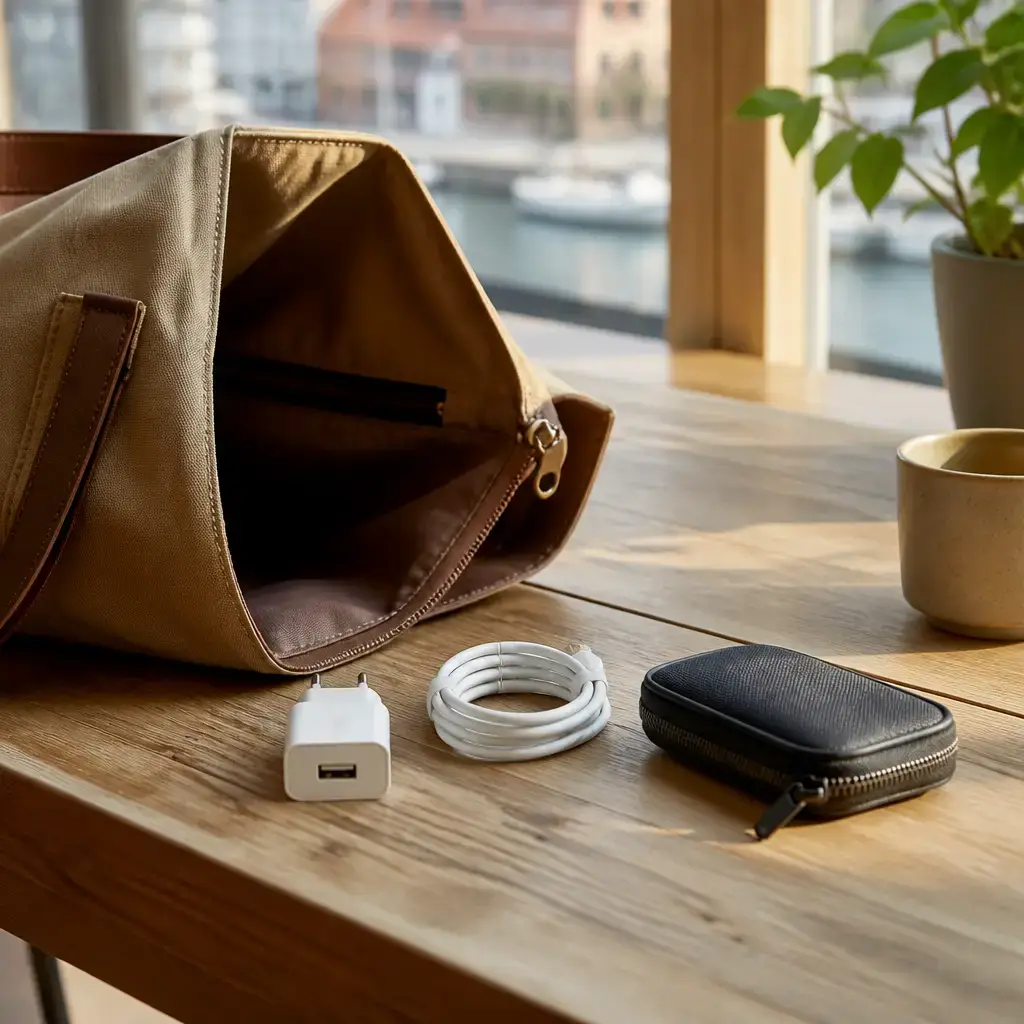
“Handy-Ladegerät” means “phone charger” in “dein Handy-Ladegerät”. It is the item that the speaker wants to borrow. Use it when referring specifically to a charger for a mobile phone.
ausleihen
“ausleihen” means “borrow” in “Kann ich mir dein Handy-Ladegerät ausleihen?”. It names the action of taking an item temporarily with the intention of returning it. Use it when asking or talking about borrowing an object.
Es
“Es” means “it” in “Es ist in der Innentasche meiner Tasche.” and refers to the phone charger mentioned just before. It makes the charger the subject of the location statement. Use it to refer back to a single object when its identity is already clear.
ist
“ist” means “is” in “Es ist in der Innentasche meiner Tasche.” and states where the charger is. The capitalized form “Ist” begins the question “Ist das Kabel dabei?”. Use it to describe or ask about a current state or location.
in
“in” means “in” and shows that something is inside a place or container, as in “in der Innentasche” and “in dem kleinen Etui”. It connects the item with its location. Use it when saying that an object is inside a pocket, bag, case, or another place.
der
“der” means “the” in “in der Innentasche”. It is the article used before “Innentasche” in this location phrase. Reuse the exact phrase “in der Innentasche” when identifying an item’s location in the inside pocket.
Innentasche
“Innentasche” means “inside pocket” in “in der Innentasche meiner Tasche”. It identifies the particular pocket where the charger is located. Use it when explaining that something is stored in an inner pocket of a bag.
meiner
“meiner” means “my” in “meiner Tasche” and shows that the bag belongs to the speaker. It appears directly before “Tasche”. Use it to identify something as belonging to yourself, as in the exact phrase “meiner Tasche”.
Tasche
“Tasche” means “bag” in “meiner Tasche”. It identifies the larger item containing the inside pocket. Use it when describing where personal belongings are stored.
das
The lowercase “das” means “the” before “Kabel” in “das Kabel”. The capitalized “Das” means “that” in “Das passt für mich.”, where it refers to the proposed arrangement. Use the form according to whether it introduces the cable as an item or refers to the situation just mentioned.
Kabel
“Kabel” means “cable” in “Das Kabel ist in dem kleinen Etui.” and “leg das Kabel zurück ins Etui.” It is the accessory that is stored with the charger and then put back. Use it when referring to the cable connected with the phone charger.
dabei
“dabei” means “with it” or “included” in “Ist das Kabel dabei?”. The whole question checks whether the cable is present together with the charger. Reuse the question pattern “Ist das Kabel dabei?” when checking whether an accessory is included.
dem
“dem” is the form of “the” used in “in dem kleinen Etui”. Together with “in”, it introduces the case as the location of the cable. Reuse the exact phrase “in dem kleinen Etui” when locating the cable inside that case.
kleinen
“kleinen” means “small” and describes the case in “dem kleinen Etui”. The form appears between “dem” and “Etui” in this phrase. Use it when describing the size of a container in the same kind of noun phrase.
Etui
“Etui” means “case” in “dem kleinen Etui” and “ins Etui”. It identifies the container holding the cable. Use it when locating or returning a small item in its case.
habe
“habe” means “have” in “Ich habe beides gefunden.”. Together with “gefunden”, it expresses that the speaker has found the two items. Reuse the exact pattern “Ich habe beides gefunden” to report that you located something.
beides
“beides” means “both” and refers to the phone charger and the cable in “Ich habe beides gefunden.”. It allows the speaker to refer to the two items together. Use it when two previously mentioned things have both been found or handled.
gefunden
“gefunden” means “found” in “Ich habe beides gefunden.”. It completes the statement that the speaker located both items. Reuse it with “habe” and an object when reporting that something has been found.
Bitte
“Bitte” means “please” and makes “Bitte leg das Kabel zurück ins Etui.” a polite request. It appears at the beginning of the request. Use it when asking another person to do something politely.
leg
“leg” means “put” in the request “Bitte leg das Kabel zurück ins Etui.”. It tells the other person to place the cable somewhere. Use it with an object and a destination when asking someone to put something in a particular place.
zurück
“zurück” means “back” in “leg das Kabel zurück ins Etui.”. It shows that the cable should be returned to its previous place. Use it with an action of placing or giving something back when restoring an item to where it belongs.
ins
“ins” means “into the” in “ins Etui”. It shows movement into the case, rather than simply describing a location. Use it before a destination when telling someone to put an object into a container.
gebe
“gebe” means “give” in form, but in “Ich gebe alles zurück.” the expression means “I will return everything”. The word works together with “zurück” to express returning the borrowed items. Reuse the exact pattern “Ich gebe alles zurück” when promising to return all the items.
alles
“alles” means “everything” in “Ich gebe alles zurück.” and refers to all the borrowed items, including the charger and cable. It groups the items together without naming them again. Use it when promising to return or handle all relevant things.
bevor
“bevor” means “before” and introduces the time relationship in “bevor ich gehe.”. It says that returning everything will happen earlier than leaving. Use it to connect an action with something that will happen later.
gehe
“gehe” means “go” or, in this context, “leave” in “bevor ich gehe.”. It refers to the speaker’s departure from the current place. Use it when explaining that an action will happen before you leave.
passt
“passt” means “works” or “is suitable” in “Das passt für mich.”. The whole expression says that the proposed arrangement is acceptable to the speaker. Use it when agreeing that a plan, time, or arrangement is suitable for you.
für
“für” means “for” in “für mich”. It marks the person for whom the arrangement is suitable. Use it before a person when saying that something works for that person.
mich
“mich” means “me” in “Das passt für mich.”. It identifies the speaker as the person for whom the arrangement works. Reuse the exact phrase “für mich” when expressing that something is suitable for you.