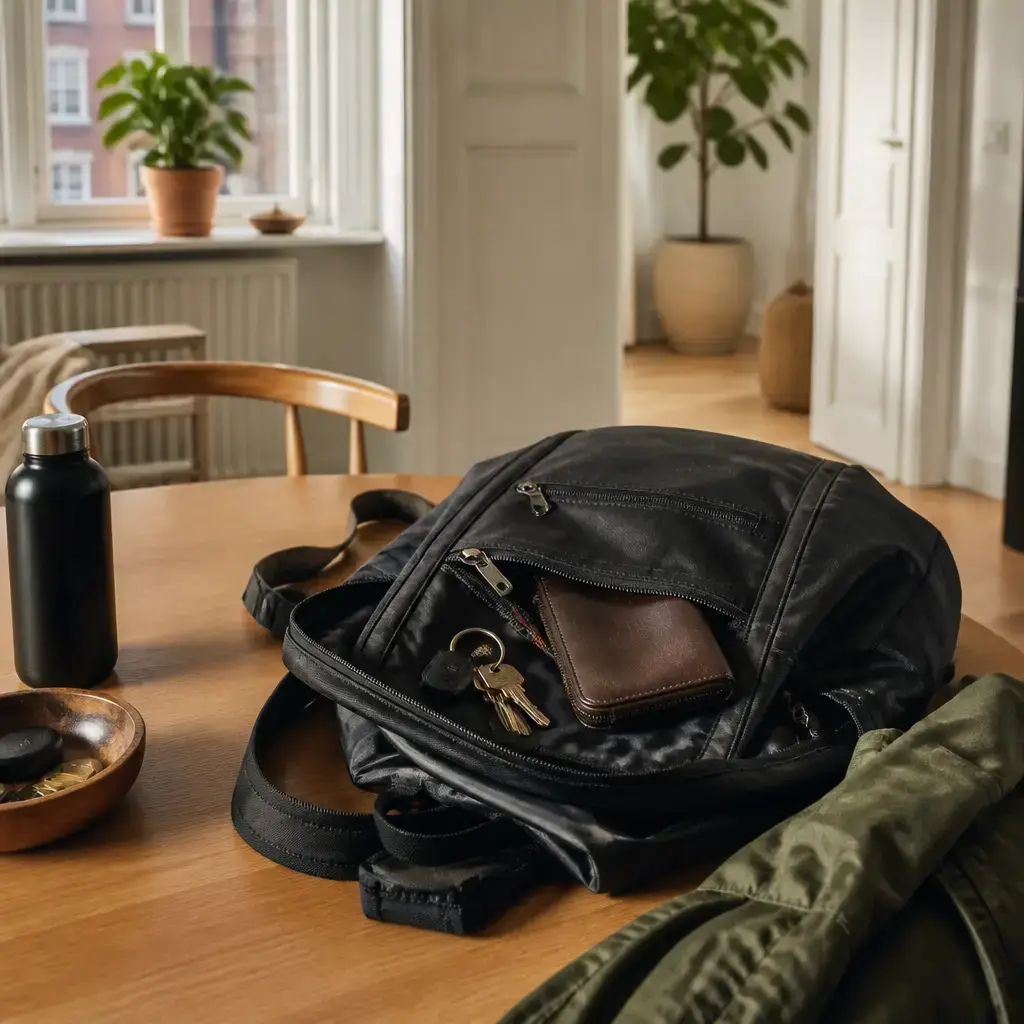
Ich
In Ich kann meine Geldbörse nicht finden. Ich means I and is the subject speaking. It commonly comes before the verb in a statement, as in Ich habe schon in der Vordertasche nachgesehen.
kann
In Ich kann meine Geldbörse nicht finden. kann means can or am able to. It is the form of können used with ich and is followed by the infinitive finden. Use kann + infinitive to express ability or inability in a situation such as looking for something.
meine
In Ich kann meine Geldbörse nicht finden. meine means my and shows that the Geldbörse belongs to the speaker. It is the form used with Geldbörse in this phrase. A reusable pattern is meine + noun, as in meine Schlüssel.
Geldbörse
In meine Geldbörse, Geldbörse means wallet. The word identifies the item that the speaker cannot find. It can be reused after a possessive word, as in meine Geldbörse.
nicht
In Ich kann meine Geldbörse nicht finden. nicht makes the statement negative: the speaker is unable to find the wallet. It appears before the final infinitive in the pattern kann ... nicht finden. Use this pattern when saying that you cannot find something.
finden
In Ich kann meine Geldbörse nicht finden. finden means find and is the infinitive after kann. The pattern kann + object + nicht finden describes being unable to locate something. It is useful when reporting that an item is missing.
Hast
In Hast du in deinem Rucksack nachgesehen? Hast means have in a question about whether someone has checked. It is the form of haben used with du and works with the past participle nachgesehen. Use Hast du ... nachgesehen? to ask one person whether they have looked somewhere.
du
In Hast du in deinem Rucksack nachgesehen? du means you and refers directly to the person being asked. It follows Hast in this yes-or-no question. A reusable question pattern is Hast du + something + nachgesehen?
in
In in deinem Rucksack, in means in or inside and shows where the checking takes place. In Schau in die kleine Tasche, it points toward the pocket to be checked. Use in with a container or place when describing where something is or where someone should look.
deinem
In deinem Rucksack, deinem means your and shows that the backpack belongs to the person being addressed. This is the form used with Rucksack in the phrase in deinem Rucksack. A useful pattern is in deinem + noun when referring to something inside the other person’s belongings.
Rucksack
In in deinem Rucksack, Rucksack means backpack. It names the container that the speaker is asked to check. The phrase in deinem Rucksack is reusable for locating or searching inside the backpack.
nachgesehen
In Hast du in deinem Rucksack nachgesehen? and Ich habe schon in der Vordertasche nachgesehen., nachgesehen means checked or looked in. It is the past participle of nachsehen and completes the perfect construction with Hast or habe. Use in ... nachgesehen when reporting that you checked inside a place.
habe
In Ich habe schon in der Vordertasche nachgesehen. habe means have and helps form the completed action of checking. It is the form of haben used with ich, together with nachgesehen. A reusable pattern is Ich habe ... nachgesehen for reporting a completed check.
schon
In Ich habe schon in der Vordertasche nachgesehen. schon means already and shows that the check has happened before this moment. It appears with habe ... nachgesehen to emphasize that the front pocket has already been checked. Use brauche noch or habe schon to distinguish what remains from what is complete.
der
In in der Vordertasche, der is the definite article for the specific front pocket in this location phrase. It connects the article with Vordertasche. A reusable location pattern is in der + place or container.
Vordertasche
In in der Vordertasche, Vordertasche means front pocket. It identifies the part of the backpack that has already been checked. The phrase in der Vordertasche can be reused to say where an object is or where someone looked.
Schau
In Schau in die kleine Tasche am Reißverschluss. Schau means look or check and gives a direct instruction to one person. It is the informal command form of schauen and is followed here by in die kleine Tasche. Use Schau in + place when telling someone where to look.
die
In die kleine Tasche, die marks the specific pocket being suggested. It comes before the adjective kleine and the noun Tasche. A reusable pattern is die + adjective + noun when referring to a particular item.
kleine
In die kleine Tasche, kleine means small and describes the size of the pocket. It appears before Tasche after the article die. Use an adjective before a noun in the same way to identify a particular object by a quality such as size.
Tasche
In die kleine Tasche, Tasche means pocket in this backpack context. It names the place where the listener should look. The phrase in die kleine Tasche is useful for directing someone toward a specific pocket.
am
In am Reißverschluss, am means at or by the and locates the pocket next to the zipper. It is the contracted form of an dem. Use am + noun to describe something positioned by a specific feature or place.
Reißverschluss
In am Reißverschluss and den Reißverschluss, Reißverschluss means zipper. It first identifies the zipper as the location near the small pocket and later identifies it as the object to close. These phrases show how the same word can name either a nearby feature or the item being closed.
sie
In Ich habe sie dort gefunden, sie refers to the wallet that was found. At the start of Sie sind in der Seitentasche, the same pronoun is capitalized as Sie and refers to the keys. A pronoun like sie or Sie can replace a noun when its referent is clear from the conversation.
dort
In Ich habe sie dort gefunden. dort means there and points to the place where the wallet was found. It commonly follows a reference to an item and identifies its location. Use it when the place is understood from the surrounding situation.
gefunden
In Ich habe sie dort gefunden. gefunden means found and reports the completed discovery of the wallet. It is the past participle of finden and follows habe in this perfect construction. Use habe ... gefunden to say that you have found an object.
Mach
In Mach den Reißverschluss zu, Mach is the informal command form of machen. Together with zu, it forms the command to close the zipper; Mach alone does not express the full meaning of close here. A reusable command pattern is Mach + object + zu.
den
In den Reißverschluss, den marks the specific zipper as the object of the command. It comes before the noun Reißverschluss. The pattern Mach den + object + zu places the object between Mach and zu.
zu
In Mach den Reißverschluss zu, zu completes the separable verb construction that means close. The object den Reißverschluss comes between Mach and zu. Use this word order when giving the same kind of instruction to close something.
bevor
In bevor du gehst, bevor means before and introduces the event that must happen later. Here the zipper should be closed before the person leaves. Use bevor + clause to connect an action with a later event.
gehst
In bevor du gehst, gehst means go or leave in this context. It is the form of gehen used with du. The pattern bevor du gehst is useful when giving an instruction that must be completed before someone leaves.
brauche
In Ich brauche noch meine Schlüssel. brauche means need and states that the speaker still requires the keys. It is the form of brauchen used with ich. A reusable pattern is Ich brauche + object when saying what you need.
noch
In Ich brauche noch meine Schlüssel. noch means still and shows that the keys remain to be found after the wallet has been located. It comes before the object in brauche noch meine Schlüssel. Use brauche noch + object to mention something that is still needed.
Schlüssel
In meine Schlüssel, Schlüssel means keys and refers to the items that are still needed. The phrase meine Schlüssel identifies them as belonging to the speaker. It can be reused after a possessive word when naming someone’s keys.
sind
In Sie sind in der Seitentasche. sind means are and states where the keys are located. It is the form of sein used with the plural subject Sie referring to the keys. Use subject + sind + location to describe where several items are.
Seitentasche
In in der Seitentasche, Seitentasche means side pocket. It identifies the location of the keys in the backpack. The phrase in der Seitentasche can be reused to say that something is inside the side pocket.