Im
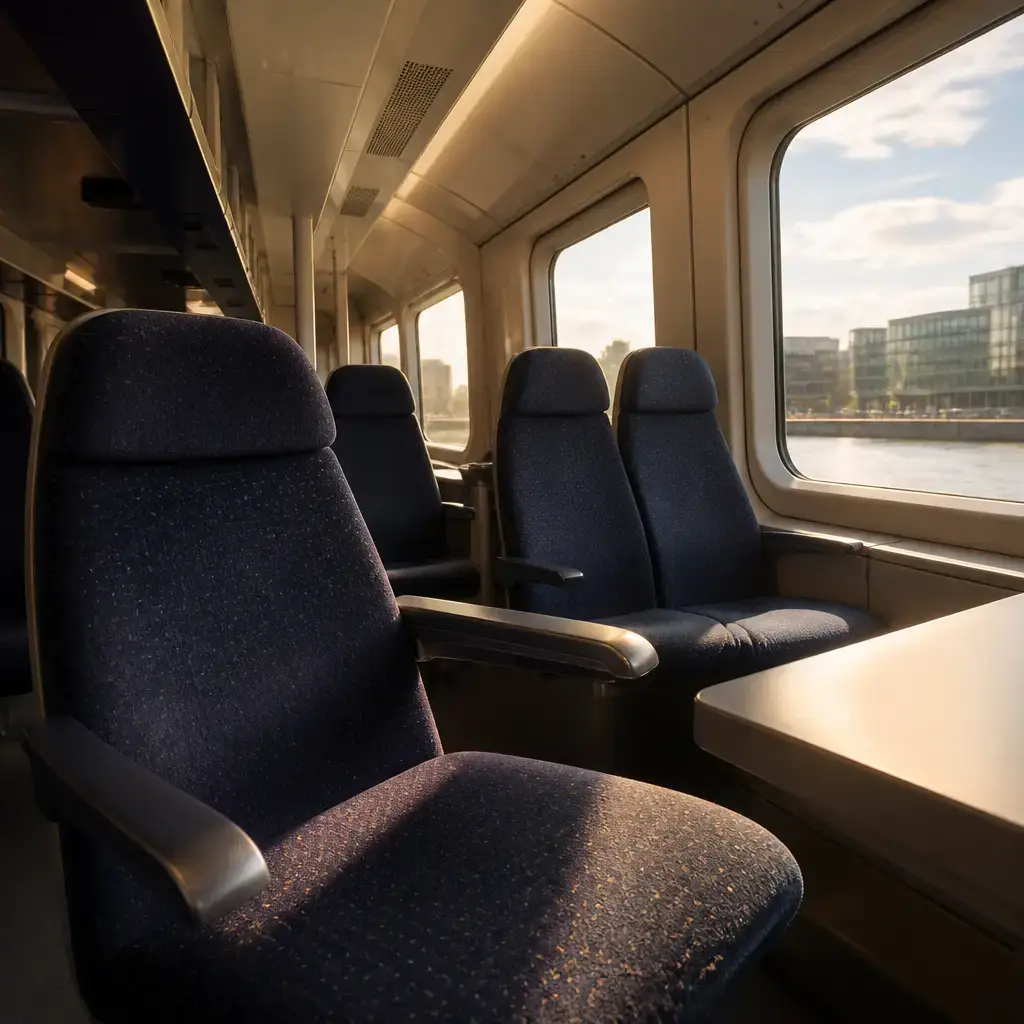
“Im” means “in the” in “Im Zug” and introduces the place where it feels cool. It is the contracted form of “in dem”; use it before a masculine or neuter noun when referring to being in a place.
Zug
“Zug” means “train” in “Im Zug.” The same word is useful after “im” when saying that someone or something is inside the train.
ist
“Ist” means “is” in “Im Zug ist es kühl.” Here it links the situation to the description “kühl”; use this form with “es” in the expression “es ist …”.
es
“Es” means “it” in “ist es kühl.” Here it is the subject of the general statement about the temperature inside the train, rather than a specific object.
kühl
“Kühl” means “cool” in “Im Zug ist es kühl” and describes the temperature inside the train. Use it after “ist” to describe a cool place or atmosphere.
Weiter
“Weiter” means “farther” in “Weiter hinten” and shows that the seats are farther inside the train. “Weiter hinten” is a reusable phrase for something located farther toward the back.
hinten
“Hinten” means “in the back” in “Weiter hinten.” Together with “weiter,” it locates the open seats farther toward the rear; use “hinten” to point out a position at the back.
sind
“Sind” means “are” in “freie Plätze” are located farther back. It is the form used with the plural subject “freie Plätze”; use it to describe where several things are.
freie
“Freie” means “open” or “available” in “freie Plätze,” describing seats that no one is using. The form belongs directly before the plural noun “Plätze” in this phrase.
Plätze
“Plätze” means “seats” in “freie Plätze.” It is the plural of “Platz”; use it for available seats or places, especially in a train or another public place.
Nach
“Nach” means “after” in “Nach dem vielen Laufen.” It places the following activity before the action the speaker wants to do; use “nach” with an activity or event that has already happened.
dem
“Dem” means “the” in “nach dem vielen Laufen.” Here it belongs to the noun phrase after “nach” and helps introduce the activity being referred to.
vielen
“Vielen” means “a lot of” in “dem vielen Laufen,” emphasizing that there has been a lot of walking. It appears directly before “Laufen” in this phrase to describe the amount of activity.
Laufen
“Laufen” means “walking” in “dem vielen Laufen.” Here it names the activity that happened before sitting; use it after expressions such as “nach dem …” when referring to an activity.
möchte
“Möchte” expresses “would like” or “want” in “möchte ich sitzen.” It introduces the speaker’s wish and is followed here by the infinitive “sitzen”; use “möchte ich …” to state what you would like to do.
ich
“Ich” means “I” in “möchte ich sitzen.” It identifies the speaker as the person who wants to sit; use it before a verb when talking about yourself.
sitzen
“Sitzen” means “sit” in “möchte ich sitzen.” It is the action the speaker wants to do after walking; use it after “möchte” to say that you want to sit.
Diese
“Diese” means “these” in “Diese Sitze” and points to the seats nearby. Use it directly before a plural noun when identifying several specific things.
Sitze
“Sitze” means “seats” in “Diese Sitze.” It is the plural of “Sitz”; use it for the individual places where people sit, such as seats on a train.
bequem
“Bequem” means “comfortable” in “Diese Sitze sind bequem.” It describes how the seats feel; use it after “sind” to describe several seats as comfortable.
Die
“Die” means “the” in “Die Fahrt.” It introduces the specific train ride being discussed; use it before “Fahrt” when referring to that journey.
Fahrt
“Fahrt” means “ride” or “journey” in “Die Fahrt ist auch ruhig.” It refers to the trip by train; use it with “die” when talking about a particular ride.
auch
“Auch” means “also” or “too” in “ist auch ruhig.” It adds that the ride is quiet in addition to the other qualities already mentioned; it commonly appears before the describing word it adds.
ruhig
“Ruhig” means “quiet” in “Die Fahrt ist auch ruhig.” It describes the ride as calm and without much noise; use it after “ist” or “sind” to describe a quiet situation.
Kannst
“Kannst” means “can” in “Kannst du … sehen?” and asks whether the other person is able to see something. It is used with “du” and an infinitive such as “sehen” in a direct question.
du
“Du” means “you” in “Kannst du … sehen?” It addresses one person directly; use it with “kannst” when asking that person about an ability.
von
“Von” means “from” in “von dort.” It marks the place from which the display can be seen; use “von” before a place or point of origin.
dort
“Dort” means “there” in “von dort.” It refers to the other person’s location; “von dort” is a reusable phrase meaning “from there.”
Anzeige
“Anzeige” means “display” in “die Anzeige für den Bahnhof.” It refers to the information display showing something connected with the station; use it for a display or posted information.
für
“Für” means “for” in “für den Bahnhof.” It connects the display with the station it concerns; use “für” before the person, thing, or place something is intended for or related to.
den
“Den” means “the” in “für den Bahnhof.” It introduces the masculine noun phrase after “für”; keep it together with “Bahnhof” in this expression.
Bahnhof
“Bahnhof” means “station” in “für den Bahnhof.” It refers to the train station named or shown on the display; use it when talking about a railway station.
sehen
“Sehen” means “see” in “Kannst du … sehen?” It is the action the question asks about and follows “kannst du”; use it after “kannst du” when asking whether someone can see something.
Wir
“Wir” means “we” in “Wir haben noch drei Haltestellen.” It refers to the speaker and the other person together; use it as the subject when talking about both people.
haben
“Haben” means “have” in “Wir haben noch drei Haltestellen.” Here it introduces the remaining number of stops before they get off; use it after “wir” when stating what remains for the group.
noch
“Noch” means “more” or “still remaining” in “noch drei Haltestellen.” It shows that three stops remain before the destination; use it before a number and noun when something is still left.
Haltestellen
“Haltestellen” means “stops” in “noch drei Haltestellen.” It is the plural of “Haltestelle” and refers to places where the train stops; use it after a number to count stops.
Dann
“Dann” means “then” in “Dann können wir …” and connects the remaining stops with what they can do afterward. Use it at the beginning of a sentence to introduce the next step or time.
können
“Können” means “can” or “be able to” in “können wir uns … ausruhen.” It says that resting is possible after the remaining stops; use it with an infinitive such as “ausruhen.”
uns
“Uns” means “ourselves” in “uns … ausruhen.” It shows that the speaker and the other person rest themselves; use it with “ausruhen” in the expression “sich ausruhen.”
ein
“Ein” contributes “a” in “ein bisschen,” the expression used for a small amount. Keep it together with “bisschen” when saying that someone does something a little.
bisschen
“Bisschen” means “a little” or “a bit” in “ein bisschen ausruhen.” It makes the amount of resting small; use the reusable phrase “ein bisschen” before an activity or description.
ausruhen
“Ausruhen” means “rest” in “uns … ausruhen.” With “uns,” it describes taking a break together before getting off; use it after a modal verb such as “können” in “können wir uns ausruhen.”
bevor
“Bevor” means “before” in “bevor wir aussteigen.” It introduces the event that has not happened yet and places it after the resting in the sentence; use it before a clause describing an earlier action.
aussteigen
“Aussteigen” means “get off” in “bevor wir aussteigen.” It refers to leaving the train at a stop; use it after “bevor wir” when saying that you will get off before or after another action.