Hast
In “Hast du schon eine Fahrkarte?”, Hast means “have” in a question about possession. It is the form of haben used with du and appears before du in this question. Use this form when asking a familiar person whether they already have something.
du
In “Hast du schon eine Fahrkarte?”, du means “you,” the person being asked. It is the familiar singular form used with Hast. Use du when speaking to one person you address informally.
schon
In “Hast du schon eine Fahrkarte?”, schon means “already,” asking whether the ticket is available by now. It appears before “eine Fahrkarte” in this question. Use it when checking whether something has happened or is ready yet.
eine
In “eine Fahrkarte”, eine means “a”; in “eine kaufen”, it means “one” and refers back to a ticket. In the second phrase, it lets the speaker avoid repeating Fahrkarte. Use eine before a feminine noun or alone when the understood noun is clear.
Fahrkarte
In “eine Fahrkarte”, Fahrkarte means “train ticket.” It names the item being discussed and bought in the dialogue. Use this word when asking for or talking about a ticket for a journey.
Noch
In the answer “Noch nicht”, Noch contributes the idea “yet.” Together with nicht, the expression means “not yet,” answering the question about the ticket. Use this expression when something has not happened but may happen later.
nicht
In “Noch nicht”, nicht supplies the negation. Together with Noch, it means that the ticket has not been obtained yet. Use nicht to make the relevant statement or answer negative.
Ich
Ich means “I” in “Ich muss eine kaufen” and “Ich habe meine Fahrkarte auf meinem Handy”; the same word also appears as ich later in “nachdem ich meine gekauft habe.” It identifies the speaker as the subject of the action or state. Use Ich or ich when talking about your own actions, needs, or possessions.
muss
In “Ich muss eine kaufen”, muss means “must” or “need to.” It is the form of müssen used with Ich and is followed by the infinitive kaufen. Use it to express that you need to do something.
kaufen
In “Ich muss eine kaufen”, kaufen means “buy.” It stays in this form after muss, while eine supplies the understood object “one,” meaning one ticket. Use a modal expression with kaufen when explaining that you need to buy something.
Neben
In “Neben dem Eingang gibt es Fahrkartenautomaten”, Neben means “beside” or “next to.” It places the ticket machines in relation to the entrance; the same word appears as neben in “neben den Automaten.” Use it before a place or landmark to indicate a nearby position.
dem
In “Neben dem Eingang”, dem is the definite-article form used before Eingang. It connects Neben with the specific entrance being used as the landmark. The singular article base is der, but the exact dialogue form here is dem.
Eingang
In “Neben dem Eingang”, Eingang means “entrance.” It is the landmark that helps locate the ticket machines. Use this word when giving directions around a station or building.
gibt
In “gibt es Fahrkartenautomaten”, gibt helps express that something exists or is available. Together with es, it forms the expression meaning “there are” in this sentence. Use this expression to tell someone that a thing or place is available.
es
In “gibt es Fahrkartenautomaten”, es is the fixed placeholder used in the expression for saying that something exists. It does not mean a physical location here; the whole expression introduces the ticket machines. Use gibt es when pointing out that something is present.
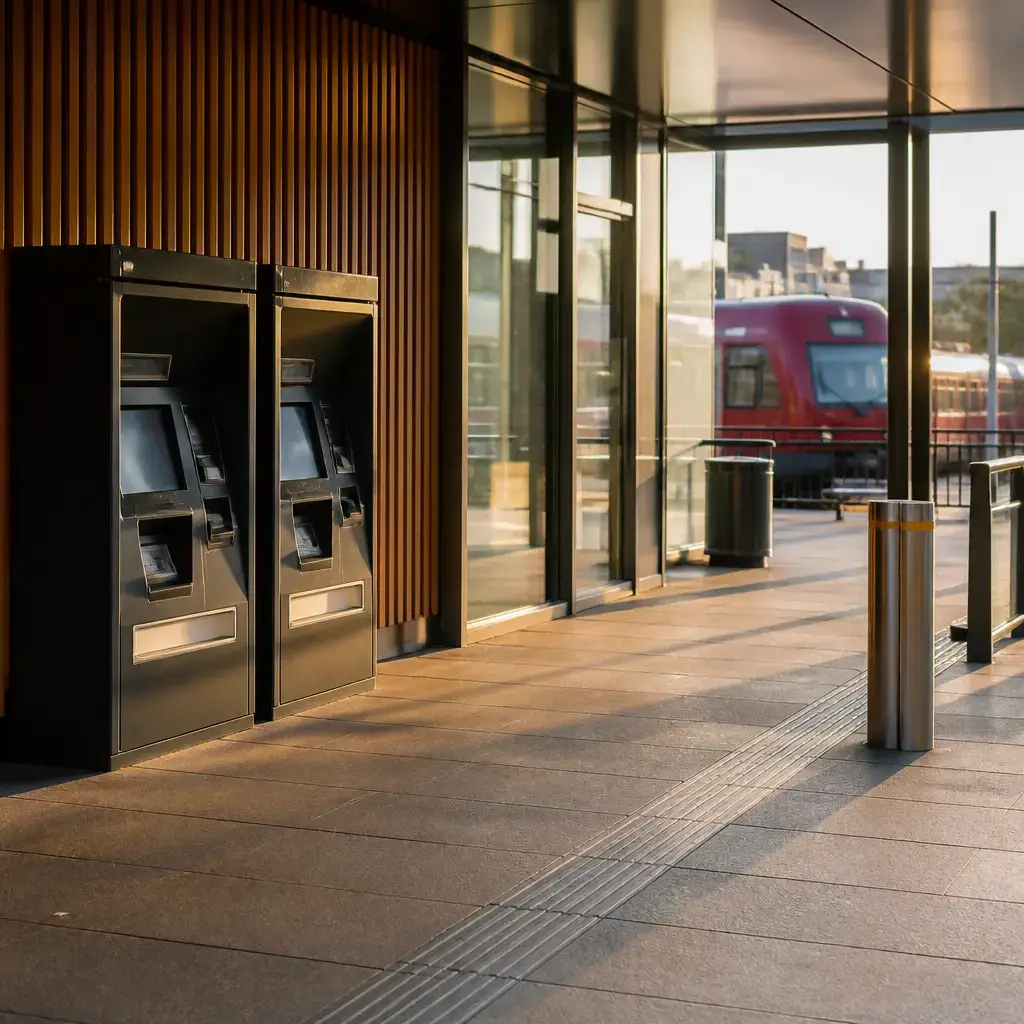
Fahrkartenautomaten
In “gibt es Fahrkartenautomaten”, Fahrkartenautomaten means “ticket machines” and refers to more than one machine. Its singular citation form is Fahrkartenautomat. Use this word when directing someone to machines where tickets can be bought.
kaufe
In “Ich kaufe meine dort”, kaufe means “buy” or “get.” It is the form of kaufen used with Ich and describes the speaker’s planned purchase at that location. Use it with the thing being bought, as meine refers to the speaker’s ticket here.
meine
In “Ich kaufe meine dort” and “meine gekauft habe”, meine means “mine” and refers to a ticket. It replaces the repeated noun Fahrkarte when the meaning is already clear. The possessive base is mein; use a possessive form alone when the omitted noun is understood.
dort
In “Ich kaufe meine dort”, dort means “there,” referring to the ticket machines by the entrance. It identifies the place where the purchase will happen. Use it to point to a location away from the speaker or already mentioned.
habe
In “Ich habe meine Fahrkarte auf meinem Handy”, habe means “have.” In “meine gekauft habe”, it works with gekauft to describe the completed purchase. It is the form of haben used with Ich; use it for possession and in this completed-action expression.
auf
In “auf meinem Handy”, auf means “on” and identifies the phone as the place where the ticket is stored. It links the ticket with the device in the phrase “auf meinem Handy.” Use it when describing something located or kept on a device or surface.
meinem
In “auf meinem Handy”, meinem means “my” and refers to the speaker’s phone. It is the possessive form from mein used before Handy in this phrase. Use a possessive form before a noun when showing who owns or uses the thing.
Handy
In “auf meinem Handy”, Handy means “mobile phone.” It identifies the device on which the speaker has the ticket. Use this word when talking about a ticket, message, or other item kept on a mobile phone.
Dann
In “Dann treffe ich dich hier wieder”, Dann means “then.” It links the next plan—meeting again—to the earlier action of buying a ticket. Use it to introduce the next step in a sequence or plan.
treffe
In “Dann treffe ich dich hier wieder”, treffe means “meet.” It is the form of treffen used with Ich, and dich identifies the person being met. Use it when arranging to meet someone at a stated place or time.
dich
In “treffe ich dich”, dich means “you,” the person whom the speaker will meet. It is the object form related to du and follows treffe in this expression. Use it when addressing one familiar person who is receiving the action.
hier
In “treffe ich dich hier wieder”, hier means “here,” referring to the current station location. Together with wieder, it indicates meeting again at this place. Use it to point to the place where the speakers are currently located.
wieder
In “hier wieder”, wieder means “again” or “back.” It adds the idea that the meeting will happen at the same place after the purchase. Use it with an action when something is repeated or happens again.
nachdem
In “nachdem ich meine gekauft habe”, nachdem means “after” and introduces the action that happens before the meeting. The clause following it ends with “gekauft habe.” Use nachdem to connect a later action with something that must happen first.
gekauft
In “meine gekauft habe”, gekauft means “bought.” It is the completed form of kaufen used with habe to describe the ticket purchase as finished. Use this form with haben when referring to something that has been bought.
warte
In “Ich warte bei den Automaten”, warte means “wait.” It is the form of warten used with Ich and states what the speaker will do at the machines. Use it when telling someone where you will remain until they return.
bei
In “bei den Automaten”, bei means “near” or “by.” It connects the waiting action with the nearby ticket machines. Use it in a location phrase to say that someone is at or near a place.
den
In “bei den Automaten”, den is the article form used before the plural noun Automaten. It identifies the specific machines where the speaker will wait. The article’s base form is der, but the exact dialogue form here is den.
Automaten
In “bei den Automaten” and “neben den Automaten”, Automaten means “machines,” referring back to the ticket machines. It is the plural form of Automat in this dialogue. Use it when directing someone to the machines near which you are waiting.
Such
In “Such mich neben den Automaten”, Such means “look for” and gives a direct instruction. It is the imperative form of suchen and is followed by mich, the person to be found. Use it when telling a familiar person to locate you.
mich
In “Such mich”, mich means “me,” the person the listener should look for. It is the object form related to ich and follows Such in the instruction. Use it when asking someone to find or contact the speaker.