Was
“Was” asks what is being considered in “Was sollen wir heute kaufen?” It is used at the beginning of a question to ask for information or a choice, such as which items to buy.
sollen
“Sollen” expresses what the speakers should do in “Was sollen wir heute kaufen?” With the infinitive “kaufen”, it asks what action is advisable or planned. This is useful when deciding together what to do next.
wir
“Wir” means the group including the speaker, “we.” In “Wir brauchen Sachen für das Frühstück morgen,” it identifies the people who need the items. Use “wir” when describing a shared need, plan, or action.
heute
“Heute” means today, the current day. In “Was sollen wir heute kaufen?”, it specifies when the shopping should happen. It is useful for locating an action on the present day.
kaufen
“Kaufen” means to buy or get something in this shopping context. In “Was sollen wir heute kaufen?”, it follows “sollen” and names the action being considered; in “Dann kaufen wir Joghurt und Marmelade,” it describes the agreed shopping action. Use it with the item being bought.
Sachen
“Sachen” means things or items that are needed. In “Sachen für das Frühstück morgen,” it refers generally to the groceries for tomorrow’s breakfast. The pattern “Sachen für ...” identifies things intended for a particular purpose.
für
“Für” means for and connects “Sachen” with their purpose in “Sachen für das Frühstück morgen.” It is useful for saying what something is intended for, such as items for a meal or event.
das
“Das” means the in “das Frühstück.” It is the word placed before “Frühstück” to form the noun phrase “das Frühstück.” Use the same article-and-noun pattern when referring to a specific item or activity.
Frühstück
“Frühstück” means breakfast. In “das Frühstück morgen,” it identifies the meal planned for tomorrow. It is useful when discussing what to buy, prepare, or eat in the morning.
morgen
“Morgen” means tomorrow. In “das Frühstück morgen,” it specifies which breakfast is meant—the one on the following day. Use it when planning an action or event for the next day.
Dann
“Dann” means then and marks the next step or consequence. In “Dann brauchen wir Brot und Butter” and “Dann kaufen wir Joghurt und Marmelade,” it connects the decision with the action that follows. It is useful when moving from a conclusion to a plan.
brauchen
“Brauchen” means need in “Wir brauchen Sachen für das Frühstück morgen” and “Dann brauchen wir Brot und Butter.” It introduces the items considered necessary. Use “brauchen” with the thing or things that are needed when planning shopping or preparation.
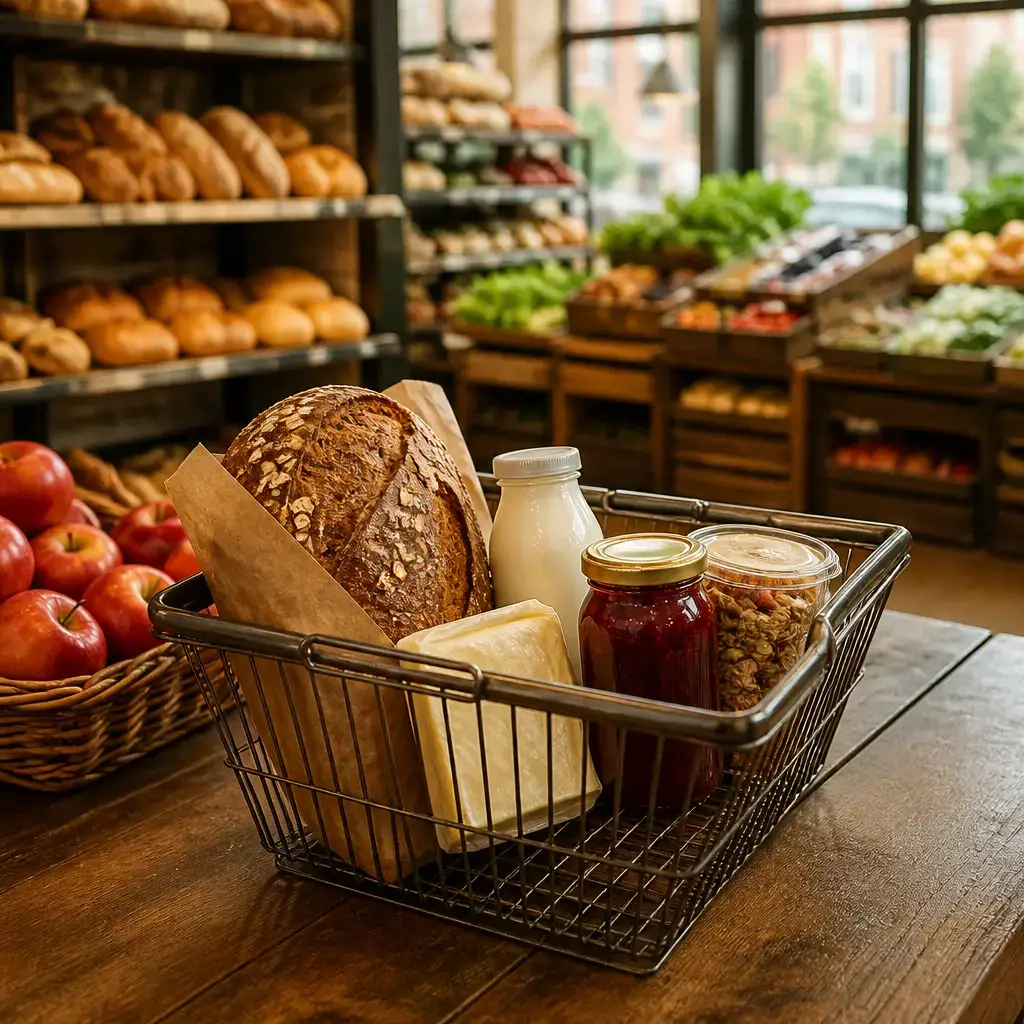
Brot
“Brot” means bread. In “Dann brauchen wir Brot und Butter,” it is one of the breakfast items the speakers decide they need. It is useful when naming bread as part of a grocery list.
und
“Und” means and and joins items in a list. It connects “Brot und Butter” and “Joghurt und Marmelade.” Use it to link two or more related things in the same plan or statement.
Butter
“Butter” means butter. In “Dann brauchen wir Brot und Butter,” it is another grocery item needed for breakfast. It is useful when listing foods to buy together with bread.
auch
“Auch” means also or too and adds yogurt to the items already under discussion in “Brauchen wir auch Joghurt?” It is useful when checking whether one more item belongs in a list or plan.
Joghurt
“Joghurt” means yogurt. It is the food item asked about in “Brauchen wir auch Joghurt?” and later included in “Dann kaufen wir Joghurt und Marmelade.” Use it when discussing yogurt as something to buy or eat.
Ich
“Ich” means I and identifies the speaker in “Ich möchte ihn mit Erdbeermarmelade essen.” It is used when the speaker gives a personal preference or intention. Use “Ich” to state what you personally want or plan to do.
möchte
“Möchte” expresses what the speaker would like or wants in “Ich möchte ihn mit Erdbeermarmelade essen.” It is followed here by the action “essen” at the end of the sentence. Use “Ich möchte” to state a personal wish or preference politely.
ihn
“Ihn” means it here and refers back to the yogurt in “Ich möchte ihn mit Erdbeermarmelade essen.” It lets the speaker refer to the already-mentioned food instead of repeating “Joghurt.” Use it when the item being eaten is already clear from the conversation.
mit
“Mit” means with and shows the combination in “mit Erdbeermarmelade.” Here it says that the yogurt is to be eaten together with strawberry jam. Use “mit” to name a food or item accompanying another one.
Erdbeermarmelade
“Erdbeermarmelade” means strawberry jam. In “mit Erdbeermarmelade,” it identifies what the speaker wants to combine with the yogurt. It is useful when specifying the type of jam or spread wanted for a meal.
essen
“Essen” means eat in “Ich möchte ihn mit Erdbeermarmelade essen.” It names the action that the speaker wants to perform and appears after “möchte.” Use it when expressing what someone plans or wants to eat.
Marmelade
“Marmelade” means jam. In “Dann kaufen wir Joghurt und Marmelade,” it is one of the groceries the speakers decide to buy. It is useful when adding jam to a shopping list or describing a breakfast item.