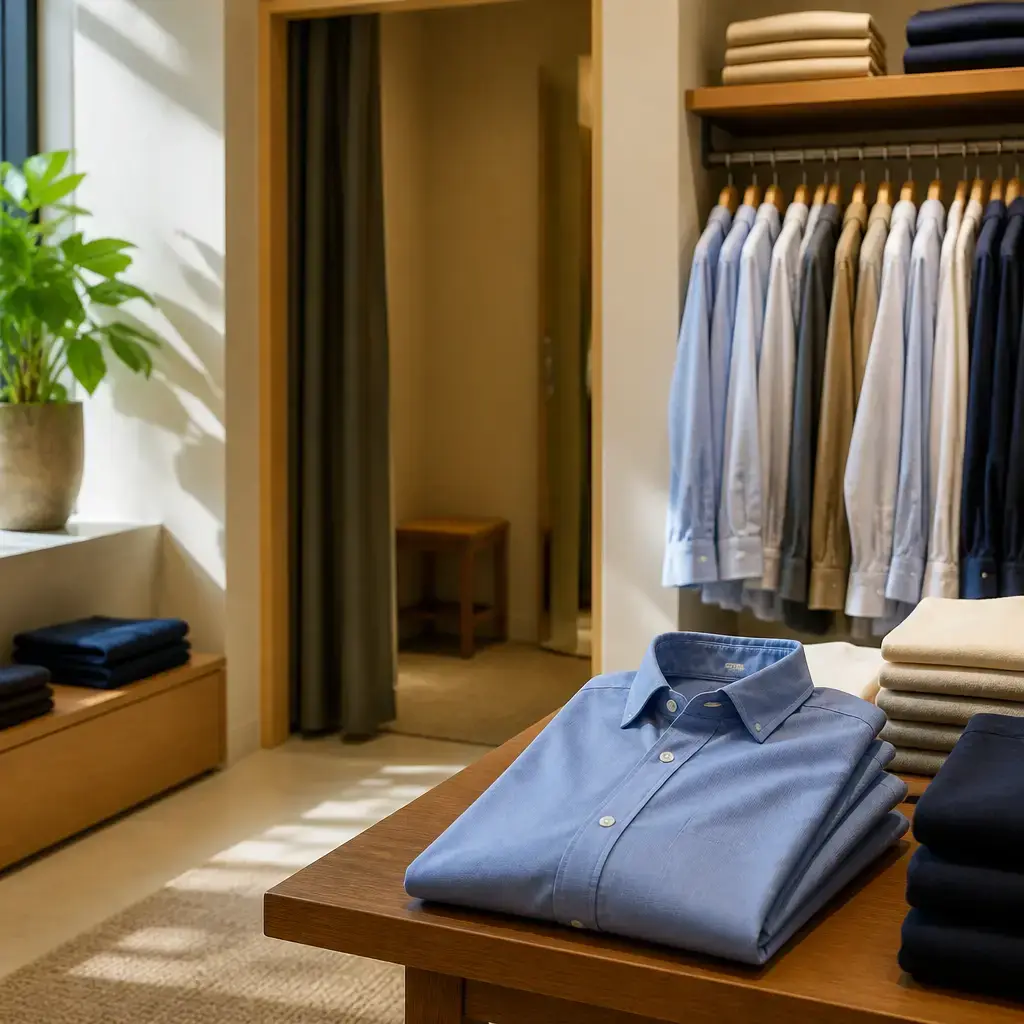
Ich
Ich means “I” here and is the person who needs the shirt. It is the subject in “Ich brauche ein neues Hemd.” A reusable pattern is “Ich brauche …” when stating a personal need.
brauche
brauche means “need” in this dialogue. It is the form used with Ich in “Ich brauche ein neues Hemd.” Use “brauche” with the thing you need, such as a product in a shop.
ein
ein is the indefinite article meaning “a” before Hemd in “ein neues Hemd.” Its form belongs to this noun phrase with the neuter noun Hemd. The reusable pattern is “ein + adjective + noun” for one unspecified item.
neues
neues means “new” and describes the shirt in “ein neues Hemd.” The ending in neues agrees with Hemd inside this noun phrase. Use an adjective before a noun when describing the item you want.
Hemd
Hemd means “shirt” in “ein neues Hemd.” The citation form is also Hemd; with the definite article, it is das Hemd. In a clothing shop, use Hemd to identify this type of garment.
Welche
Welche asks “which” or “what” in “Welche Farbe suchen Sie?” It introduces the question about the customer’s preferred color and agrees with Farbe in this phrase. A reusable pattern is “Welche + noun?” when asking someone to choose or identify something.
Farbe
Farbe means “color” in “Welche Farbe suchen Sie?” The citation form is die Farbe. Use Farbe when asking about or describing the color of clothing or another item.
suchen
suchen means “look for” in this shop question. In “Welche Farbe suchen Sie?”, it describes what the formal customer is looking for. The reusable pattern is suchen plus the thing or quality being sought.
Sie
Sie means formal “you” in “Welche Farbe suchen Sie?” The capital letter marks the polite form used when speaking to a customer. Use Sie in respectful service conversations with someone you do not address informally.
Etwas
Etwas means “something” here, referring to an unspecified item in “Etwas Blaues.” It allows the speaker to request an item without naming the garment again. A reusable pattern is “etwas + describing word” for an unspecified thing with a particular quality.
Blaues
Blaues means “something blue” or “a blue item” in “Etwas Blaues.” It is the standalone form of the describing word after Etwas and is capitalized because it refers to an item. Use this pattern when requesting an unspecified item by its color.
wenn
wenn means “if” in “wenn Sie es haben.” It introduces the condition that the shop has the requested blue item. In this subordinate clause, haben comes at the end; the reusable pattern is wenn + condition.
es
es means “it” in “wenn Sie es haben,” referring to the requested blue item. It prevents the speaker from repeating the item’s name. Use es when the thing being discussed is already clear from the conversation.
haben
haben means “have” in “wenn Sie es haben.” It expresses whether the shop has the requested item, and it appears at the end of the wenn-clause. A reusable pattern is haben plus the item that is available or possessed.
Hier
Hier means “here” in “Hier ist eins in Ihrer Größe.” It points to the item the shop assistant is showing. The reusable pattern “Hier ist …” presents or points out something nearby.
ist
ist means “is” in “Hier ist eins in Ihrer Größe.” It links the item with its location or presence here. The reusable pattern “Hier ist …” is useful when handing or showing someone an item.
eins
eins means “one” here and stands for one shirt or one item already being discussed. In “Hier ist eins in Ihrer Größe,” it avoids repeating Hemd. Use a standalone number form like eins when the item is clear from context.
in
in means “in” in the phrase “in Ihrer Größe,” meaning that the shirt is available in the customer’s size. Here it introduces the size category of the item. A reusable pattern is in + size information when describing clothing availability.
Ihrer
Ihrer means formal “your” in “Ihrer Größe.” Its form belongs to the phrase with Größe and matches the polite Sie address. Use this formal possessive form when referring respectfully to a customer’s size or belongings.
Größe
Größe means “size” in “in Ihrer Größe.” The citation form is die Größe. In a clothing shop, Größe is used to discuss which fit or measurement an item is available in.
Kann
Kann means “can” in “Kann ich es anprobieren?” It begins a polite question asking for permission to try on the item. The reusable pattern “Kann ich …?” makes a request about an action.
anprobieren
anprobieren means “try on” in “Kann ich es anprobieren?” It is the action of putting on the garment to check it. After Kann, it stays as the infinitive at the end of the question; use it with the item being tried on.
Die
Die is the definite article meaning “the” before Umkleidekabine in “Die Umkleidekabine ist gleich hier.” It identifies a specific changing room in the shop. Use the definite article when the place is known or being pointed out.
Umkleidekabine
Umkleidekabine means “changing room” in “Die Umkleidekabine ist gleich hier.” The citation form is die Umkleidekabine. Use it in a clothing shop when directing someone to the place where they can try on clothes.
gleich
gleich means “just” or “right” in “gleich hier,” emphasizing that the changing room is very nearby. It adds emphasis to the location rather than naming a separate place. The reusable expression “gleich hier” points out something immediately nearby.
passt
passt means “fits” in “Es passt sehr gut.” It describes how the shirt fits the person trying it on. The reusable pattern is an item or garment as the subject followed by passt and a description of the fit.
sehr
sehr means “very” or “really” in “sehr gut.” It strengthens the positive description of how the shirt fits. Use sehr before a describing word to make its meaning stronger.
gut
gut means “well” in “Es passt sehr gut.” Together with passt, it says that the shirt fits very well. The reusable expression sehr gut gives a strong positive evaluation.
steht
In “Es steht Ihnen gut,” steht contributes the verb used to say how the shirt looks on the person. The full construction, not steht alone, means that the item looks good on someone. Use this clothing-related construction when giving a positive opinion about someone’s appearance in an item.
Ihnen
Ihnen means formal “you” in “Es steht Ihnen gut.” It identifies the person on whom the shirt looks good and is used in this polite construction. Use Ihnen when speaking respectfully to a customer about how clothing looks on them.