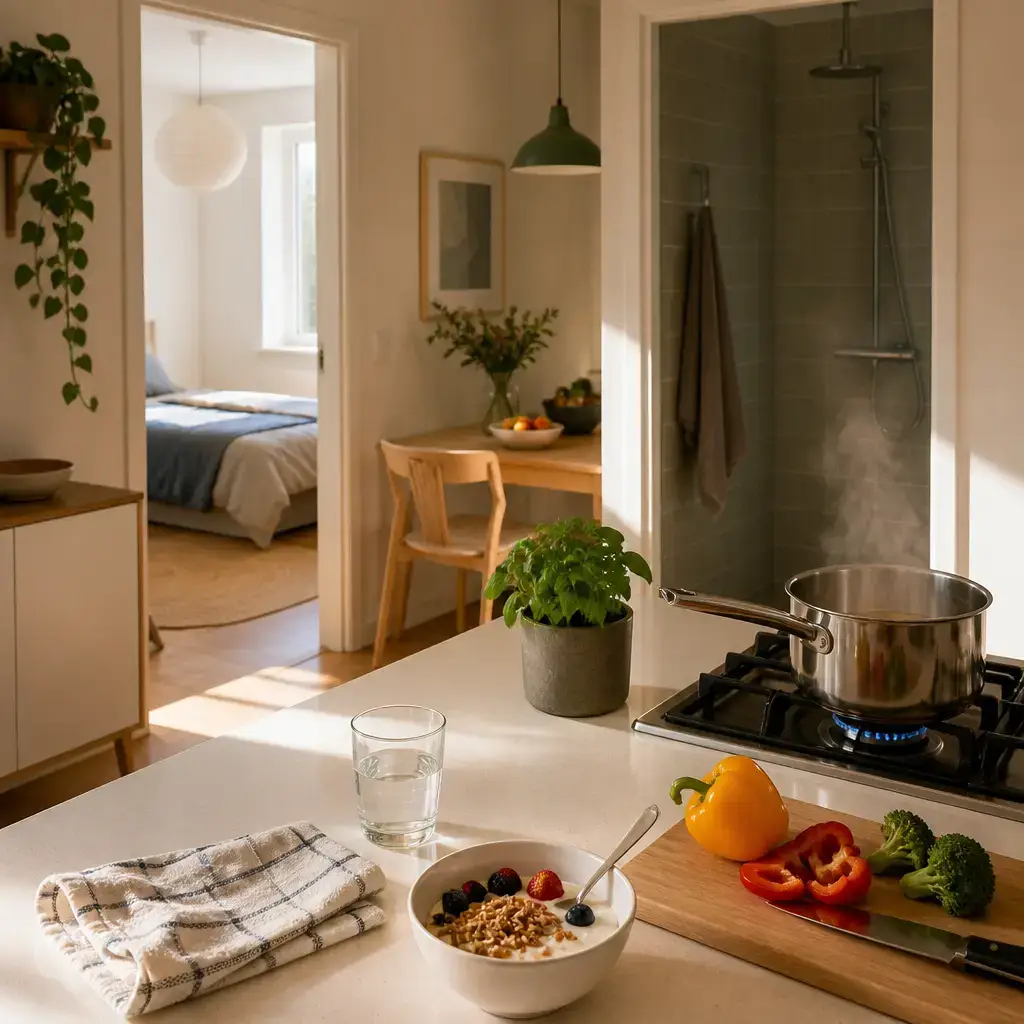
Was
“Was” asks for the thing or activity being referred to, here in the question “Was machst du?”. It is useful at the start of questions such as “Was ist das?” when asking what something is. You would use it when asking someone to identify something or describe an activity.
machst
“Machst” means “do” in the exact question “Was machst du?”. It is the form of machen used with du. A reusable pattern is “Was machst du?” when asking someone about their current activity.
du
“Du” means “you” when speaking to one person in the informal form, as in “Was machst du?”. It identifies the person whose activity is being asked about. Use it with friends, family, or other people you address informally.
Ich
“Ich” means “I” and identifies the speaker in the statements “Ich esse gerade.”, “Ich trinke Wasser.”, and the other answers. It is used at the beginning of these simple statements about the speaker’s actions. Use it whenever you are saying what you do or what is happening to you.
esse
“Esse” means “eat” in “Ich esse gerade.” and describes the speaker’s action. It is the form of essen used with ich. A reusable pattern is “Ich esse …” followed by something being eaten, when saying what you are eating.
gerade
“Gerade” means “right now” or “currently” in “Ich esse gerade.” and “Ich dusche gerade.”. It shows that the action is happening at the moment of speaking. Use it with an action when you want to emphasize that it is happening now.
trinke
“Trinke” means “drink” in “Ich trinke Wasser.” and describes the speaker’s action. It is the form of trinken used with ich. A reusable pattern is “Ich trinke …” followed by a drink, such as “Ich trinke Wasser.” as a new example.
Wasser
“Wasser” means “water” in “Ich trinke Wasser.” and names what the speaker is drinking. It follows the action “trinke” as the thing being consumed. Use it when talking about drinking water in everyday situations.
mache
“Mache” means “make” in “Ich mache das Abendessen.” and describes the speaker preparing dinner. It is the form of machen used with ich. A reusable pattern is “Ich mache …” followed by something the speaker is making or preparing.
das
“Das” means “the” before “Abendessen” in the exact phrase “das Abendessen”. It introduces the specific dinner being prepared in “Ich mache das Abendessen.”. Use it before a specific noun when the intended thing is already clear in the situation.
Abendessen
“Abendessen” means “dinner” or the evening meal in “Ich mache das Abendessen.”. The capital letter shows the written German noun form. Use “das Abendessen” when referring to the dinner being prepared or eaten.
putze
“Putze” means “clean” in “Ich putze mein Zimmer.” and describes the speaker cleaning the room. It is the form of putzen used with ich. A reusable pattern is “Ich putze …” followed by the place or thing being cleaned.
mein
“Mein” means “my” in the exact phrase “mein Zimmer”. It shows that the room belongs to or is associated with the speaker. Use it before a noun when identifying something as the speaker’s, as in “mein Zimmer.”
Zimmer
“Zimmer” means “room” in “Ich putze mein Zimmer.” and names the place being cleaned. It appears after “mein” in the phrase “mein Zimmer”. Use it when talking about a room in a home, hotel, or other building.
dusche
“Dusche” means “take a shower” in “Ich dusche gerade.” and describes the speaker showering. It is the form of duschen used with ich; together with “gerade”, the expression says that the action is happening now. Use “Ich dusche gerade.” when explaining that you are currently in the shower.