Jeg
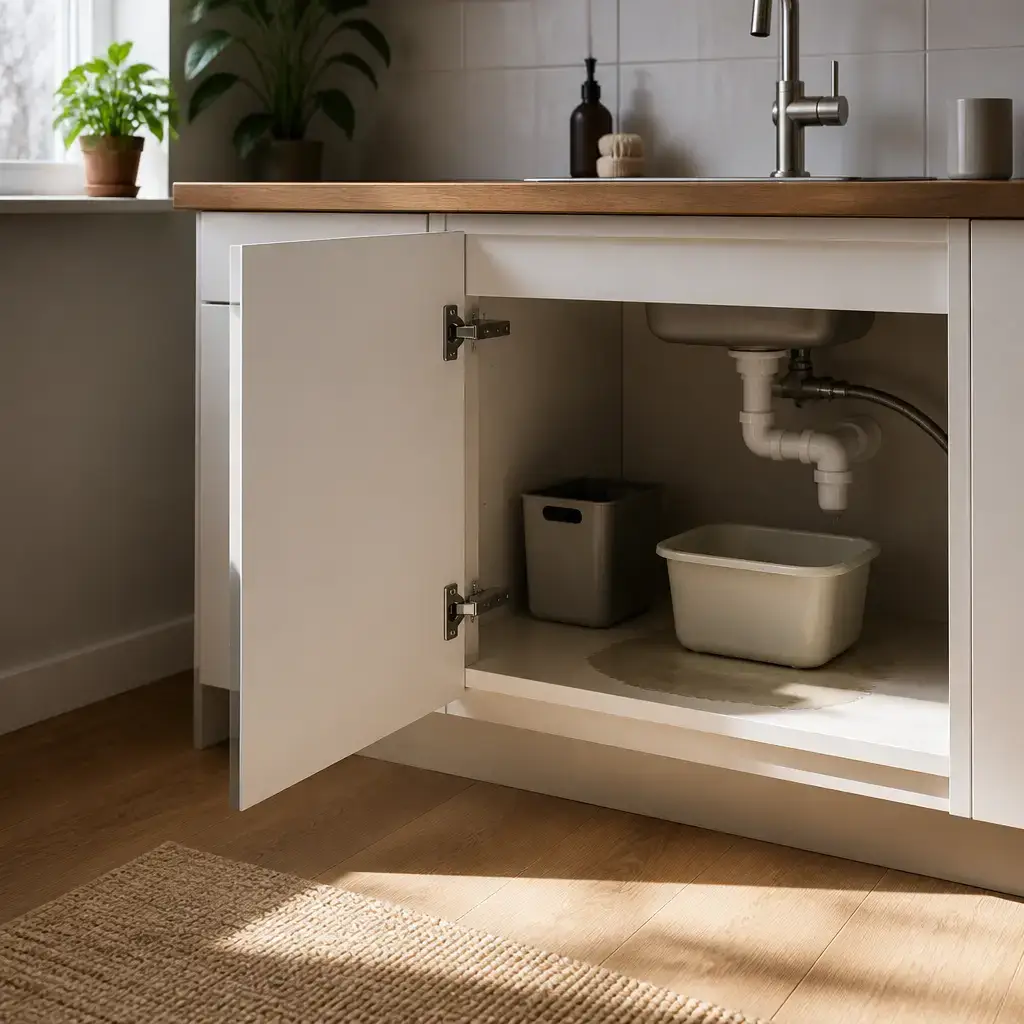
Jeg means I, the person reporting the leak. It is used as the subject in Jeg lagde mærke til and Jeg stillede en beholder. New example: Jeg kan hjælpe means I can help.
lagde mærke til
The whole expression lagde mærke til means noticed in Jeg lagde mærke til. Within the expression, lagde contributes the idea of putting, mærke refers to notice or attention, and til is to; together they form the fixed expression for noticing something. Use it with the thing noticed, as in Jeg lagde mærke til, at ... when reporting an observation.
at
Here at introduces the content of the observation in Jeg lagde mærke til, at der var ved at danne sig en fugtig plet, meaning that. It is not the infinitive marker in this sentence. A reusable pattern is Jeg bemærkede, at ... for I noticed that ... .
der
In der var ved at danne sig en fugtig plet, der is an existential placeholder that helps introduce what was forming. The same form appears in noget der, where it means there and refers to the location. Use der er or der var to introduce something that exists or was present.
var
Var means was in der var ved at danne sig en fugtig plet. It presents the damp patch as being in that situation at the time of the observation. New example: Der var vand på gulvet means There was water on the floor.
ved
Ved contributes in the process of in the construction var ved at danne sig, describing an action that was underway. It is used here together with ved at plus a verb, not by itself. A reusable pattern is være ved at reparere noget for be in the process of repairing something.
danne
Danne means form in ved at danne sig, describing the damp patch coming into existence. It follows at in this construction and is followed by the reflexive sig. New example: Der er ved at danne sig en kø means A queue is forming.
sig
In danne sig, sig refers back to what is forming and helps make the expression mean form or develop. The same reflexive form appears in slå sig, where it is part of the expression meaning warp. It commonly follows a verb when the action relates back to the subject or developing thing.
en
En is the indefinite article a in en fugtig plet, introducing one unspecified damp patch. It comes directly before the noun phrase plet and agrees with that noun. New example: en beholder means a container.
fugtig
Fugtig means damp or moist in en fugtig plet, describing the condition of the patch. It is placed before the noun plet as part of the noun phrase. Use it with things affected by moisture, such as en fugtig væg for a damp wall.
plet
Plet means patch or spot in en fugtig plet, referring to the visible area of moisture. It is the noun described by fugtig. A reusable pattern is en plet på gulvet for a spot on the floor.
under
Under means under in under køkkenvasken, locating the damp patch below the kitchen sink. It introduces the place where something is situated. New example: under bordet means under the table.
køkkenvasken
Køkkenvasken means the kitchen sink in under køkkenvasken. The form refers to the specific sink in the kitchen and contains the definite ending in køkkenvasken. Use it after a location word such as under or ved when describing where a problem is.
Det
Det means that or it in Det skal håndteres, referring to the leak or the reported problem. The same form appears later as det in markere det and Det påvirker sikkerheden, where it refers to the item being marked or the problem affecting safety. It is useful for referring back to a previously mentioned situation.
skal
Skal expresses that something needs to happen in Det skal håndteres, so the problem needs to be handled. It combines here with håndteres to express a requirement or necessary action. A reusable pattern is Det skal repareres for It needs to be repaired.
håndteres
Håndteres means be handled or dealt with in Det skal håndteres. The form presents the problem as something that requires handling without naming the person who will handle it. Use it for issues, requests, or situations, such as sagen skal håndteres for the matter needs to be handled.
før
Før means before in før det beskadiger skabet, introducing the point that must be reached before damage occurs. It is followed here by a clause with its own subject and verb. New example: Ring, før du kommer means Call before you come.
beskadiger
Beskadiger means damages in før det beskadiger skabet. It describes the leak or problem causing harm to the cabinet. Use it with the thing being damaged, as in vand beskadiger gulvet for water damages the floor.
skabet
Skabet means the cabinet in beskadiger skabet, referring to the specific cabinet at risk from the leak. The form is the definite version of the noun for cabinet. A reusable pattern is reparere skabet for repair the cabinet.
stillede
Stillede means placed in Jeg stillede en beholder der, describing putting the container in a particular place. It is the past form related to stille, used with the object en beholder and the location der. New example: Jeg stillede værktøjet på bordet means I placed the tool on the table.
beholder
Beholder means container in en beholder, the object placed under the leak. It names something used to hold the dripping water. A reusable pattern is sætte en beholder under noget for put a container under something.
men
Men means but and contrasts the container being placed with the leak continuing to drip. It connects two clauses with opposing or unexpected information. Use it to introduce a limitation, as in Jeg ryddede området, men problemet fortsatte.
lækagen
Lækagen means the leak in lækagen drypper stadig langsomt, referring to the specific leak already being discussed. The form is the definite version of lækage. Use it as the subject when describing what the leak is doing, such as lækagen fortsætter.
drypper
Drypper means drips in lækagen drypper stadig langsomt, describing the leak releasing drops. It is used with lækagen as the subject and can be modified by words such as stadig and langsomt. New example: Vandet drypper fra røret means The water is dripping from the pipe.
stadig
Stadig means still in lækagen drypper stadig langsomt, showing that the dripping has continued. It is placed before the adverb langsomt and after the subject and verb here. Use it to report an ongoing condition, as in problemet er stadig der for the problem is still there.
langsomt
Langsomt means slowly in lækagen drypper stadig langsomt, describing the rate of the dripping. It modifies drypper and gives a concrete detail about the leak. Use it after an action verb when describing a slow process, such as vandet løber langsomt.
Er
Er means is or are at the start of Er der opbevaret noget der, forming a question about whether anything is stored there. It is the question form of the verb used to ask about a present situation. New example: Er der vand på gulvet? means Is there water on the floor?
opbevaret
Opbevaret means stored or kept in Er der opbevaret noget der, describing something being kept in that location. It is used with er der to ask whether anything has been placed there. A reusable pattern is Der er opbevaret værktøj i skabet for tools are stored in the cabinet.
noget
Noget means anything in the question Er der opbevaret noget der? It refers generally to an unspecified thing that might be stored there. Use it when asking about an unspecified object, as in Har du fundet noget? for Have you found anything?
som
Som introduces the description som kan blokere adgangen, meaning that or which can block access. It links noget to the information about what it could do. Use som to add a relative clause after a noun or pronoun, such as noget som hjælper for something that helps.
kan
Kan means can or could in som kan blokere adgangen, expressing a possible ability or effect. It is followed by the infinitive blokere without an extra infinitive marker. A reusable pattern is noget, der kan hjælpe for something that can help.
blokere
Blokere means block in kan blokere adgangen, describing preventing access to the area. It follows kan in the verb phrase and takes adgangen as what is blocked. New example: Kasserne kan blokere døren means The boxes can block the door.
adgangen
Adgangen means the access in blokere adgangen, referring to the access needed to reach the leak. The form is the definite version of adgang. Use it with verbs such as blokere or give, for example give adgang til området for give access to the area.
ryddede
Ryddede means cleared in Jeg ryddede området, describing removing items from the area. It is used with området as the thing cleared. New example: Jeg ryddede bordet means I cleared the table.
området
Området means the area in Jeg ryddede området, referring to the space around the leak. The form is the definite version of område. Use it with verbs describing preparation or inspection, such as undersøge området for inspect the area.
så
Så means so that in så teknikeren nemt kan undersøge det, introducing the purpose of clearing the area. It connects an action with the result or purpose it is intended to make possible. New example: Jeg flyttede kassen, så døren kunne åbne means I moved the box so that the door could open.
teknikeren
Teknikeren means the technician in så teknikeren nemt kan undersøge det, referring to the person expected to inspect the problem. The form is the definite version of tekniker. Use it as the person carrying out a repair or inspection, such as teknikeren kommer i morgen.
nemt
Nemt means easily in teknikeren nemt kan undersøge det, describing how the technician can inspect the problem. It modifies undersøge and comes before that verb phrase here. Use it to describe an action that is not difficult, as in Det kan nemt løses for It can easily be solved.
undersøge
Undersøge means inspect or examine in kan undersøge det, referring to checking the leak and surrounding area. It follows kan in the verb phrase and takes det as its object. A reusable pattern is undersøge problemet for examine the problem.
markere
Markere means mark in markere det som akut, meaning to label or classify the request as urgent. It is followed by the object det and the classification som akut. Use the pattern markere noget som vigtigt for mark something as important.
akut
Akut means urgent in markere det som akut, describing the priority assigned to the maintenance request. It follows som and identifies how the request should be classified. Use it for problems requiring prompt attention, such as en akut reparation for an urgent repair.
selvom
Selvom means although in selvom planlægningen stadig kan tage tid, introducing a limitation to the promise that the request can be marked urgent. It connects two facts that remain true at the same time. New example: Jeg kommer, selvom jeg er træt means I will come although I am tired.
planlægningen
Planlægningen means the scheduling or planning in selvom planlægningen stadig kan tage tid, referring to arranging when the technician will come. The form is the definite version of planlægning. Use it for the process of arranging appointments or work, such as planlægningen af reparationen.
tage
Tage means take in planlægningen stadig kan tage tid, where the expression tage tid means require or take time. It is followed by the object tid, so the complete expression should retain that object. New example: Det kan tage en uge means It can take a week.
tid
Tid means time in tage tid, completing the expression for something requiring time. Here it refers to the duration of scheduling, not to a specific clock time. Use the pattern tage tid to say that a process requires time.
Nævn
Nævn means mention in Nævn venligst, at gulvet er begyndt at slå sig, giving a polite instruction to include information. It is the direct command form related to nævne and is followed by what should be mentioned. New example: Nævn problemet i rapporten means Mention the problem in the report.
venligst
Venligst means please in Nævn venligst, making the instruction more polite. It commonly appears with a command or request. Use it before or after the requested action, as in Kontakt os venligst for Please contact us.
gulvet
Gulvet means the floor in at gulvet er begyndt at slå sig, referring to the specific floor affected by moisture. The form is the definite version of gulv. Use it when identifying a surface in a room, such as rengøre gulvet for clean the floor.
begyndt
Begyndt means begun or started in gulvet er begyndt at slå sig, showing that the warping has started. It appears with er and at plus the following action, forming the idea that something has begun to happen. A reusable pattern is er begyndt at lække for has started to leak.
slå sig
The whole expression slå sig means warp or become misshapen in gulvet er begyndt at slå sig. Within it, slå contributes the verb idea and sig is the reflexive component; together they describe a surface changing shape rather than someone hitting it. Use it for materials such as floors or wooden boards when moisture causes them to deform.
Den
Den means that or the in Den detalje, referring back to the specific detail about the floor. It is placed directly before detalje as part of the noun phrase. Use it to point back to a known item, as in Den information er vigtig for That information is important.
detalje
Detalje means detail in Den detalje bør stå i rapporten, referring to the concrete information about the floor warping. It is the noun selected by Den and the subject of bør stå. Use it when adding a specific fact to a report or request, such as en vigtig detalje for an important detail.
bør
Bør means should in Den detalje bør stå i rapporten, expressing what is advisable or appropriate for the detail. It is followed by the infinitive stå without an extra infinitive marker. A reusable pattern is Det bør nævnes i rapporten for It should be mentioned in the report.
stå
Stå means stand or appear in Den detalje bør stå i rapporten, where it means be included or appear in the report. It is used with i rapporten to specify the document containing the information. New example: Det står i beskeden means It appears in the message.
i
I means in in i rapporten, locating the detail inside the report. It introduces the document where information is written or appears. New example: Det står i planen means It is in the plan.
rapporten
Rapporten means the report in Den detalje bør stå i rapporten, referring to the specific report for the maintenance issue. The form is the definite version of rapport. Use it with information that should be recorded, such as skrive det i rapporten for write it in the report.
påvirker
Påvirker means affects in Det påvirker sikkerheden og reparationsplanen, describing the leak's effect on safety and the repair plan. It is followed by the things affected, joined here by og. New example: Fugt påvirker træet means Moisture affects the wood.
sikkerheden
Sikkerheden means the safety in Det påvirker sikkerheden, referring to safety as a specific concern affected by the leak. The form is the definite version of sikkerhed. Use it when describing risks or precautions, such as tænke på sikkerheden for think about safety.
og
Og means and in sikkerheden og reparationsplanen, joining two things affected by the problem. It links items of the same kind in the sentence. New example: gulvet og skabet means the floor and the cabinet.
reparationsplanen
Reparationsplanen means the repair plan in Det påvirker sikkerheden og reparationsplanen, referring to the specific plan for fixing the leak. The form combines reparation with the definite form of plan. Use it when discussing how a repair will be organized, such as følge reparationsplanen for follow the repair plan.