Nogen
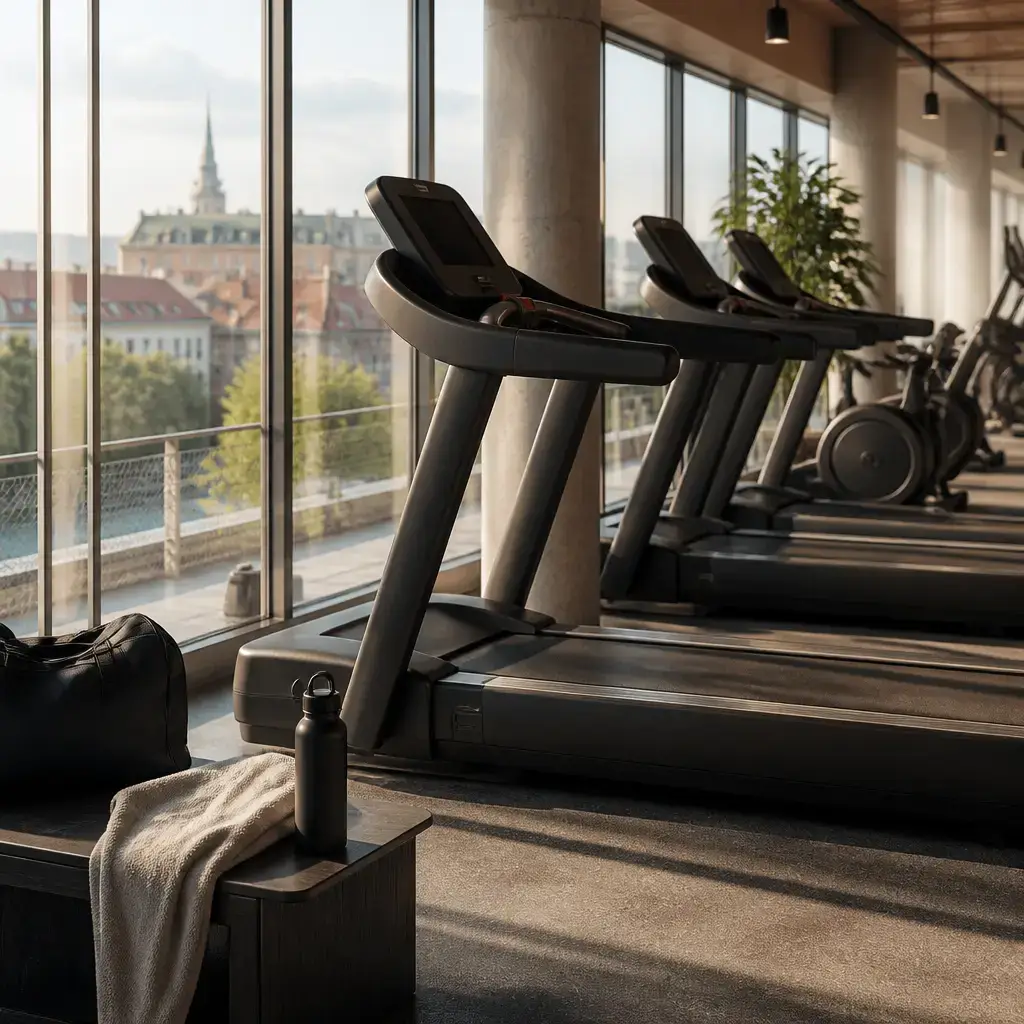
“Nogen” means “someone” here: an unspecified person who has been using the treadmill. It can introduce an unknown or unnamed person, as in the new example “Nogen venter udenfor” (“Someone is waiting outside”).
har
“Har” is the auxiliary in “har brugt” and helps express that someone has used the treadmill. It combines with a past participle such as “brugt”; the reusable pattern is “Jeg har ...” followed by what someone has done.
brugt
“Brugt” means “used” in “har brugt løbebåndet”. It is the form of “bruge” used with “har”; a useful pattern is “har brugt” plus an object, such as “har brugt maskinen” in a new example.
løbebåndet
“Løbebåndet” means “the treadmill”, the piece of equipment being used in the dialogue. The ending makes it a definite form of “løbebånd”; the same pattern appears in the new example “cykelbåndet” only when referring to a specific item, so use the exact noun needed for the equipment.
i
“I” means “for” in the time expression “i lang tid”. It introduces a period of time, as in the reusable pattern “i ... tid”, for example “i kort tid” in a new example.
lang
“Lang” means “long” in “i lang tid”, describing the duration of the use. It comes before the noun “tid” in this expression; the same word order works in a new example such as “en lang pause” (“a long break”).
tid
“Tid” means “time” in the expression “i lang tid”, referring to a duration. It commonly follows a duration word in “i ... tid”; for example, a new example is “i kort tid” (“for a short time”).
Skiltet
“Skiltet” means “the sign”, specifically the sign that gives the sharing instruction. It is the definite form of “skilt”; use it when referring to a particular sign, as in the new example “Skiltet hænger på væggen” (“The sign hangs on the wall”).
siger
“Siger” means “says” in “Skiltet siger”, introducing the information written on the sign. It is the form of “sige” used with “Skiltet”; a reusable pattern is “X siger, at ...” when reporting what a person or sign says.
at
“At” means “that” here and introduces the content of what the sign says: “at man skal dele det”. It links a statement to its content, as in the reusable pattern “siger, at ...”.
man
“Man” refers to people in general rather than one named person in “man skal dele det”. It is useful for general rules or instructions, as in the new example “Man skal vente på sin tur” (“People should wait their turn”).
skal
“Skal” expresses the rule or expectation that people should share the equipment. It is followed by the infinitive “dele” in “skal dele”; the same pattern is used for instructions such as “Man skal vente” in a new example.
dele
“Dele” means “share” in “skal dele det”, referring to sharing the treadmill when others are waiting. It follows “skal” in this sentence; a reusable pattern is “dele noget med nogen”, with the object and the person included when needed.
det
“Det” means “it” here and refers back to the treadmill or equipment that people should share. It is used as the object after “dele”; a reusable pattern is “dele det”, when the thing being shared is already known.
når
“Når” means “when” and introduces the situation in which the sharing rule applies: “når andre venter”. It commonly begins a time or situation clause, as in the new example “når bussen kommer” (“when the bus arrives”).
andre
“Andre” means “others” here, referring to other people who are waiting for the equipment. It is used before the verb in “andre venter”; the same meaning is useful when distinguishing one group from other people.
venter
“Venter” means “are waiting” in “andre venter”. It is the form of “vente” used with “andre”; a common pattern is “vente på noget eller nogen”, such as “vente på bussen” in a new example.
jeg
“Jeg” means “I” and identifies the speaker in “Skal jeg spørge personen?”. It normally comes before the verb in a statement, while a question can place “skal” before “jeg”, as in this dialogue.
spørge
“Spørge” means “ask” in “Skal jeg spørge personen?”. It follows “skal” in this question; a reusable pattern is “spørge nogen om noget”, with the person and topic specified when needed.
personen
“Personen” means “the person”, referring to the person using the treadmill. It is the definite form of “person”; use it for a specific person already identifiable in the situation.
eller
“Eller” means “or” and connects the two possibilities in “Skal jeg spørge personen, eller vil det virke uhøfligt?”. It is used to present an alternative, as in the new example “Vil du vente, eller vil du bruge en anden maskine?”.
vil
“Vil” means “would” in “vil det virke uhøfligt?”, asking whether the action might seem rude. It combines with the infinitive “virke”; a reusable question pattern is “Vil det ...?” when asking how something may appear or develop.
virke
“Virke” means “seem” in “vil det virke uhøfligt?”. It follows “vil” and describes how the action might appear to someone; a common pattern is “virke + description”, such as “virke klart” in a new example.
uhøfligt
“Uhøfligt” means “rude” or “impolite” in “virke uhøfligt”, describing how the request might come across. It follows “virke” as the description of the situation; it is useful when evaluating whether an action seems impolite.
Spørg
“Spørg” means “ask” as a direct instruction in “Spørg høfligt”. It is used at the beginning of a polite piece of advice; a reusable pattern is “Spørg ...” followed by the person or information you want to ask about.
høfligt
“Høfligt” means “politely” and describes how the learner should ask. It comes after the instruction “Spørg”; the same pattern can describe another action, such as “tal høfligt” in a new example.
og
“Og” means “and” and connects the two instructions “Spørg høfligt” and “sig”. It joins actions or statements, as in the reusable pattern “Gør X, og sig Y”.
sig
“Sig” means “say” in the instruction “sig, at du venter ...”. It introduces what the learner should tell the other person; the reusable pattern is “sig, at ...” followed by the information to communicate.
du
“Du” means “you” and refers to the person being given the advice in “du venter”. It is the subject of the clause after “at”; a common pattern is “du ...” when addressing one person directly.
på
“På” means “for” in “venter på at få en tur”, linking “venter” to what the person is waiting for. The reusable pattern is “vente på ...”, as in the new example “vente på bussen” (“wait for the bus”).
få
“Få” means “get” or “have” in “få en tur”, meaning to get a turn on the treadmill. It follows “på at” in this construction; a useful pattern is “få en tur” when asking for an opportunity to use something.
en
“En” means “a” in “en tur”, introducing one turn that the speaker is waiting to get. It comes directly before the noun “tur”; the same article pattern appears in a new example such as “en maskine” (“a machine”).
tur
“Tur” means “turn” in “få en tur”, referring to an opportunity to use the treadmill. It is used with “få en” here; the reusable expression is “vente på sin tur” (“wait for one’s turn”).
kan
“Kan” means “can” in “Jeg kan sige”, expressing that the speaker is able or ready to say something. It is followed by the infinitive “sige”; a common pattern is “kan + infinitive”, such as “kan vente” in this dialogue.
sige
“Sige” means “say” in “Jeg kan sige”. It follows “kan” and introduces the words the speaker can use; a reusable pattern is “Jeg kan sige: ...” before quoting a possible phrase.
Undskyld
“Undskyld” means “Excuse me” in the polite opening of the request. It gets the other person’s attention without directly accusing them; it can also be used as a brief apology in a new situation.
er
“Er” means “are” in “er du snart færdig”, asking about the other person’s current state. It is the form of “være” used with “du”; a reusable question pattern is “Er du ...?” followed by a description.
snart
“Snart” means “almost” in “er du snart færdig?”, asking whether the person will finish soon. It modifies the idea of finishing and softens the timing question; a common pattern is “snart færdig” when asking whether an activity is nearly over.
færdig
“Færdig” means “finished” in “færdig med løbebåndet”, asking whether the person has finished using the treadmill. It is followed by “med” and the activity or thing concerned; the reusable pattern is “færdig med ...”.
med
“Med” means “with” in “færdig med løbebåndet”, identifying what the person is finished using. It follows “færdig” in the construction “færdig med ...”; the same pattern can be used with another task or object in a new example.
lyder
“Lyder” means “sounds” in “Det lyder klart”, giving an assessment of how the suggested request comes across. It is the form of “lyde” used with “Det”; a reusable pattern is “Det lyder + description”.
klart
“Klart” means “clear” in “Det lyder klart”, describing the request as easy to understand. It follows “lyder” as the description of how the suggestion sounds; the same pattern can be used for another clear message in a new example.
uden
“Uden” means “without” in “uden at lægge for meget pres på personen”. It introduces something that does not happen; the reusable pattern is “uden at” followed by an infinitive, as in this dialogue.
lægge
“Lægge” means “putting” or “placing” in the construction “lægge ... pres på personen”, where the speaker does not put too much pressure on the person. It follows “uden at” in the infinitive construction; a reusable pattern is “lægge pres på nogen” for putting pressure on someone.
for
“For” means “too” in “for meget pres”, marking an excessive amount of pressure. It comes before “meget”; the reusable pattern is “for meget + noun”, as in “for meget tid” in a new example.
meget
“Meget” means “much” in “for meget pres”, referring to a large amount of pressure. Together with “for” it means “too much”; the pattern “for meget + uncounted amount” is useful for describing an excessive quantity.
pres
“Pres” means “pressure” in “lægge for meget pres på personen”, referring to social pressure placed on the person using the treadmill. The expression “lægge pres på nogen” keeps “på” and the person slot; it is useful when describing pressure on another person.
Hvis
“Hvis” means “if” and introduces a possible condition: “Hvis personen har brug for mere tid”. It commonly begins a conditional clause, as in the new example “Hvis du vil vente, kan jeg bruge en anden maskine” (“If you want to wait, I can use another machine”).
brug
“Brug” contributes the meaning “need” in the fixed expression “har brug for mere tid”, literally involving having use for more time. The complete reusable pattern is “have brug for + something”, not just “brug” alone; for example, “Jeg har brug for hjælp” is a new example.
mere
“Mere” means “more” in “mere tid”, referring to additional time. It comes before the noun “tid”; the same pattern is used in a new example such as “mere plads” (“more space”).
vente
“Vente” means “wait” in “kan jeg vente”, offering waiting as one possible response. It follows “kan” in this sentence; a reusable pattern is “kan vente på ...” when naming what someone will wait for.
bruge
“Bruge” means “use” in “bruge en anden maskine”, offering another machine as an alternative. It follows “kan” and takes the object “en anden maskine”; the reusable pattern is “bruge + equipment or object”.
anden
“Anden” means “another” in “en anden maskine”, identifying a different machine from the treadmill. It comes before the noun it describes; the reusable pattern is “en anden + singular noun” when offering a different option.
maskine
“Maskine” means “machine” in “en anden maskine”, referring to another piece of gym equipment. It follows the article and adjective in the noun phrase; a new example is “en maskine i fitnesscentret” (“a machine in the gym”).
gør
“Gør” means “makes” in “Det gør det muligt”, describing what the flexible response achieves. It is the form of “gøre” used with “Det”; the reusable pattern is “gøre det muligt at ...” for saying that something enables an action.
muligt
“Muligt” means “possible” in “gør det muligt at dele udstyret”. It completes the construction “gøre det muligt at ...”, which says that something enables the following action; keep “at” and the infinitive after it in reuse.
udstyret
“Udstyret” means “the equipment”, referring collectively to the gym equipment being shared. It is the definite form used for the specific equipment in this situation; a reusable pattern is “dele udstyret” when referring to known equipment.
starte
“Starte” means “start” in “uden at starte et skænderi”, describing an argument that does not begin. It follows “uden at” as an infinitive; a reusable pattern is “starte et ...” when naming an activity or event.
et
“Et” means “an” in “et skænderi”, introducing one argument as the event that should not be started. It comes before the noun “skænderi”; use this article with the noun phrase required by the noun.
skænderi
“Skænderi” means “argument” in “starte et skænderi”, referring to a verbal conflict between people. It is used after “starte et” in this expression; the reusable pattern is “starte et skænderi” when describing beginning an argument.