Det
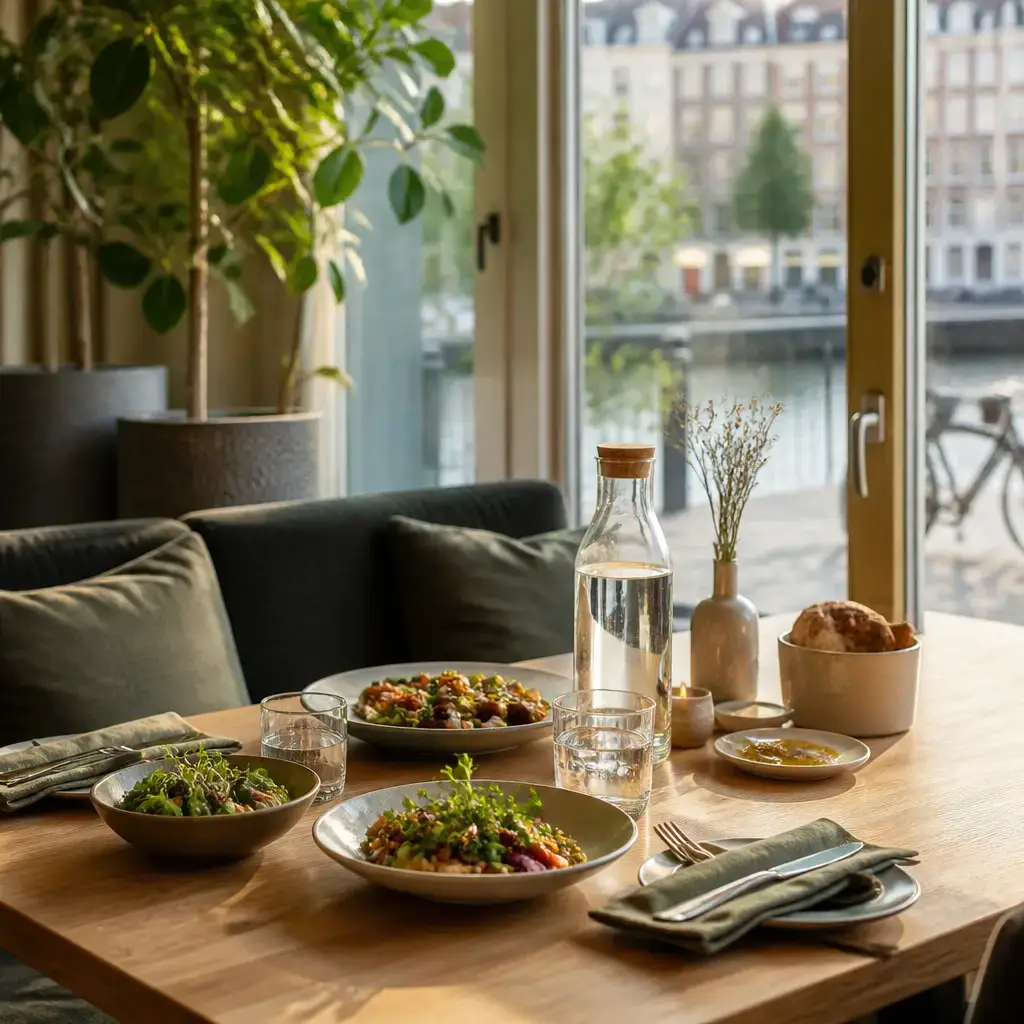
In Det er svært at vælge en restaurant, Det is an introductory subject referring to the situation of choosing a restaurant. It is used with er svært at + infinitive to say that doing something is difficult.
er
Here er means is and links the introductory subject Det with the description svært. The pattern Det er + adjective is commonly used to describe a situation.
svært
Svært means difficult in this sentence and describes choosing a restaurant as challenging. It appears in the useful pattern Det er svært at + infinitive.
at
At introduces the infinitive vælge after the expression Det er svært. Use at before an infinitive when describing an action in a construction such as Det er svært at vælge.
vælge
Vælge means to choose in the action of selecting a restaurant. After at, it stays in this infinitive form, as in at vælge en restaurant.
en
En is the indefinite article before the common-gender noun restaurant, giving the meaning a restaurant. It is placed directly before a singular common-gender noun.
restaurant
Restaurant means restaurant, the place being selected in the dialogue. It can be used after en in the pattern en restaurant.
fordi
Fordi introduces the reason for the difficulty: the group has some requirements. It commonly introduces a clause explaining why something is the case.
vi
Vi means we and refers to the people making the restaurant decision. It is used as the subject before har in vi har nogle få krav.
har
Har means have here, in the clause vi har nogle få krav. With har brug for, the verb is also part of the Danish expression for needing something.
nogle
Nogle means some in nogle få krav, referring to an unspecified number of requirements. It is used before a plural noun, often together with a quantity such as få.
få
Få means few in nogle få krav, emphasizing that the group has only a small number of requirements. It is placed before the plural noun it describes.
krav
Krav means requirements or constraints that the restaurant must satisfy. It is used here as a plural noun after nogle få.
Lad
Lad begins the suggestion Lad os først liste behovene, meaning Let us list the needs first. The pattern Lad os + infinitive is used to suggest doing something together.
os
Os means us in Lad os først liste behovene. Together with Lad, it identifies the people included in the suggestion.
først
Først means first and sets the order of the proposed action. It can be placed before the verb in a suggestion such as Lad os først liste behovene.
liste
Liste means list in the suggestion to make a list of the needs. After Lad os, it appears in the infinitive form: Lad os liste behovene.
behovene
Behovene means the needs, referring to the group’s practical requirements. The ending -ene marks this as a definite plural form, and it is the object of liste.
madmuligheder
Madmuligheder means food options, one of the needs being listed. It is a compound noun combining food with options and is used as a plural item in the list.
støjniveau
Støjniveau means noise level, the amount of noise considered when choosing the restaurant. It is a compound noun used here as one item in a list of requirements.
afstand
Afstand means distance, referring to how far the restaurant is from the group. It is used as a noun naming one consideration in the decision.
og
Og means and and connects items or clauses. Here it joins the final list item komfort to the preceding considerations.
komfort
Komfort means comfort, referring to how comfortable the restaurant environment and seating are. It is used as a noun naming one of the group’s needs.
Én
Én means one and singles out one person in the group. The accent distinguishes this emphasized number from the unstressed article en.
person
Person means person and identifies one member of the group. In Én person, it follows the number directly.
brug
Brug contributes to the meaning need in the fixed expression har brug for. In this dialogue, the complete expression har brug for vegetariske muligheder says that someone needs vegetarian options.
for
For is part of the expression har brug for, which indicates what someone needs. The thing needed follows for, as in har brug for vegetariske muligheder.
vegetariske
Vegetariske means vegetarian and describes the plural noun muligheder. It agrees with that plural noun in the phrase vegetariske muligheder.
muligheder
Muligheder means options or possibilities, specifically vegetarian options in this sentence. It follows the adjective vegetariske and is the object of har brug for.
anden
Anden means another, referring to a second person different from the first one mentioned. It is used before or with a common-gender singular noun, as in en anden person.
vil
Vil expresses wants in vil gerne sidde et roligt sted. Together with gerne and the infinitive sidde, it describes a person’s preferred action.
gerne
Gerne helps express a willing or desired action in vil gerne sidde, meaning wants or would like to sit. It commonly follows vil before the infinitive.
sidde
Sidde means sit in the expression vil gerne sidde et roligt sted. It is the infinitive after vil gerne and is followed by the place where the person wants to sit.
et
Et is the indefinite article before the neuter noun sted, giving the meaning a place. It appears in the phrase et roligt sted.
roligt
Roligt means quiet or calm and describes the neuter noun sted. The form is used because it follows et in et roligt sted.
sted
Sted means place, referring here to a quiet place where someone can sit. It follows et roligt in the phrase et roligt sted.
Så
Så means then and draws a conclusion from the group’s needs. Here it introduces the hypothetical result that a loud burger place would not be suitable.
ville
Ville means would in Så ville et larmende burgersted ikke være et godt kompromis. It presents a hypothetical result and is followed by the infinitive være.
larmende
Larmende means noisy or loud and describes the burger place as unsuitable for someone who wants quiet. It is placed before the noun burgersted as a describing word.
burgersted
Burgersted means burger place, referring to a restaurant centered on burgers. It is a compound noun used as the subject of the hypothetical clause.
ikke
Ikke means not and negates the claim that the burger place would be a good compromise. It is placed before the infinitive phrase være et godt kompromis.
være
Være means be in the hypothetical expression ville ikke være et godt kompromis. It follows ville in the infinitive form.
godt
Godt means good and describes the neuter noun kompromis. The form is neuter in et godt kompromis because it follows the article et.
kompromis
Kompromis means compromise, referring to a solution that balances the group’s different needs. It follows et godt in the phrase et godt kompromis.
Denne
Denne means this and points to the nearby restaurant being considered. It is used with a common-gender singular noun, as in Denne restaurant.
i
I means in and forms part of the location phrase i nærheden, meaning nearby or in the vicinity. It is used directly before nærheden in this expression.
nærheden
Nærheden means the vicinity or nearby area in i nærheden. Together, i nærheden describes the restaurant’s location.
retter
Retter means dishes, referring to the vegetarian dishes available at the restaurant. It is a plural noun after vegetariske.
roligere
Roligere means quieter and compares this seating area with a noisier alternative. It describes område in the phrase et roligere område.
område
Område means area, here a seating area inside or associated with the restaurant. It follows et roligere and is further described by med siddepladser.
med
Med means with and introduces what the area has: siddepladser. The pattern et område med + noun describes an area containing or equipped with something.
siddepladser
Siddepladser means seats or seating places, referring to places where people can sit. It follows med in the phrase et område med siddepladser.
menuen
Menuen means the menu, referring to the restaurant’s available food choices. The ending -en marks a definite singular form, and it is the subject of passe.
passe
Passe means fit or work for in Ville menuen passe til hele gruppen? The construction passe til is used to ask whether something is suitable for a person or group.
til
Til means for in passe til hele gruppen and identifies who the menu should suit. It follows passe in the reusable pattern passe til + person or group.
hele
Hele means whole or entire and emphasizes that the menu should suit every member of the group. It is placed before the definite noun gruppen.
gruppen
Gruppen means the group, referring to all the people deciding where to eat. The ending -en marks a definite singular form after hele.
Den
Den means it here and refers back to the common-gender noun restaurant. It is the subject of Den ser enkel nok ud.
ser
Ser means looks or appears in Den ser enkel nok ud. Together with ud, it forms the expression for how something appears.
enkel
Enkel means simple, describing the appearance of the restaurant’s menu or overall offering. It follows ser and is modified by nok in enkel nok.
nok
Nok means enough or sufficiently in enkel nok, giving the sense simple enough. It is placed after the adjective it modifies.
ud
Ud is part of ser ud, the expression meaning look or appear. In Den ser enkel nok ud, it completes the description of how the restaurant appears.
siddepladserne
Siddepladserne means the seating places or the seats, referring to the restaurant’s seating. The ending -ne marks a definite plural form, and the word is the subject of virker komfortable.
virker
Virker means seem or appear in virker komfortable. It is used to give an impression about the seating without stating the impression as absolute certainty.
forklar
Forklar means explain and is a direct instruction to give the reasons for the choice. This form is used at the beginning of an imperative sentence.
hvorfor
Hvorfor means why and introduces the reason that should be explained. It begins the clause hvorfor dette sted passer til gruppen.
dette
Dette means this and points to the particular place being considered. It is used with the neuter noun sted in dette sted.
før
Før means before and introduces the action that must happen earlier: explaining the fit before confirming the place. It commonly introduces a subordinate clause with a subject and verb.
du
Du means you and identifies the person who is expected to confirm the place. It is the subject of du bekræfter det.
bekræfter
Bekræfter means confirm in the instruction to explain the reasons before confirming the restaurant. It follows du in the present-tense clause du bekræfter det.
Jeg
Jeg means I and identifies the speaker as the person who will explain the decision. It is the subject at the beginning of Jeg vil forklare grunden.
forklare
Forklare means explain in Jeg vil forklare grunden. It is the infinitive after vil and takes grunden as what is being explained.
grunden
Grunden means the reason, referring to the explanation for choosing this restaurant. The ending -en marks a definite singular form.
spørge
Spørge means ask in Jeg vil forklare grunden og spørge, om nogen har betænkeligheder. It is coordinated with forklare after vil, so both actions belong to the plan.
om
Om introduces an indirect question meaning whether in spørge, om nogen har betænkeligheder. It connects the verb spørge with the question about someone’s concerns.
nogen
Nogen means anyone or someone in the question about whether anyone has a concern. It is the subject of har betænkeligheder.
betænkeligheder
Betænkeligheder means concerns or reservations about the proposed restaurant. It is the plural object of har in the expression nogen har betænkeligheder.
Klare
Klare means clear and describes the reasons as easy to understand. The form describes the plural noun grunde in Klare grunde.
grunde
Grunde means reasons, referring to the explanations given for the restaurant choice. It is a plural noun described by Klare and used as the subject of mindsker.
mindsker
Mindsker means reduces and describes the effect of clear reasons on awkwardness. It is followed by the thing being reduced, akavethed.
akavethed
Akavethed means awkwardness, referring to an uncomfortable social situation that may occur later. It is the object of mindsker in mindsker akavethed.
senere
Senere means later and indicates when the awkwardness might occur. It is placed at the end of the sentence to describe the time of the possible effect.