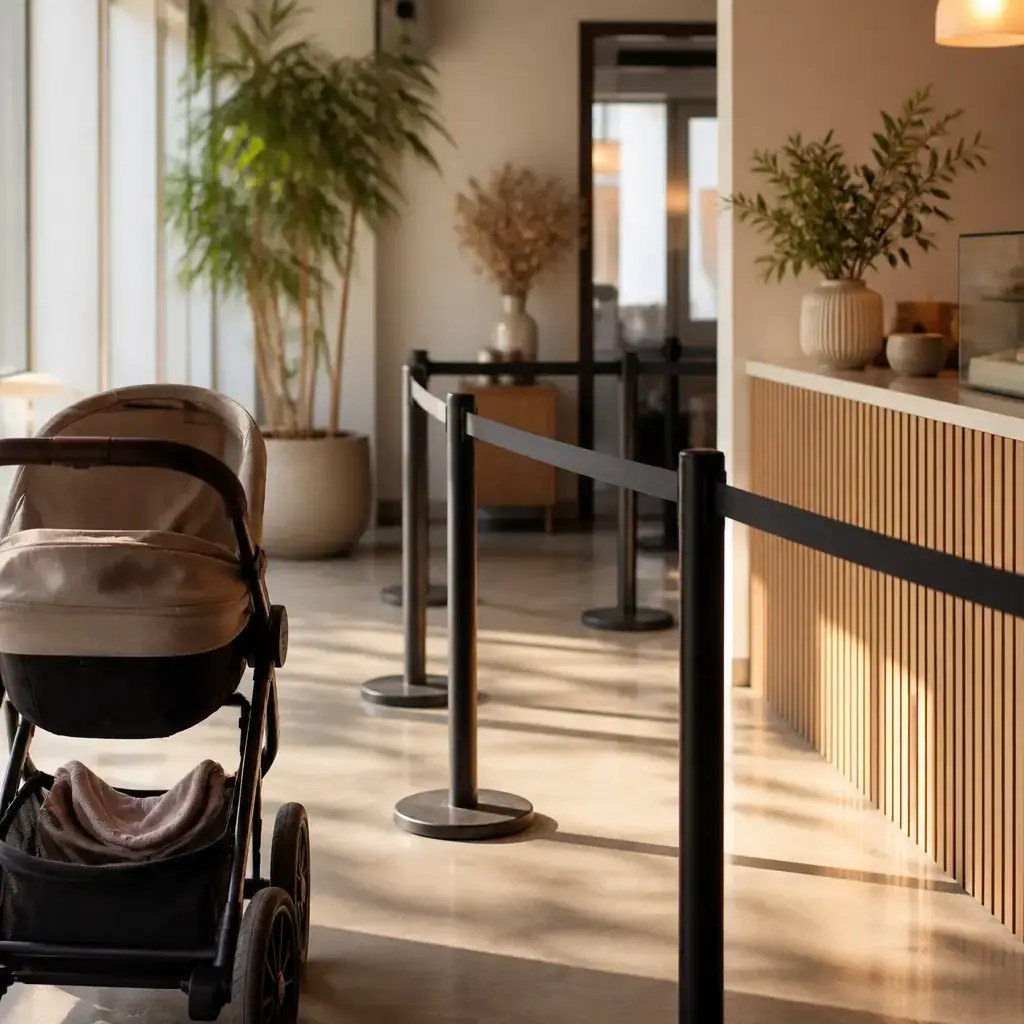
Undskyld
“Undskyld” means “excuse me” here and is used to politely get someone’s attention before speaking. Use it at the beginning of a polite question or comment to a stranger.
det
“det” refers to the situation being discussed: standing in the line with a baby and stroller. In “det må være svært”, it introduces the situation as the subject. A common reuse pattern is “Det er ...” for commenting on a situation.
må
“må” expresses a conclusion or strong assumption in “det må være svært”: it must be difficult. Here it combines with “være” in “må være” to describe what the situation is likely to be like. Use “må være” when making a considerate assumption about a situation.
være
“være” means “be” in “det må være svært”. It follows “må” in the pattern “må være + description”. Use this form after “må” when describing a likely state or situation.
svært
“svært” means “difficult” in “være svært” and describes standing in the line with the baby and stroller. It is used after “være” in “det må være svært”. A common reuse pattern is “Det er svært at ...” followed by an activity.
at
“at” introduces the infinitive phrase “at stå i denne kø”, meaning “to stand in this line”. It connects the activity to the description “svært”. Use “svært at” followed by an infinitive when saying that an activity is difficult.
stå
“stå” means “stand” in “at stå i denne kø”. Together with “i denne kø”, it describes being positioned in and waiting in the line. Use “at stå i ...” with a place or queue when describing where someone is standing.
i
“i” means “in” in “stå i denne kø” and places the person within the line. It is used here before “denne kø”. A common reuse pattern is “i kø” or “i denne kø” when talking about waiting in a line.
denne
“denne” means “this” and points to the particular line the speakers are in: “denne kø”. It appears directly before the noun it identifies. Use “denne” before a specific nearby noun when referring to this particular one.
kø
“kø” means “line” or “queue” in “denne kø”. It names the public line where the speakers are waiting. A common reuse pattern is “stå i kø” for standing in a line.
med
“med” means “with” in “med en baby og en klapvogn” and identifies what the person is managing while standing in line. It links the person’s situation to the baby and stroller. Use “med” before people or things that accompany someone.
en
“en” is the indefinite article in “en baby” and “en klapvogn”, meaning “a” or “an”. It appears before each singular noun introduced for the first time. Use “en” before a singular noun of this type.
baby
“baby” means “baby” in “en baby”. It identifies the young child accompanying the person in the line. A common reuse pattern is “en baby” when introducing a baby.
og
“og” means “and” and joins “en baby” with “en klapvogn” in the same situation. Use it to connect two people, things, or activities in a list.
klapvogn
“klapvogn” means “stroller” in “en klapvogn”. It identifies the stroller being managed in the line. Use “en klapvogn” when referring to a stroller as one item.
har
“har” means “has” or “have” in “Det har været besværligt”. Together with “været”, it describes how the situation has been up to now. A common reuse pattern is “har været + description” when describing a situation over a period of time.
været
“været” means “been” in “har været besværligt”. It follows “har” to describe the situation as it has been. Use “har været” before an adjective or description when summarizing an experience so far.
besværligt
“besværligt” means “tricky” or “difficult” in “Det har været besværligt”. It describes the experience of managing the stroller and baby while waiting. Use “Det har været besværligt” to say that something has been troublesome so far.
Jeg
“Jeg” means “I” in “Jeg prøver” and “Jeg er sikker”. It identifies the speaker as the person trying to manage the stroller or giving reassurance. Use “Jeg” at the beginning of a sentence when stating what you are doing or feeling.
prøver
“prøver” means “am trying” in “Jeg prøver at holde ...”. It presents an effort that is happening now. Use “prøver at” followed by an infinitive to say that you are trying to do something.
holde
“holde” means “keep” in “holde klapvognen stille og babyen rolig”. It describes maintaining the stroller in one condition and the baby in another. Use “holde + object + description” when saying that someone keeps something or someone in a particular state.
klapvognen
“klapvognen” means “the stroller” in “holde klapvognen stille”. The form refers to the specific stroller already relevant in the situation. Use “klapvognen” when talking about that particular stroller rather than introducing a new one.
stille
“stille” means “still” in “holde klapvognen stille”. It describes the condition the speaker is trying to maintain for the stroller. Use “holde ... stille” when saying that something should remain unmoving.
babyen
“babyen” means “the baby” in “holde ... babyen rolig”. The form refers to the specific baby in the conversation. Use “babyen” when the listener knows which baby is being discussed.
rolig
“rolig” means “calm” in “holde babyen rolig”. It describes the condition the speaker is trying to maintain for the baby. Use “holde ... rolig” when saying that someone keeps a person calm.
mens
“mens” means “while” and introduces the activity happening at the same time: “mens vi venter”. It links waiting with the effort to keep the stroller still and baby calm. Use “mens” before a clause to describe two simultaneous actions.
vi
“vi” means “we” in “vi venter” and refers to the speaker and the baby together. It is the subject of the waiting activity. Use “vi” when the speaker includes themselves and at least one other person.
venter
“venter” means “wait” in “vi venter”. It describes what the speaker and baby are doing in the line. A common reuse pattern is “vente på” followed by the person or thing being awaited.
Vil
“Vil” means “would like” in “Vil du gå foran mig?” and makes a polite offer or question about the other person’s wish. It is followed here by “du” and the infinitive “gå”. Use “Vil du ...?” when politely asking whether someone wants to do something.
du
“du” means “you” in “Vil du gå foran mig?”. It identifies the person being offered the chance to go ahead. Use “du” as the person addressed in a direct question or offer.
gå
“gå” means “go” in “gå foran mig”. With “foran mig”, it means moving to a position ahead of the speaker in the line. Use “gå foran” when talking about going in front of someone.
foran
“foran” means “in front of” in “gå foran mig”. It specifies the position the other person may move to in the line. Use “foran” before the person or object that someone is in front of.
mig
“mig” means “me” in “foran mig”. It identifies the speaker as the person behind whom the other person is currently standing. Use “foran mig” when describing a position in front of the speaker.
er
“er” means “am” in “Jeg er sikker” and “is” in “Det er meget hensynsfuldt”. It links the subject to a description or state. Use “er” with a person or situation when describing what they are like or how they are.
meget
“meget” means “very” in “meget hensynsfuldt” and strengthens the description. It appears directly before the adjective here. Use “meget” before a description when emphasizing its degree.
hensynsfuldt
“hensynsfuldt” means “considerate” in “Det er meget hensynsfuldt af dig”. It describes the offer as thoughtful toward the other person’s situation. The pattern “Det er ... af dig” can be used to comment appreciatively on someone’s action.
af
“af” means “of” in “af dig” and connects the considerate action with the person who performed it. The full expression “hensynsfuldt af dig” evaluates something someone has done. Use “... af dig” when describing an action as considerate or kind of someone.
dig
“dig” means “you” in “af dig”. It identifies the person whose action is being appreciated. Use “dig” after “af” in this kind of expression about something someone has done.
sikker
“sikker” means “sure” in “Jeg er sikker”. It expresses confidence in the decision to let the other person go ahead. Use “Jeg er sikker” to reassure someone that you are certain.
ikke
“ikke” means “not” in “Jeg har ikke travlt”. It makes the statement negative. Here it appears before “travlt” in the expression about not being in a hurry.
travlt
“travlt” contributes to the expression “har ikke travlt”, meaning “am not in a hurry”. It describes the speaker as not pressed for time in this situation. Use “have travlt” when talking about being busy or in a hurry, and place “ikke” before it for the negative.
ser
“ser” means “looks” in “Det ser svært ud at håndtere”. Together with “ud”, it introduces an impression about how the situation appears. Use “ser ... ud” before a description when saying that something looks a certain way.
ud
“ud” is part of “ser svært ud”, the expression used to say that something looks difficult. It helps complete the appearance expression with “ser” and does not mean “out” by itself here. Use “ser ... ud” when describing how something appears.
håndtere
“håndtere” means “manage” or “handle” in “svært ud at håndtere”. It names the task that appears difficult. Use “svært at håndtere” when saying that a situation, task, or object is difficult to manage.
ville
“ville” means “would” in “Det ville gøre en stor forskel” and “ville hjælpe os”. It presents a possible result or effect. Use “ville” with an infinitive to describe what would happen or what would help in a situation.
gøre
“gøre” means “make” in “ville gøre en stor forskel”. Together with “en stor forskel”, it describes an action having a significant effect. Use “gøre en forskel” when saying that something affects a situation.
stor
“stor” means “big” or “significant” in “en stor forskel”. It emphasizes the importance of the effect the offer would have. Use “en stor forskel” to describe a meaningful improvement or effect.
forskel
“forskel” means “difference” in “gøre en stor forskel”. The expression describes an action that has a noticeable effect. Use “gøre en forskel” when saying that something changes a situation in a helpful or meaningful way.
kun
“kun” means “only” in “vil kun give mig lidt ekstra ventetid”. It limits the effect to a small additional amount of waiting. Use “kun” before the part of the sentence that you want to limit.
give
“give” means “give” in “vil ... give mig lidt ekstra ventetid”, where the result is that the speaker will have some additional waiting time. It is followed by “mig” and the resulting thing. Use “give + person + thing” when describing what someone or something gives a person.
lidt
“lidt” means “a little” in “lidt ekstra ventetid”. It indicates a small amount of additional waiting time. Use “lidt” before an uncounted amount or time expression when referring to a small quantity.
ekstra
“ekstra” means “extra” in “lidt ekstra ventetid”. It identifies the waiting time as additional to what the speaker would otherwise have experienced. Use “ekstra” before a noun when describing an added amount.
ventetid
“ventetid” means “waiting time” in “lidt ekstra ventetid”. It names the time spent waiting as the result of letting the other person go ahead. Use “ventetid” when discussing how long someone has to wait.
hjælpe
“hjælpe” means “help” in “ville hjælpe os”. It describes the benefit that going ahead would provide to the speaker and baby. Use “hjælpe + person” when saying whom an action helps.
os
“os” means “us” in “hjælpe os”. It refers to the speaker and the baby together as the people who would benefit. Use “hjælpe os” when an action helps the speaker and others in their group.
før
“før” means “before” in “før babyen bliver mere urolig”. It introduces the point in time before the baby becomes more restless. Use “før” before a clause to describe something that should happen earlier.
bliver
“bliver” means “becomes” or “gets” in “bliver mere urolig”. It describes a change into a more restless state. Use “bliver” before a description when saying that someone or something is becoming a certain way.
mere
“mere” means “more” in “mere urolig”. It shows that the baby’s restlessness would increase. Use “mere” before a description when comparing a stronger degree of a quality.
urolig
“urolig” means “restless” in “babyen bliver mere urolig”. It describes the baby becoming increasingly unsettled while waiting. Use “bliver urolig” when describing someone becoming restless.
håbe
“håbe” means “hope” in “ville håbe”. It expresses a wish about what someone would do in a similar situation. Use “håbe, at ...” before the hoped-for situation, as in “håbe, at nogen ...”.
nogen
“nogen” means “someone” in “at nogen ville tilbyde mig ...”. It refers to an unspecified person who might offer the same help. Use “nogen” when the particular person is not identified or does not matter.
tilbyde
“tilbyde” means “offer” in “ville tilbyde mig den samme hjælp”. It describes voluntarily giving or making help available to someone. Use “tilbyde + person + thing”, as in offering a person some help.
den
“den” means “the” in “den samme hjælp”. It points to the specific help being compared with the help offered in this situation. Use “den samme” before a noun when referring to the identical thing or kind of help.
samme
“samme” means “same” in “den samme hjælp”. It shows that the hoped-for help would match the help being offered now. Use “den samme” before a noun when comparing an identical thing or action.
hjælp
“hjælp” means “help” in “den samme hjælp”. It names the supportive action that one person hopes someone would offer. Use “tilbyde hjælp” when saying that help is offered to someone.
sætter jeg pris på
“sætter jeg pris på” means “I appreciate it” as a whole in “Det sætter jeg pris på”. Within the expression, “sætter” contributes the idea of placing, “jeg” identifies the speaker, “pris” refers to value, and “på” completes the expression; together they express appreciation for something just done. Use “Det sætter jeg pris på” after someone has helped or done something considerate.
gør
“gør” means “makes” in “Det gør ventetiden meget mindre stressende”. It describes the effect that the offer has on the waiting time. Use “gør + noun + description” when saying that something causes a person or situation to become a certain way.
ventetiden
“ventetiden” means “the waiting time” or “the wait” in “gør ventetiden meget mindre stressende”. The form refers to the specific waiting period in the line. Use “ventetiden” when discussing a particular wait that is already understood.
mindre
“mindre” means “less” in “meget mindre stressende”. It shows that the waiting time has a lower level of stress because of the offer. Use “mindre” before a description when comparing a reduced degree of a quality.
stressende
“stressende” means “stressful” in “ventetiden meget mindre stressende”. It describes the emotional quality of the waiting time. Use “mindre stressende” when saying that a situation causes less stress than before.