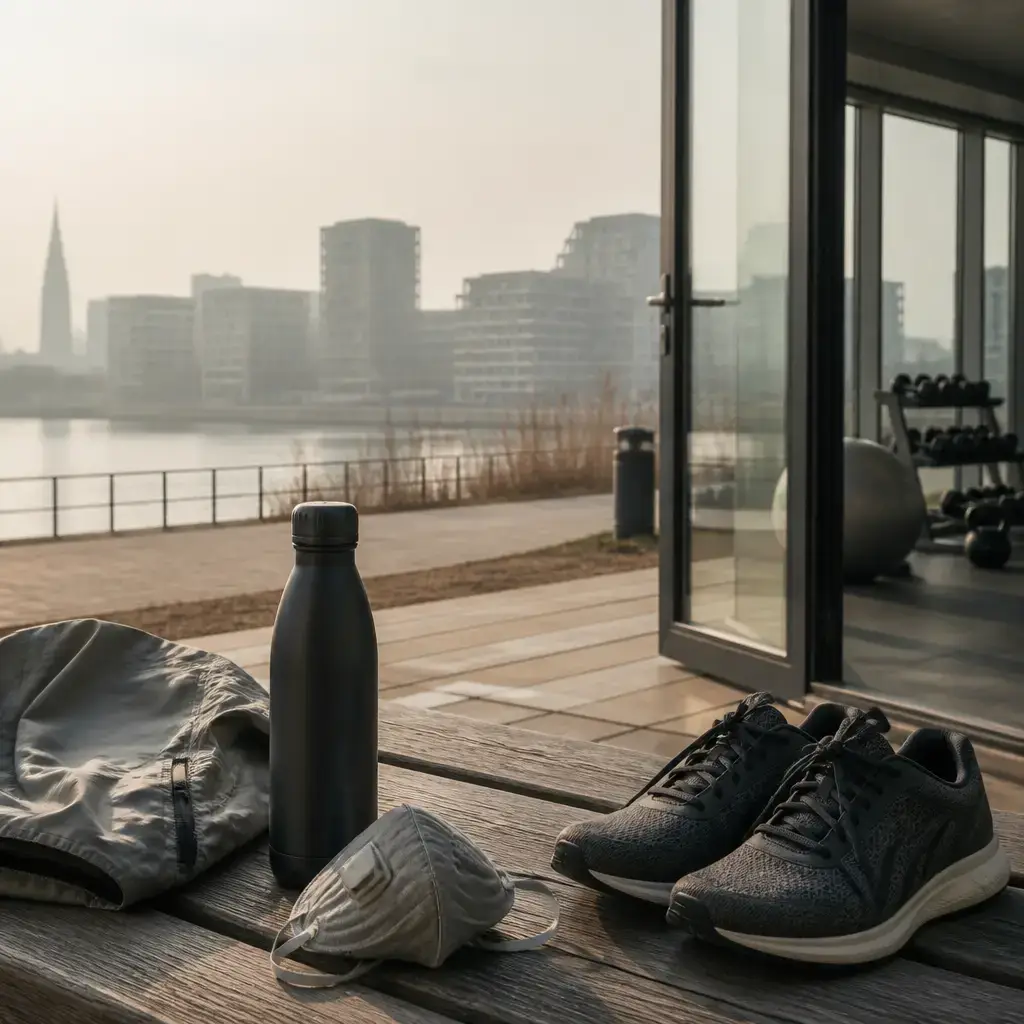
Luften
“Luften” means “the air” here, referring to the specific air being discussed. It is the definite form used in “Luften føles tung i dag”.
føles
“føles” means “feels” and describes how something is experienced. With a subject and an adjective, it expresses an impression, as in “Luften føles tung”.
tung
“tung” means “heavy” here, describing the uncomfortable impression made by the air. It follows “føles” in “føles tung”.
i
“i” means “in” in the time expression “i dag”. It is commonly used before a time expression such as “i dag”.
dag
“dag” means “day” and forms “i dag”, meaning “today”. The same time expression can be used to say when something happens.
og
“og” means “and” and joins the two pieces of information about the air and its quality. It connects clauses or other coordinated parts, as in “i dag, og luftkvaliteten”.
luftkvaliteten
“luftkvaliteten” means “the air quality”, referring to the specific quality of the air. It is used in the noun phrase “luftkvaliteten kan være dårlig”.
kan
“kan” expresses possibility here: the air quality may be poor. It is followed by the infinitive “være” in “kan være dårlig”.
være
“være” means “be” and follows the modal verb “kan” in “kan være dårlig”. After “kan”, the following verb stays in this infinitive form.
dårlig
“dårlig” means “poor” or “bad” here and describes the air quality. It is used after “være” in “kan være dårlig”.
Så
“Så” means “then” or “so” here and introduces a consequence of the poor air quality. At the beginning of “Så er motion udendørs måske ikke en god idé”, it links the sentence to what was just said.
er
“er” means “is” here and links the subject “motion udendørs” with the assessment “ikke en god idé”. It is used in the pattern “er ... en god idé”.
motion
“motion” means “exercise” or physical activity here. In “motion udendørs”, it is combined with a location expression to describe outdoor exercise.
udendørs
“udendørs” means “outdoors” or “outdoor” here and specifies where the exercise takes place. It is used with an activity in “motion udendørs”.
måske
“måske” means “maybe” and makes the statement less certain. It appears before the negative assessment in “måske ikke en god idé”.
ikke
“ikke” means “not” and negates the assessment that outdoor exercise is a good idea. It occurs before “en god idé” in “ikke en god idé”.
en
“en” means “a” here and introduces the indefinite noun phrase “en god idé”. It is used before the adjective and noun in “en god idé”.
god
“god” means “good” and describes the idea in “en god idé”. It comes between the article “en” and the noun “idé”.
idé
“idé” means “idea” in the assessment “ikke en god idé”. The phrase “en god idé” can be used when evaluating a possible action.
Jeg
“Jeg” means “I” and is the subject of the sentence about the planned run. It appears at the beginning of “Jeg havde planlagt at løbe i parken”.
havde
“havde” means “had” in “Jeg havde planlagt”, placing the planning before the relevant moment. It is used with “planlagt” to describe a plan that had already been made.
planlagt
“planlagt” means “planned” and describes the run as an activity that had already been planned. It follows “havde” in “havde planlagt at løbe”.
at
“at” marks the infinitive phrase “at løbe” after “planlagt”. It introduces the action that was planned.
løbe
“løbe” means “run” and names the activity that was planned. It follows “at” in “at løbe i parken”.
parken
“parken” means “the park”, referring to a specific park. It is used after “i” in the location phrase “i parken”.
Hvis
“Hvis” means “if” and introduces a condition: the advice applies when pollution bothers the person. It begins the conditional clause “Hvis forureningen generer dig”.
forureningen
“forureningen” means “the pollution”, referring to the pollution being discussed. It is the subject of “generer” in “forureningen generer dig”.
generer
“generer” means “bothers” here and describes the effect of the pollution on someone. It is followed by the person affected in “generer dig”.
dig
“dig” means “you” as the person affected by the pollution in “forureningen generer dig”. It is used after the verb that describes what bothers someone.
vælg
“vælg” means “choose” and gives a direct recommendation. It is used to tell someone to choose an alternative, as in “vælg træning indendørs i stedet”.
træning
“træning” means “training” or “exercise” and names the indoor alternative. It is the activity chosen in “vælg træning indendørs”.
indendørs
“indendørs” means “indoors” or “indoor” and specifies where the training takes place. It is used with “træning” in “træning indendørs”.
stedet
In “i stedet”, “stedet” contributes to the meaning “instead”, showing that indoor training replaces the outdoor option. The reusable expression is the complete phrase “i stedet”.
kunne
“kunne” means “could” here and presents using the gym as a possible option. It is followed by the infinitive “bruge” in “kunne bruge fitnesscenteret”.
bruge
“bruge” means “use” and describes using the gym for exercise. It follows “kunne” in “kunne bruge fitnesscenteret”.
fitnesscenteret
“fitnesscenteret” means “the gym”, referring to a specific place for exercise. It is the object of “bruge” in “bruge fitnesscenteret”.
selv
Here “selv” is part of the conjunction “selv om”, meaning “although”. The full expression introduces a contrast in “selv om det føles mindre afslappende end parken”.
om
Here “om” completes the conjunction “selv om”, meaning “although”, rather than meaning “about”. It introduces the contrasting clause “selv om det føles mindre afslappende end parken”.
det
“det” means “it” in “det føles mindre afslappende”, referring to the gym. In the later sentence, capitalized “Det” introduces the assessment in “Det virker sikrere at udskyde løbeturen”.
mindre
“mindre” means “less” and makes a comparison about how relaxing the gym feels. It is used before “afslappende” in “mindre afslappende end parken”.
afslappende
“afslappende” means “relaxing” and describes the experience of using the gym. It is compared with the park in “mindre afslappende end parken”.
end
“end” means “than” and introduces the second part of the comparison. It occurs in “mindre afslappende end parken”.
sundere
“sundere” means “healthier” and compares indoor training with breathing poor air. It is used in the pattern “sundere end”.
træne
“træne” means “train” or “exercise” and names the indoor activity. It follows “at” in “at træne indendørs”.
indånde
“indånde” means “breathe in” and describes taking poor air into the body. It follows “at” in the comparison “end at indånde dårlig luft”.
luft
“luft” means “air” here in the general expression “dårlig luft”. It is combined with an adjective to describe the air being breathed in.
Bør
“Bør” means “should” and asks whether wearing a mask is advisable. It begins the question “Bør jeg tage en maske på”.
tage
In “tage en maske på”, “tage” contributes to the action of putting on or wearing a mask. It is followed by the object and the particle “på” in this expression.
maske
“maske” means “mask” and is the object in the expression “tage en maske på”. It names the item being put on.
på
In “tage en maske på”, “på” completes the expression for putting a mask on. Its meaning here comes from the full construction rather than from “på” alone.
nødt
“nødt” contributes the meaning “obliged” or “required” in the fixed construction “er nødt til at gå udenfor”. It shows that going outside is necessary rather than freely chosen.
til
In “er nødt til at gå udenfor”, “til” is part of the construction expressing necessity. It connects “nødt” with the action introduced by “at”.
gå
“gå” means “go” or “walk” here and names the action that may be necessary outside. It follows “at” in “at gå udenfor”.
udenfor
“udenfor” means “outside” and specifies where the person needs to go. It completes the phrase “gå udenfor”.
hjælpe
“hjælpe” means “help” and describes the possible benefit of a mask. It follows “kan” in “kan hjælpe”.
lokale
“lokale” means “local” and describes the health advice as coming from the local context. It comes before “sundhedsråd” in “lokale sundhedsråd”.
sundhedsråd
“sundhedsråd” refers to health advice in this sentence. Together with “lokale”, it forms the noun phrase “lokale sundhedsråd”.
anbefale
“anbefale” means “recommend” or “suggest” and describes what the local health advice may do. It follows “kan” in “kan anbefale ekstra forholdsregler”.
ekstra
“ekstra” means “extra” and describes additional precautions. It comes before “forholdsregler” in “ekstra forholdsregler”.
forholdsregler
“forholdsregler” means “precautions”, referring to actions taken to reduce risk. It is the object of “anbefale” in “anbefale ekstra forholdsregler”.
virker
“virker” means “seems” here and presents an assessment rather than a certain fact. It is used with an adjective in “Det virker sikrere”.
sikrere
“sikrere” means “safer” and compares postponing the run with continuing in the poor air. It follows “virker” in “virker sikrere”.
udskyde
“udskyde” means “postpone” and describes delaying the run. It follows “at” in “at udskyde løbeturen”.
løbeturen
“løbeturen” means “the run”, referring to the specific running outing that was planned. It is the object of “udskyde” in “udskyde løbeturen”.
indtil
“indtil” means “until” and introduces the point at which the air improves. It begins the time clause “indtil luften bliver bedre”.
bliver
“bliver” means “becomes” or “gets” here and describes a change in the air’s condition. It is used with “bedre” in “bliver bedre”.
bedre
“bedre” means “better” and describes improvement in the air. It completes the expression “luften bliver bedre”.
endnu
“endnu” means “another” in the phrase “endnu et helbredsproblem”, adding one more problem to those already considered. It is used before the indefinite noun phrase “et helbredsproblem”.
et
“et” means “a” or “an” and introduces the indefinite noun phrase “et helbredsproblem”. It comes directly before the noun here.
helbredsproblem
“helbredsproblem” means “health problem” and names the harmful outcome that exercise should not become. It appears in the expression “bliver til endnu et helbredsproblem”.