Jeg
“Jeg” means “I” and is the subject speaking in the sentence. The capitalized form begins a sentence, while the lowercase form “jeg” appears later in “den sav, jeg lånte”; both refer to the speaker. A reusable pattern is “Jeg er nødt til at være ærlig” when stating a personal obligation.
er
“Er” links “Jeg” to the obligation expressed by “er nødt til at være ærlig”. Here it presents the speaker’s current situation. A reusable pattern is “er nødt til at” followed by an action.
nødt til
“Nødt til” means “need to” or “be obliged to” in “Jeg er nødt til at være ærlig”. In this expression, “nødt” conveys necessity and “til” connects that necessity to the following action, “at være ærlig”. Use “nødt til” when explaining that an action is necessary.
at
“At” is the infinitive marker in “at være ærlig” and “at udskifte klingen”. It also introduces the clause “at du siger det ligeud”, where it means “that”, so its function depends on what follows. A useful reuse point is to notice whether “at” is followed by an action form or by a subject and clause.
være
“Være” means “be” in “at være ærlig”. It describes the quality the speaker needs to show. A reusable pattern is “at være” followed by a description such as “ærlig”.
ærlig
“Ærlig” means “honest” and describes how the speaker intends to communicate about the borrowed saw. It follows “være” in “at være ærlig”. Use “ærlig” when openly giving information or admitting something.
om
“Om” means “about” in “ærlig om den sav, jeg lånte”. It introduces the subject of the honest explanation. A reusable pattern is “være ærlig om” followed by a topic.
den
“Den” identifies the specific saw in “den sav, jeg lånte”. It appears directly before the noun and points to an already identifiable object. A reusable pattern is “den” followed by a specific noun.
sav
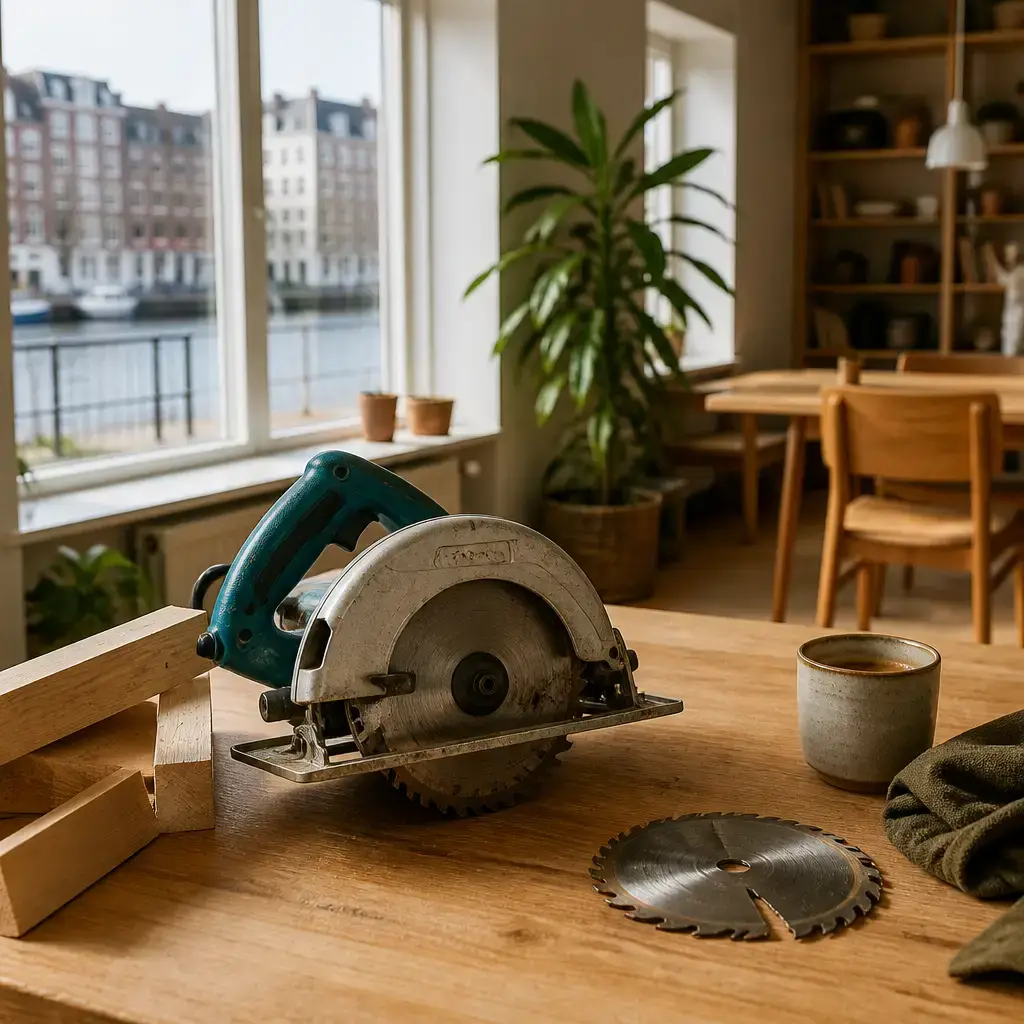
“Sav” means “saw” in “den sav”. It names the tool being discussed and borrowed. The same noun appears in the specific form “saven” when the saw is brought back.
lånte
“Lånte” means “borrowed” in “den sav, jeg lånte”. This form reports the earlier act of borrowing and appears in the clause describing which saw is meant. Use it when referring to something the speaker borrowed.
Kan
“Kan” means “can” in the question “Kan du forklare, hvad der skete?”. Its capital letter reflects its position at the start of the sentence. A reusable question pattern is “Kan du” followed by an action.
du
“Du” means “you” and addresses the other adult in the conversation. It is the subject in “Kan du forklare” and also appears in “før du kommer tilbage”. Use “du” when speaking directly to one person.
forklare
“Forklare” means “explain” in “Kan du forklare, hvad der skete?”. It follows “Kan” as the action the other person is asked to perform. A reusable pattern is “Kan du forklare” when requesting an account of an event.
hvad
“Hvad” means “what” in “hvad der skete”. It asks for information about the event that occurred. A reusable pattern is “hvad der” followed by a description of what happened.
der
In “hvad der skete”, “der” helps link “hvad” to the event described by “skete”. It is part of the clause pattern meaning “what happened”, rather than naming a separate object here. A reusable pattern is “hvad der” followed by an event verb.
skete
“Skete” means “happened” in “hvad der skete”. It refers to the event the listener wants explained. Use it when asking or talking about something that occurred.
Klingen
“Klingen” means “the blade” in “Klingen blev beskadiget”. It is the specific blade of the saw and is the subject of the report about the damage. The related noun appears as “klingen” after a lowercase sentence position.
blev
“Blev” contributes the “got” or “was” meaning in “blev beskadiget”. Together with “beskadiget”, it reports that the blade ended up damaged. A reusable pattern is “blev” followed by a form describing a resulting condition.
beskadiget
“Beskadiget” describes the blade as damaged in “Klingen blev beskadiget”. It names the resulting condition caused during the cutting. Use it when reporting that an object has suffered damage.
mens
“Mens” means “while” in “mens jeg skar i tykt træ”. It connects the damage to the activity that was taking place at the same time. A reusable pattern is “mens” followed by a clause describing a simultaneous action.
skar
“Skar” means “cut” in “jeg skar i tykt træ”. It describes the speaker’s cutting activity when the blade was damaged. A reusable pattern is “skar i” followed by the material being cut.
i
“I” links the cutting action to the material in “skar i tykt træ”. Here it introduces the wood being cut into or worked on. A reusable pattern is “skære i” followed by a material.
tykt
“Tykt” means “thick” in “tykt træ”. Its form fits the noun “træ” in this expression. Use it to describe the thickness of the wood being worked on.
træ
“Træ” means “wood” in “tykt træ”. It names the material being cut. A reusable pattern is an adjective followed by “træ” when describing the material.
Var
“Var” means “was” in the question “Var træet for tykt til den sav?”. It asks about the wood’s condition or suitability in the earlier situation. A reusable question pattern is “Var” followed by the thing being assessed.
træet
“Træet” means “the wood” in “Var træet for tykt til den sav?”. It refers to the specific wood involved in the cutting. The form is related to the noun “træ” used in “tykt træ”.
for
“For” means “too” in “for tykt til den sav”. It shows that the thickness may have exceeded what was suitable for the saw. A reusable pattern is “for” followed by an adjective and then “til” with the relevant object.
til
“Til” means “for” in “for tykt til den sav”. It connects the degree of thickness with the saw’s suitability. A reusable pattern is “for” plus a description, followed by “til” and the object or purpose.
Det
“Det” means “it” or “that” in “Det var det nok”. It refers back to the idea that the wood was too thick. It also appears at the start of “Det burde være nok”, where it refers to the proposed replacement being sufficient.
nok
“Nok” means “probably” in “Det var det nok”, expressing a cautious conclusion. In “Det burde være nok”, the same form means “enough”, so the surrounding expression determines the meaning. Use it to qualify a conclusion or to say that something is sufficient.
og
“Og” means “and” in “Det var det nok, og jeg burde have spurgt”. It joins the speaker’s conclusion with the admission about what should have been done. A reusable pattern is “og” between two related statements.
burde
“Burde” means “should” or “ought to” in “jeg burde have spurgt”. It expresses that asking would have been the better responsibility in the earlier situation. A reusable pattern is “burde have” followed by an action that should already have happened.
have
“Have” helps form “burde have spurgt”, referring to an earlier action that should have taken place. It works together with “burde” and “spurgt”, rather than meaning possession here. A reusable pattern is “burde have” followed by a completed action.
spurgt
“Spurgt” means “asked” in “burde have spurgt”. It names the question the speaker now regrets not asking before trying. Use it when referring to asking for information or permission.
før
“Før” means “before” in “før jeg prøvede” and “før du kommer tilbage”. It places one action earlier than another. A reusable pattern is “før” followed by a clause describing the later point or action.
prøvede
“Prøvede” means “tried” in “før jeg prøvede”. It refers to the speaker’s attempt to use the saw. Use it when describing an attempt that took place before another event.
sætter pris på
“Sætter pris på” means “appreciate” in “Jeg sætter pris på, at du siger det ligeud”. “Sætter” and “pris” together express valuing something, while “på” connects that appreciation to what follows. A reusable pattern is “sætter pris på” followed by a thing or clause that is valued.
siger
“Siger” means “say” or “tell” in “at du siger det ligeud”. It describes the other person expressing the matter openly. A reusable pattern is “siger det” when referring to stating something already understood in the conversation.
ligeud
“Ligeud” means “directly” or “frankly” in “siger det ligeud”. It describes speaking plainly instead of concealing the matter. A reusable pattern is “sige det ligeud” when admitting or stating something openly.
i stedet for
“I stedet for” means “instead of” in “i stedet for at skjule det”. “I” and “stedet” form the idea of an alternative place or choice, while “for” introduces the action that is not chosen. A reusable pattern is “i stedet for” followed by an action or alternative.
skjule
“Skjule” means “hide” in “at skjule det”. It describes keeping the damage from being known. A reusable pattern is “skjule det” when concealing a matter already understood by the speakers.
sørge for
“Sørge for” means “arrange” or “make sure” in “sørge for en reparation”. “Sørge” carries the idea of taking responsibility for ensuring something, and “for” connects that responsibility to “en reparation”. A reusable pattern is “sørge for” followed by the thing that will be arranged or ensured.
en
“En” means “a” in “en reparation”. It introduces one repair as an unspecified option. A reusable pattern is “en” before a singular noun of this type.
reparation
“Reparation” means “repair” in “en reparation”. It names the work that could be arranged for the damaged tool. Use it when referring to work intended to fix damage.
eller
“Eller” means “or” in “en reparation eller udskifte klingen”. It presents repair and blade replacement as two alternatives. A reusable pattern is “eller” between possible actions or choices.
udskifte
“Udskifte” means “replace” in “udskifte klingen”. It describes removing the damaged blade and putting another one in its place. A reusable pattern is “udskifte” followed by the object being replaced.
tager mig af
“Tager mig af” means “take care of” or “handle” in “Jeg tager mig af det”. “Tager” contributes the idea of taking action, “mig” marks the speaker as the person responsible, and “af” links that responsibility to the matter. Use the expression before the thing you will handle, as in “tager mig af det”.
dag
“Dag” means “day” in “i dag”, the full expression meaning “today”. It places the promised action on the current day. A reusable pattern is “i dag” when stating when something will happen.
Sig til
“Sig til” means “let me know” or “tell me” in “Sig til mig”. “Sig” gives the instruction to say or tell, while “til” directs the information toward the person who should receive it. A reusable pattern is “Sig til” followed by the person who should be informed.
mig
“Mig” means “me” in “Sig til mig”. It identifies the speaker as the recipient of the information. Use it after “til” when telling someone who should be notified.
når
“Når” means “when” in “når den er blevet udskiftet”. It introduces the point at which the replacement has been completed. A reusable pattern is “når” followed by a clause describing the relevant time or condition.
blevet
“Blevet” contributes the completed change in “er blevet udskiftet”. Together with “er” and “udskiftet”, it expresses that the blade has undergone replacement. A reusable pattern is “er blevet” followed by a description of a completed change.
udskiftet
“Udskiftet” means “replaced” in “er blevet udskiftet”. It describes the completed result required before the saw is returned. Use it when stating that one object has been replaced.
kommer
“Kommer” means “come” in “du kommer tilbage med saven”. It names the other person’s return action. A reusable pattern is “kommer tilbage” when describing someone returning.
tilbage
“Tilbage” means “back” in “kommer tilbage med saven”. It shows that the person is returning to the shared space or previous place. A reusable pattern is “komme tilbage” for a return movement.
med
“Med” means “with” in “kommer tilbage med saven”. It indicates that the saw accompanies the person on the return. A reusable pattern is “komme tilbage med” followed by the object being brought.
saven
“Saven” means “the saw” in “med saven”. It refers to the specific saw that was borrowed and is now being returned. It is the specific form related to “sav” in “den sav”.